
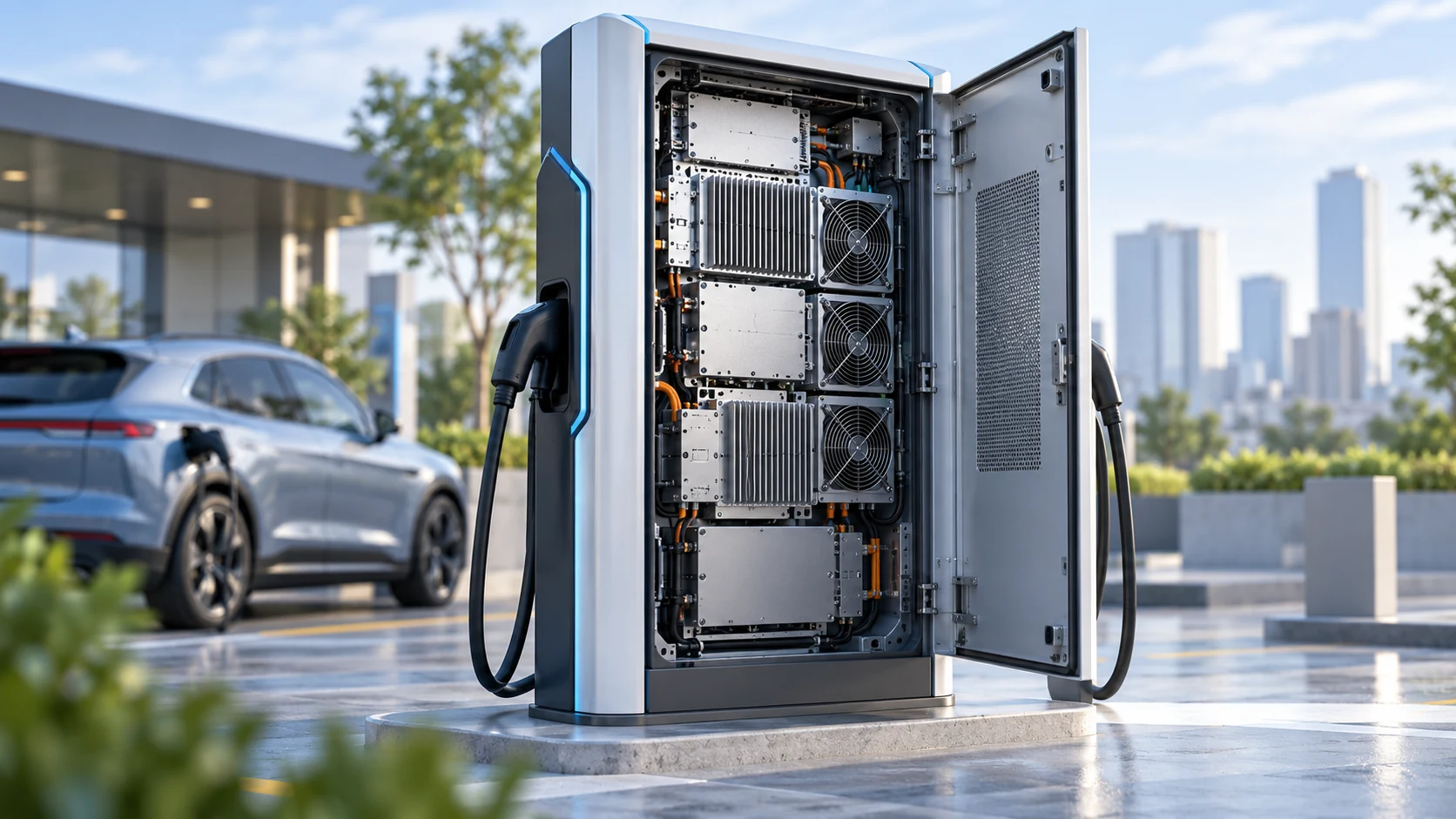
Power module cooling
Airflow across charger heat sinks and power conversion electronics.
Thermal support for charger modules, control boards, and power electronics
Understanding the specific thermal and environmental demands of EV Charger and Charging Pile Cooling environments is the foundation of every Herays solution.
EV charging infrastructure operates continuously at the intersection of high power electronics, outdoor environments, and demanding duty cycles. A 60 kW DC fast charger dissipates 3–4.2 kW of heat continuously — at a duty cycle of 95%+ typical for public fast chargers, the thermal management system never rests. Getting the fan selection right directly determines system uptime and maintenance intervals.
EV charging equipment places unique demands that distinguish it from standard industrial cooling:
Herays industrial axial fans in the 120 mm range cover the airflow requirements for most EV charger power stages. All are available in 24V and 48V versions and carry CE and RoHS certification.
For chargers requiring tachometer feedback to detect fan failure — critical for systems that must alarm and de-rate before component temperatures exceed safe limits — specify the −SF (signal feedback) variants.
How long should a cooling fan last in a commercial EV charger? Plan for a minimum MTBF of 70,000 hours at operating temperature. At 95% duty cycle that is approximately 8 years before the first statistically expected failure. Ball-bearing fans significantly outperform sleeve-bearing designs at elevated temperatures and non-horizontal mounting angles.
Should I use PWM or voltage-variable speed control? PWM is strongly preferred. It provides linear speed control down to 20–30% minimum speed without the torque and startup issues associated with low-voltage operation, and allows proportional ramping with thermal load.
Herays supplies cooling fans to EV charger OEMs with custom cable lengths, connector types, and IP ratings. Request a sample or OEM quote to discuss your specific charger platform requirements.
Precision-engineered DC fan technologies tailored to the performance and reliability requirements of EV Charger and Charging Pile Cooling applications.
Airflow across charger heat sinks and power conversion electronics.
Fan options for outdoor charging cabinets and internal control areas.
Connector, wire, voltage, tachometer, and label customization.
Herays DC fan and blower products engineered to meet the performance requirements of EV Charger and Charging Pile Cooling systems.
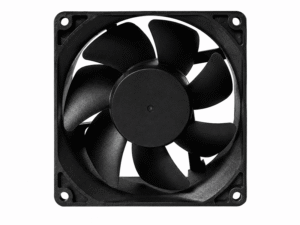 DC Axial Fan
DC Axial Fan
DC Axial Fan
DC Axial Fan
DC Axial Fan
DC Axial Fan
DC Axial Fan
DC Axial Fan
DC Axial Fan
DC Axial Fan
DC Axial Fan
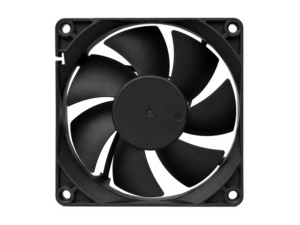 DC Axial Fan
DC Axial Fan
DC Axial Fan
Our application engineers are available to help you select the right product for your system requirements.