
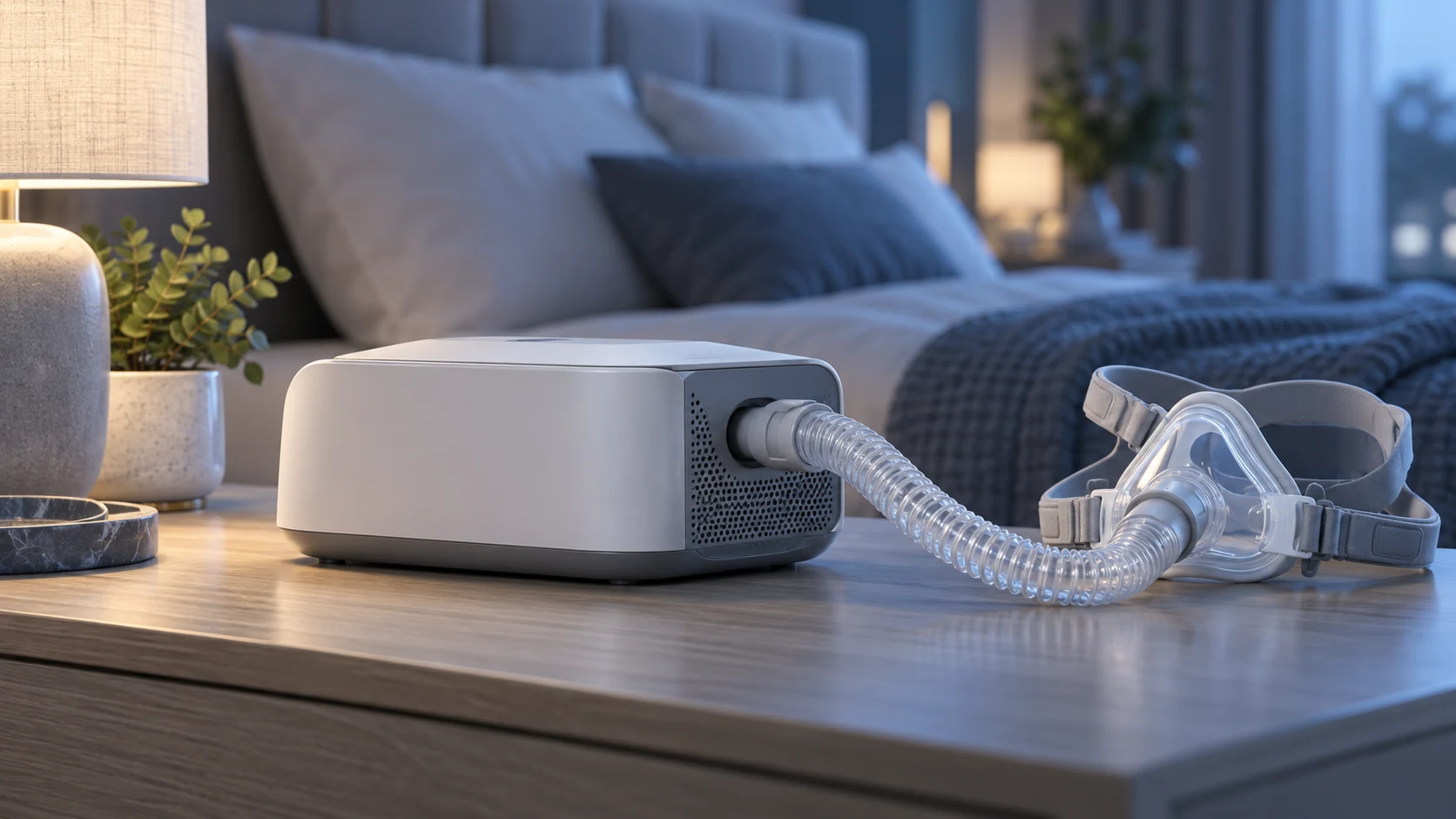
Low-noise airflow
Blower choices for quiet user-facing air delivery systems.
Low-noise compact blower airflow for sleep therapy device engineering
Understanding the specific thermal and environmental demands of CPAP and Sleep Therapy Airflow environments is the foundation of every Herays solution.
CPAP (Continuous Positive Airway Pressure) and sleep therapy devices require blowers that operate with a combination of performance characteristics found nowhere else in consumer electronics: they must deliver precisely regulated airway pressure (typically 4–20 cmH₂O) in a device held inches from a sleeping patient’s face, running continuously for 6–8 hours per night, every night, for 5+ years — all while producing less acoustic output than the rustling of bedsheets. This is one of the most acoustically and mechanically demanding consumer blower applications in existence.
Herays supplies centrifugal BLDC blower modules for CPAP, APAP, and BiPAP device designs in 12V and 24V configurations, with PWM speed control, tachometer output, and low acoustic noise profiles suitable for sleep therapy applications.
Key blower specifications for CPAP device evaluation:
Contact Herays with your device’s prescribed pressure range, target device acoustic specification, and form factor constraints for specific blower model recommendations and NDA-protected engineering samples.
Why is CPAP blower acoustic performance so difficult to achieve? The fundamental challenge is that reducing noise requires reducing blower speed, but pressure is generated by centrifugal force which scales with the square of speed — halving the speed reduces pressure to one-quarter. To deliver 8 cmH₂O quietly, the impeller must be designed with a large diameter (to generate more pressure per unit speed) and an optimized blade profile (to minimize turbulence noise). These design constraints compete with the compact size and low cost requirements of consumer CPAP devices — hence why CPAP blowers are significantly more technically sophisticated and expensive than comparable-size fans.
How does humidifier operation affect blower requirements in a CPAP system? Integrated heated humidifiers draw additional power from the same 12V or 24V supply as the blower. The blower control loop must compensate for the voltage droop that occurs when the humidifier heater element cycles on — this typically causes a brief blower speed drop and pressure perturbation that wakes sensitive patients. Power supply sizing and blower speed control bandwidth must account for heater element current step loads.
What is the difference between CPAP and BiPAP blower requirements? CPAP uses a fixed therapeutic pressure. BiPAP delivers different inspiratory (IPAP) and expiratory (EPAP) pressures and transitions between them in under 200 ms in response to detected patient breath. BiPAP requires a faster blower speed control loop and lower motor/impeller inertia to achieve pressure transitions within patient-imperceptible response times. CPAP blowers and BiPAP blowers are mechanically similar but the speed controller design differs significantly.
Herays works with sleep therapy OEMs from initial design through regulatory submission. Contact us to discuss your device platform requirements and documentation needs.
Precision-engineered DC fan technologies tailored to the performance and reliability requirements of CPAP and Sleep Therapy Airflow applications.
Blower choices for quiet user-facing air delivery systems.
Airflow through filters, tubing, and compact internal paths.
Repeatable specifications for equipment development and production.
Herays DC fan and blower products engineered to meet the performance requirements of CPAP and Sleep Therapy Airflow systems.
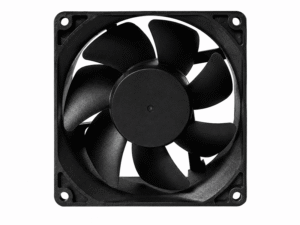 DC Axial Fan
DC Axial Fan
DC Axial Fan
DC Axial Fan
DC Axial Fan
DC Axial Fan
DC Axial Fan
DC Axial Fan
DC Axial Fan
DC Axial Fan
DC Axial Fan
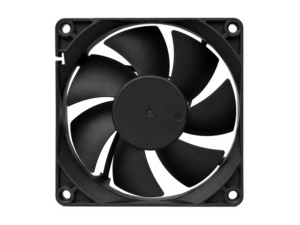 DC Axial Fan
DC Axial Fan
DC Axial Fan
Our application engineers are available to help you select the right product for your system requirements.