
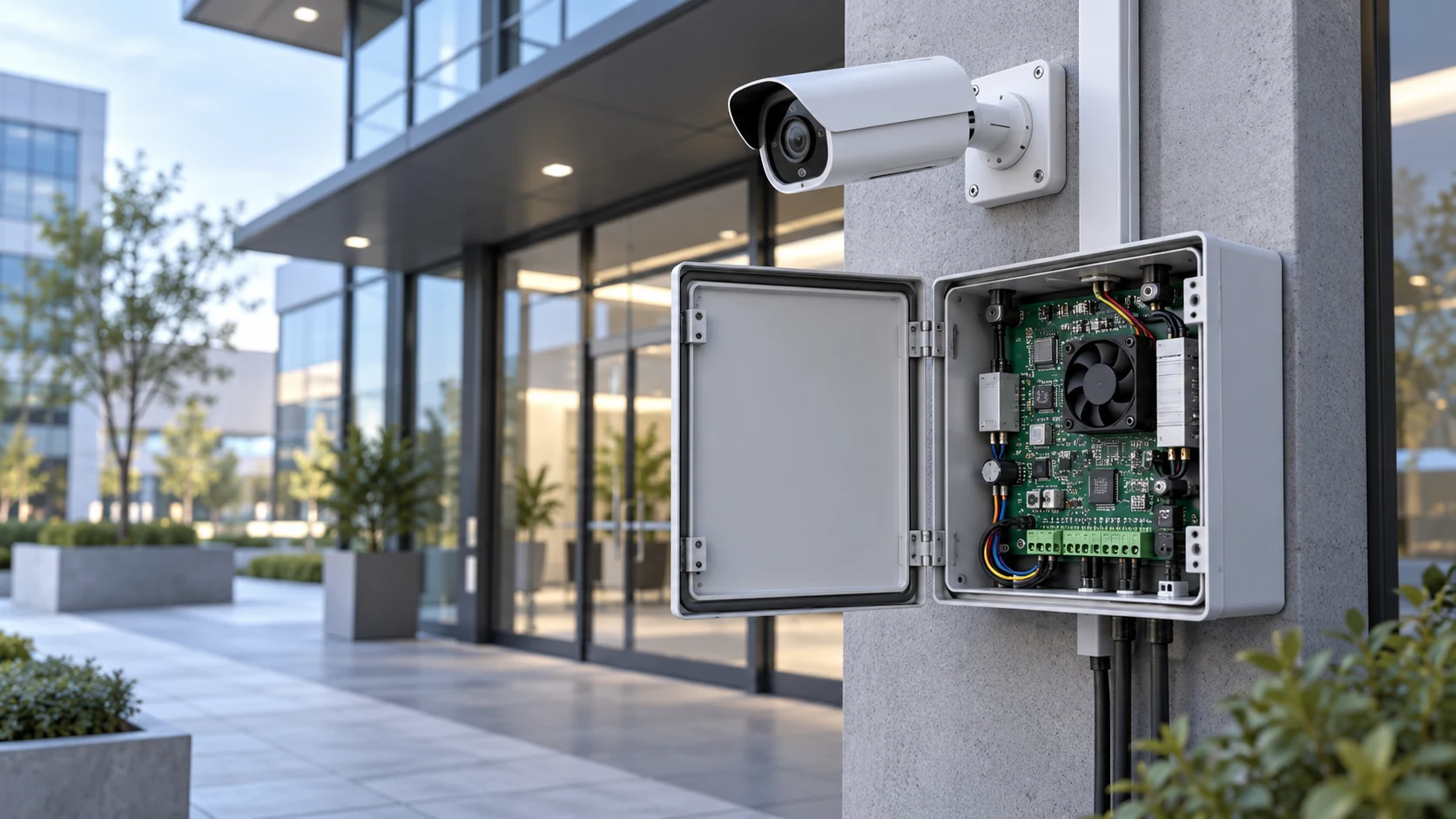
Compact cooling
Small fan choices for cameras, controllers, and smart access devices.
Small-format airflow for security devices and intelligent access systems
Understanding the specific thermal and environmental demands of Security Camera and Access Control Cooling environments is the foundation of every Herays solution.
Security surveillance and physical access control equipment — PTZ cameras, multi-channel NVR systems, outdoor enclosure controllers, biometric access terminals, and gate barrier electronics — operates in environments that combine high reliability requirements with limited space, low-power auxiliary supplies, and exposure to outdoor conditions that degrade uncertified components rapidly. As AI-enabled edge inference accelerates on-device, the thermal load from embedded SoC processors is increasing significantly — what once ran cool enough without a fan now requires active cooling to maintain inference accuracy and component life.
Cooling engineering requirements for security and access control equipment:
Herays supplies DC axial fans in both 120 mm standard and compact formats for security camera and access control cooling applications. The 12V variants serve NVR enclosures and access control panel cooling; outdoor IP-rated variants are available for sealed enclosure applications.
For sealed outdoor enclosures with active cooling, Herays can supply IP-rated fan assemblies with gasket sealing appropriate for PTZ camera housings and outdoor access control equipment rated to IP66.
Does a PTZ camera housing really need a fan if it has a thermal path through the housing? Traditional analog PTZ cameras with passive housing cooling are marginal at best in direct-sun summer conditions — enclosure temperatures routinely exceed 70°C, accelerating lubricant degradation in pan/tilt mechanisms and reducing image sensor life. AI-capable PTZ cameras with on-device inference have 3–5× higher SoC power than their predecessors; passive cooling is generally insufficient for these platforms without a significant increase in housing mass and fin area.
How do I manage condensation risk in a fan-cooled outdoor enclosure? Use a fan with a sealed motor (IP54 or higher) and design the enclosure ventilation path to include a labyrinthine or downward-facing inlet that prevents direct water ingress. A small desiccant pack in the enclosure absorbs residual moisture. Avoid designs that draw warm moist air in during the day and then cool it below the dew point at night — this is the most common cause of condensation damage in outdoor electronics enclosures.
What is the minimum fan specification for an NVR enclosure running AI analytics? An NVR with 16 channels of AI motion detection and object classification may dissipate 25–40 W from the inference SoC alone. At 20°C temperature rise allowance in a 40°C ambient, you need approximately 6–8 CFM of clean airflow across the SoC heatsink — a compact 80 mm fan at 1,500 RPM is the practical minimum; a 120 mm fan at 800 RPM provides equivalent airflow at significantly lower noise.
Contact Herays for compact fan specifications, IP-rated outdoor variants, and OEM pricing for security equipment manufacturing programs.
Precision-engineered DC fan technologies tailored to the performance and reliability requirements of Security Camera and Access Control Cooling applications.
Small fan choices for cameras, controllers, and smart access devices.
Options for continuous operation in security electronics.
5V, 12V, and other DC options for embedded systems.
Herays DC fan and blower products engineered to meet the performance requirements of Security Camera and Access Control Cooling systems.
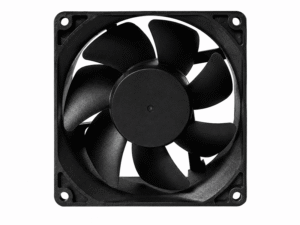 DC Axial Fan
DC Axial Fan
DC Axial Fan
DC Axial Fan
DC Axial Fan
DC Axial Fan
DC Axial Fan
DC Axial Fan
DC Axial Fan
DC Axial Fan
DC Axial Fan
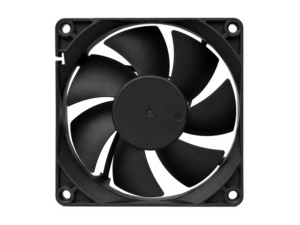 DC Axial Fan
DC Axial Fan
DC Axial Fan
Our application engineers are available to help you select the right product for your system requirements.