Seeing "MTBF: 70,000 hours" on a fan datasheet feels like a concrete reliability guarantee, but treating it as a literal lifespan prediction is one of the most common misunderstandings in component selection.
MTBF (Mean Time Between Failures) is a statistical reliability metric derived from testing a population of fans under specific conditions, not a guarantee of how long any individual fan will run -- understanding what MTBF actually measures, and the conditions it was calculated under, is essential to using it correctly in system design.
- MTBF is a statistical average failure rate derived from population testing, not a predicted lifespan for any single fan unit.
- Manufacturers calculate MTBF using specific test conditions (temperature, voltage) that may not match your actual operating environment.
- L10 and L50 ratings describe the percentage of a fan population expected to fail by a given time, offering a different and often more practical reliability perspective than MTBF alone.
- Real operating conditions -- temperature, dust, vibration, duty cycle -- can significantly affect actual fan lifespan compared to the MTBF test environment.
- MTBF is most useful for comparing relative reliability between fan models under similar test methodology, not as an absolute lifespan prediction for your specific application.
Understanding what MTBF actually represents statistically clarifies how to use it appropriately in real system design decisions.
Table of Contents
What Does MTBF Actually Measure, Statistically Speaking?
Getting the statistical definition right is the foundation for using MTBF correctly.
MTBF is calculated from a population of fans tested (or modeled) under controlled conditions, representing the average time between failures across that population -- it does not mean any individual fan is expected to run trouble-free for that exact duration, since some units will fail earlier and some later than the average.
Why "Average Time Between Failures" Is Easy to Misread as "Guaranteed Lifespan"
A 100,000-hour MTBF rating doesn't mean a specific fan will run for over 11 years continuously -- it means that across a large population of similar fans operating under the test conditions, failures occur at a rate that averages out to one failure per 100,000 operating hours of cumulative fleet time, which is a very different statistical statement than an individual unit's expected service life. This distinction matters because engineers who treat MTBF as a literal lifespan guarantee risk underestimating the need for redundancy or monitoring in reliability-critical applications.
How Do Fan Manufacturers Actually Calculate MTBF Figures?
Understanding the calculation methodology explains why MTBF figures can vary so much between manufacturers even for seemingly similar fans.
MTBF is typically calculated either through accelerated life testing (running a sample of fans under stress conditions and extrapolating) or through a bottom-up reliability calculation based on component failure rate databases -- both methods involve assumptions and test conditions that should be understood before comparing figures across manufacturers.
Why MTBF Figures From Different Manufacturers Aren't Always Directly Comparable
Because MTBF can be derived through different methodologies and test conditions (different temperatures, different voltage levels, different sample sizes), two manufacturers' published MTBF figures for seemingly similar fans may not be calculated on an equivalent basis, making direct numerical comparison potentially misleading without understanding each figure's underlying test methodology. This is why requesting the specific test conditions behind a published MTBF figure, particularly for reliability-critical applications, provides more meaningful comparison data than the headline number alone.
What Do L10 and L50 Ratings Actually Tell You That MTBF Doesn't?
These alternative reliability metrics offer a perspective that's often more directly useful for design decisions.
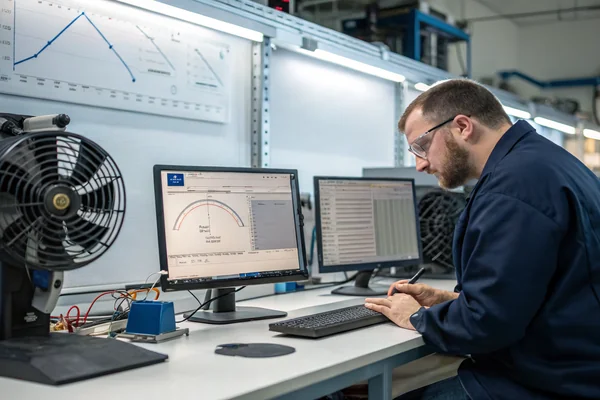
L10 life describes the operating time at which 10% of a fan population is expected to have failed, and L50 describes the time at which 50% have failed -- these percentile-based ratings can be more practically useful than MTBF for design decisions, since they directly answer "how long until a meaningful fraction of my fans start failing" rather than an abstract average.
Why Percentile Ratings Answer a More Directly Useful Design Question
A system designer specifying fans for a product with a target field lifespan is often more interested in knowing when a specific failure percentage is expected to occur (informing warranty periods, maintenance scheduling, or redundancy design) than in the abstract statistical average that MTBF represents. This is why L10 or similar percentile-based reliability data, when available, often provides more directly actionable information for product reliability planning than MTBF alone.
How Much Do Real Operating Conditions Actually Affect Fan Lifespan Compared to MTBF Test Conditions?
Understanding the gap between lab conditions and field conditions is critical for realistic lifespan expectations.
Real-world operating conditions -- higher ambient temperature, dust exposure, vibration, humidity, and duty cycle -- can significantly reduce actual fan lifespan compared to MTBF figures calculated under controlled, often more favorable test conditions, meaning field lifespan expectations should account for your specific application's environmental severity.
Why Temperature Alone Can Dramatically Shift Real-World Fan Lifespan
Bearing wear and lubricant degradation in fan motors generally accelerate at higher temperatures, meaning a fan operating continuously at a higher ambient temperature than its MTBF test condition can experience meaningfully reduced real-world lifespan compared to the published figure. This is why applying a derating factor based on your application's actual expected temperature, dust, and duty cycle conditions -- rather than taking the published MTBF at face value for your specific environment -- produces a more realistic lifespan expectation for design and warranty planning purposes.

How Should MTBF Actually Be Used in Practical System Design Decisions?
Bringing this understanding together into actionable guidance for engineers specifying fans.
Use MTBF (and L10/L50 where available) primarily as a comparative tool between candidate fans tested under similar conditions, apply a realistic derating for your application's actual environmental severity, and for reliability-critical systems, design in redundancy or monitoring rather than relying on MTBF figures alone to guarantee field performance.
Why Redundancy and Monitoring Matter More Than Chasing a Higher MTBF Number
Even a very high MTBF rating doesn't eliminate the statistical certainty that some fraction of deployed fans will fail before the average, which is why reliability-critical systems (servers, medical equipment, industrial control systems) typically pair fan selection with redundant fan configurations or health monitoring rather than depending on component-level MTBF alone to guarantee system uptime. This is why MTBF should inform fan selection and system architecture decisions together, rather than being treated as a standalone reliability guarantee sufficient on its own.

What Questions Should You Actually Ask a Fan Supplier About Their MTBF Figures?
Practical due diligence questions that clarify what a published MTBF figure actually represents.
Ask what test methodology and conditions (temperature, voltage, sample size) were used to derive the MTBF figure, whether L10 or other percentile data is available, and whether the figure reflects accelerated testing or a calculated estimate -- these questions reveal whether a published MTBF figure is genuinely comparable to your application's requirements.
Why Asking These Questions Upfront Prevents Costly Reliability Surprises Later
A supplier who can clearly explain their MTBF test methodology and provide supporting data (rather than just a headline number) is generally more trustworthy for reliability-critical sourcing decisions than one who cannot, since the ability to explain methodology suggests genuine testing rigor behind the figure. This is why building MTBF methodology questions into your fan supplier evaluation process, rather than accepting headline figures at face value, reduces the risk of field reliability surprises that a superficial spec comparison would miss.
Our DC fan lineup includes models with genuine tested reliability data, manufactured at our Dongguan facility under ISO 9001 certification. With over 20 years of production experience, we provide transparent MTBF test methodology and conditions to customers specifying fans for reliability-critical applications, rather than headline figures alone.
How Does MTBF Relate to a Fan's Warranty Period, and Should They Match?
Understanding the relationship (and the gap) between these two figures clarifies what each one actually protects you against.
A fan's warranty period is a commercial commitment, generally set well below its MTBF or L10 figures, while MTBF is a statistical reliability estimate -- the two aren't meant to match, and a large gap between a high MTBF and a much shorter warranty period isn't necessarily a red flag, since manufacturers typically set warranties conservatively regardless of statistical lifespan data.
Why a Short Warranty Relative to a High MTBF Doesn't Necessarily Signal Low Confidence
Warranty periods are commercial decisions influenced by business risk tolerance, typical product replacement cycles, and competitive positioning, not a direct translation of the statistical MTBF figure -- a manufacturer offering a 2-year warranty on a fan rated for 100,000-hour MTBF (over 11 years of continuous runtime) isn't necessarily expressing doubt about the reliability data, since warranty terms commonly stay conservative regardless of underlying reliability figures. This is why warranty length alone shouldn't be read as a direct signal of a manufacturer's confidence in their own MTBF data.
FAQ
Is a higher MTBF number always better when comparing two fans?
Generally yes when comparing fans tested under equivalent conditions, but a higher MTBF calculated under more favorable test conditions can be misleading compared to a lower MTBF calculated more conservatively -- understanding methodology matters as much as the number itself.
Does MTBF account for how the fan is actually mounted and used in a specific product?
No -- MTBF is calculated under standardized test conditions and doesn't account for product-specific factors like orientation, airflow obstruction, or duty cycle, which is why real-world lifespan can differ from the published figure.
Can MTBF be improved by simply running a fan at lower speed?
Often yes to some degree, since lower speed generally reduces bearing wear and heat generation, but this needs to be balanced against whether reduced speed still meets your required airflow, making it a design tradeoff rather than a free reliability improvement.
Is L10 always reported alongside MTBF by fan manufacturers?
Not universally -- L10 and similar percentile data are less commonly published than MTBF, though reputable manufacturers serving reliability-critical markets are increasingly likely to provide this data upon request even when not listed on a standard datasheet.
Does fan bearing type (ball vs sleeve vs fluid dynamic) significantly affect MTBF?
Yes -- bearing type is one of the most significant factors affecting a fan's reliability profile, with different bearing technologies offering different tradeoffs between cost, orientation sensitivity, and expected lifespan under various conditions.
Should I always choose the fan with the highest published MTBF for my design?
Not automatically -- the fan best suited to your actual operating conditions and duty cycle, verified through methodology transparency and ideally your own validation testing, is a more reliable selection criterion than defaulting to the highest headline MTBF number.
Using MTBF correctly comes down to understanding it as a statistical comparison tool, not a literal lifespan guarantee, and pairing it with realistic environmental derating for your application. At Herays, our Dongguan facility manufactures DC fans with genuine tested reliability data, backed by over 20 years of production experience under ISO 9001 certification. If you're specifying fans for a reliability-critical application, we're glad to provide transparent MTBF methodology to support your design decisions.

Liang
I've been working with DC fans for 30 years — long enough to have seen the industry evolve from basic sleeve bearing designs to today's high-efficiency, IP68-rated systems built for the harshest environments imaginable. I founded Herays because I believed manufacturers and engineers deserved a supplier who could talk technical from day one. Not just hand over a datasheet, but actually help you select the right fan for your thermal load, your enclosure, your certification requirements. Most of what I write here comes directly from problems I've solved on the factory floor or in customer applications — medical devices, laser equipment, industrial automation, you name it. If it involves moving air efficiently and reliably, I've probably spent time thinking about it. When I'm not obsessing over airflow curves, I'm usually helping a customer figure out why their cooling system isn't performing the way their simulation said it would.
View all posts by Liang