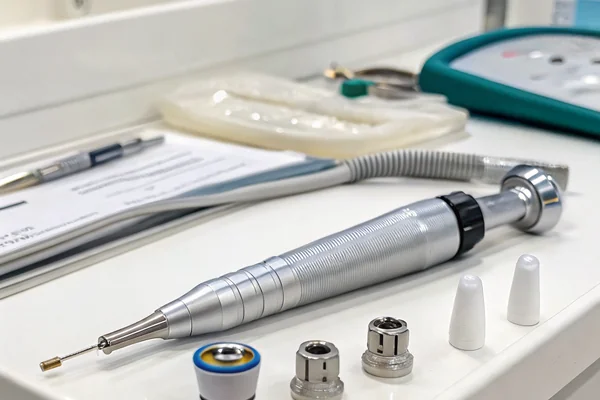
A dental drill spinning at hundreds of thousands of RPM inches from a patient's mouth generates real heat in a genuinely tiny space -- and the cooling and air delivery systems behind that handpiece matter more than most patients ever realize.
Dental equipment relies on small DC blowers for two distinct jobs -- cooling high-speed handpiece motors and electronics, and delivering controlled air for suction and drying -- both requiring ultra-quiet operation given the close patient proximity, along with material compatibility for sterilization and cleaning procedures common in clinical settings.
- Dental handpieces and drills generate meaningful heat at very high rotational speeds, requiring active cooling in a genuinely compact space.
- Air delivery blowers in dental equipment support both suction (removing fluid and debris) and drying functions during procedures.
- Ultra-quiet operation is a critical requirement given how close dental equipment operates to an awake patient's ears.
- Materials and components used in dental equipment need to tolerate sterilization procedures and chemical cleaning agents common in clinical settings.
- Sourcing blowers for dental applications benefits from suppliers offering consistent quality and documentation to support the device manufacturer's own regulatory requirements.
Understanding the specific thermal and airflow challenges in dental equipment clarifies why blower selection for this category deserves particular care.
Table of Contents
Why Do Dental Drills and Handpieces Actually Generate So Much Heat?
Understanding the heat source explains why active cooling is necessary despite the handpiece's small size.
Dental handpieces spin at extremely high rotational speeds -- often several hundred thousand RPM for high-speed drills -- and that speed, combined with friction at the cutting point and motor operation, generates meaningful heat concentrated in a device small enough to be held comfortably and maneuvered precisely inside a patient's mouth.
Why High RPM and Compact Size Create a Genuine Thermal Challenge
The physical relationship between rotational speed and heat generation means a handpiece spinning at very high RPM produces proportionally more heat than a slower-spinning tool, and that heat has essentially nowhere to dissipate passively given the handpiece's small size and the fact that it's held directly against or near a patient. This is why active air cooling, not passive heat dissipation alone, is necessary to keep handpiece motors and electronics within safe operating temperature during extended procedures.
How Do Blowers Actually Support Suction and Air Delivery During Dental Procedures?
Understanding the second major blower application in dental settings, separate from motor cooling.
Beyond handpiece cooling, dental equipment uses blowers to generate suction for removing saliva, water, and debris from a patient's mouth during procedures, and to deliver controlled air for drying tooth surfaces before certain treatments like fillings or sealants -- both functions depend on consistent, controllable airflow.
Why Suction and Drying Both Require Precise, Not Just Powerful, Airflow
Dental suction needs to reliably clear fluid and debris without being so aggressive it causes patient discomfort, while drying air needs to be controlled and directed precisely enough to dry a specific tooth surface without excessive discomfort from a forceful air stream -- both applications prioritize controllability and consistency over raw airflow power. This is why blower selection for dental suction and air delivery applications weighs precise, repeatable performance similarly to how medical suction devices in general prioritize controlled output over maximum capability.

Why Is Ultra-Quiet Operation Such a Critical Requirement for Dental Equipment Specifically?
Patient proximity and dental-specific anxiety make noise an unusually important consideration in this category.
Dental equipment operates in extremely close proximity to an often-anxious, fully awake patient, making blower and motor noise a significant factor in patient comfort and overall experience -- excessive noise doesn't just annoy, it can measurably increase patient anxiety during dental visits, a well-documented phenomenon in dental care.
Why Dental-Specific Anxiety Makes Noise a Clinical Comfort Issue, Not Just a Preference
Dental anxiety is a well-recognized phenomenon affecting a significant portion of patients, and equipment noise -- particularly high-pitched drill and suction sounds -- is frequently cited as a specific trigger contributing to that anxiety, making genuinely quiet equipment operation a meaningful factor in patient comfort and treatment compliance, not merely a nice-to-have refinement. This is why dental equipment manufacturers invest specifically in low-noise blower and motor selection beyond what pure functional performance would require.
How Does Sterilization Compatibility Actually Affect Blower and Component Selection?
Clinical hygiene requirements introduce material and design considerations beyond typical electronics applications.
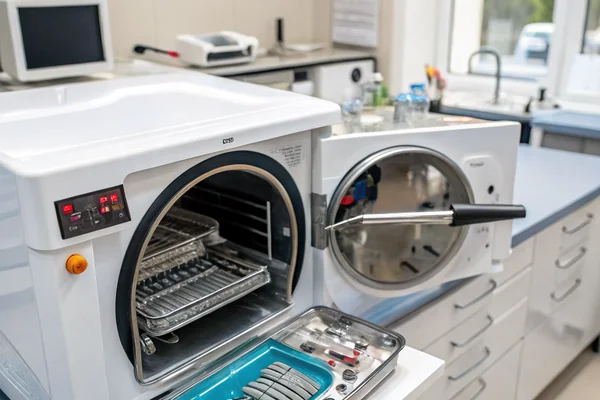
Components used in or near dental equipment that undergoes sterilization or chemical disinfection need materials and construction that tolerate these processes without degrading -- this affects housing materials, seals, and sometimes internal component selection for blowers integrated closely with parts of the equipment that require regular sterilization.
Why Sterilization-Adjacent Components Need Different Material Considerations Than Standard Electronics
While the blower motor itself is often positioned away from direct sterilization exposure, components in close proximity to parts requiring sterilization or frequent chemical cleaning need housing materials and seals resistant to those specific chemical agents and, in some cases, heat or steam exposure from autoclave processes used on other parts of the equipment. This is why dental equipment manufacturers specify component materials with sterilization-adjacent environments in mind, rather than assuming standard electronics-grade materials are automatically suitable.
What Quality and Consistency Standards Actually Matter for Dental Equipment Component Sourcing?
Translating the reliability and regulatory context into practical supplier evaluation criteria.
Dental equipment manufacturers, like other medical-adjacent device makers, need blower suppliers with consistent manufacturing quality, documented quality management systems, and batch traceability to support the device manufacturer's own regulatory and quality certification requirements -- specification compliance alone doesn't substitute for demonstrated manufacturing consistency.
Why Consistency Matters as Much as Initial Specification Compliance
A blower that meets specification in initial testing but shows unit-to-unit variation in production can create downstream quality and compliance headaches for a dental equipment manufacturer validating their device against those components, making supplier manufacturing consistency and quality documentation a genuinely important evaluation criterion beyond the datasheet specifications themselves. This is why dental and medical-adjacent equipment manufacturers typically weight supplier quality system maturity heavily during component sourcing decisions.
What Should Dental Equipment Designers Actually Prioritize When Sourcing Blowers?
Bringing these application-specific requirements together into practical sourcing guidance.
Prioritize blowers with validated ultra-quiet operation at actual clinical operating speeds, precise and controllable airflow output, sterilization-adjacent material compatibility where relevant, and supplier quality documentation supporting your own device certification process -- these combined requirements matter more here than general blower specifications alone.
Why Dental Applications Reward This Specific Combination of Priorities
No single specification captures what makes a blower genuinely suitable for dental equipment -- it's the combination of acoustic performance, controllability, material compatibility, and manufacturing consistency together that determines real-world suitability, meaning evaluation against actual clinical conditions and requirements produces better sourcing outcomes than comparing any single spec in isolation. This is why close collaboration between dental equipment engineers and blower suppliers, with genuine testing against clinical noise and performance targets, produces better results than a spec-sheet-only sourcing process.
Our DC blower fan line includes compact, low-noise models suited to space-constrained medical and dental-adjacent applications, manufactured at our Dongguan facility under ISO 9001 certification. With over 20 years of production experience, we support dental and clinical equipment manufacturers with the quality documentation and manufacturing consistency needed for their own device certification process.
Does Blower Size and Placement Actually Constrain Dental Equipment Design as Much as Handheld Electronics Do?
Physical space constraints in dental equipment share some similarities with other compact device categories.
Dental handpieces and connected equipment face genuine space constraints similar to other compact, handheld medical and electronics devices -- blower placement needs to fit within an already tightly packed housing alongside motors, sensors, and tubing, without adding bulk that would make the equipment harder to maneuver during precise clinical work.
Why Maneuverability Requirements Add a Layer of Constraint Beyond Simple Space Fitting
Unlike a stationary piece of equipment where internal space is the only real constraint, dental handpieces need to remain comfortably maneuverable in a dentist's hand during precise procedures, meaning even a blower that technically fits within the housing can be a poor choice if its placement shifts the tool's weight distribution or balance in a way that affects clinical precision. This is why dental equipment designers evaluate blower placement against ergonomic handling characteristics, not just raw physical fit within the housing.
FAQ
Do dental handpieces use water cooling in addition to air cooling?
Yes, many dental handpieces use a combination of water spray and air cooling at the cutting point specifically, while separate blower-driven airflow handles motor and electronics cooling within the handpiece and connected equipment.
How loud is too loud for dental equipment blowers?
There's no single universal threshold, but manufacturers generally aim for the quietest operation achievable within performance constraints, given documented links between equipment noise and patient anxiety in dental care settings.
Are dental equipment blowers typically custom-designed or off-the-shelf components?
This varies by manufacturer and application -- some use adapted standard blower models meeting their specific noise and performance requirements, while others work with suppliers on more tailored specifications for particular equipment designs.
Does dental equipment blower sourcing require different certifications than general medical devices?
Requirements vary by region and specific equipment classification, but dental equipment manufacturers generally navigate similar regulatory frameworks to other medical devices, relying on component suppliers for quality and documentation support rather than independent component-level medical certification.
Can the same blower be used for both handpiece cooling and suction functions?
Not typically as a single shared component, since these are usually separate airflow paths with different performance requirements, though both may be sourced from the same supplier or product family for consistency.
How often do dental equipment blowers need maintenance or replacement?
This depends on usage frequency and specific equipment design, but dental practices typically follow manufacturer-specified maintenance schedules that account for the equipment's clinical duty cycle and sterilization exposure.
Sourcing blowers for dental equipment comes down to balancing ultra-quiet operation, precise airflow control, and manufacturing consistency for this closely regulated, patient-proximate application. At Herays, our Dongguan facility manufactures compact, low-noise DC blower fans under ISO 9001 certification, backed by over 20 years of production experience. If you're sourcing components for dental or clinical equipment, we're glad to support your specific acoustic and quality documentation requirements.

Liang
I've been working with DC fans for 30 years — long enough to have seen the industry evolve from basic sleeve bearing designs to today's high-efficiency, IP68-rated systems built for the harshest environments imaginable. I founded Herays because I believed manufacturers and engineers deserved a supplier who could talk technical from day one. Not just hand over a datasheet, but actually help you select the right fan for your thermal load, your enclosure, your certification requirements. Most of what I write here comes directly from problems I've solved on the factory floor or in customer applications — medical devices, laser equipment, industrial automation, you name it. If it involves moving air efficiently and reliably, I've probably spent time thinking about it. When I'm not obsessing over airflow curves, I'm usually helping a customer figure out why their cooling system isn't performing the way their simulation said it would.
View all posts by Liang