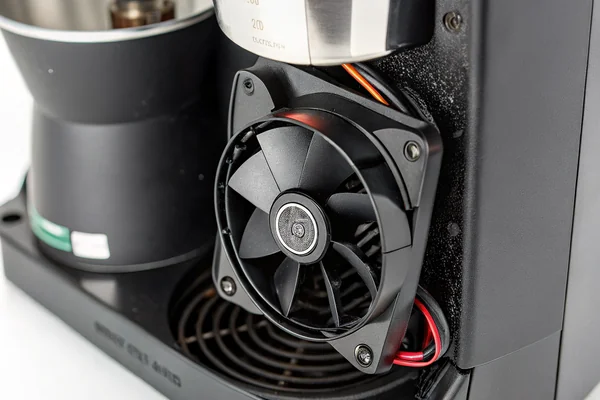
A coffee machine that hisses, drips condensation internally, or shuts down mid-brew on hot days often traces its problem back to a component nobody thinks about until it fails -- the small fan quietly managing heat and steam inside the housing.
Coffee machines and similar kitchen appliances rely on small DC fans to manage heat from heating elements and steam/humidity from brewing, requiring components that tolerate genuine moisture exposure, operate quietly in close kitchen proximity, remain energy-efficient during long always-on standby periods, and survive years of frequent daily use.
- Coffee brewers generate both heat (from heating elements) and steam/humidity, requiring fans that manage both simultaneously.
- Steam and humidity resistance is a genuine, specific requirement distinct from general electronics moisture protection.
- Low noise matters meaningfully in kitchen environments where appliances often run during quiet morning routines.
- Many kitchen appliances remain powered in standby for extended periods, making fan energy efficiency a genuine cost factor over the appliance's life.
- High-use appliances (multiple brew cycles daily) need fans validated for genuinely frequent cycling, not just occasional operation.
Understanding why coffee machines and similar appliances create this specific combination of thermal and moisture challenges clarifies what actually matters in fan selection for this category.
Table of Contents
Why Do Coffee Brewers Actually Generate Enough Heat to Need Active Cooling?
Understanding the heat sources inside a coffee machine clarifies why active cooling becomes necessary in a device that might seem simple on the outside.
Coffee brewers use heating elements to heat water to brewing temperature and, in many designs, to maintain a warming plate for the finished pot, and this heat generation, combined with an often compact housing designed for countertop convenience, creates a genuine need for active airflow to prevent heat buildup around control electronics and other heat-sensitive internal components.
Why Compact Countertop Design Works Against Passive Heat Management
A coffee maker's compact countertop footprint, valued for kitchen space efficiency, leaves limited internal volume for passive heat dissipation the way a larger appliance might accommodate, meaning the heating element's heat and the compact enclosure's limited natural airflow combine to create a genuine active cooling requirement despite the appliance's modest overall size and power draw compared to larger kitchen equipment. This is why even relatively low-power coffee machines often include a small fan specifically to manage this compact-enclosure heat buildup.
Why Does Steam and Humidity Resistance Matter So Specifically for This Application?
Understanding why moisture protection needs differ from general electronics humidity tolerance.
Coffee brewing generates genuine steam and locally high humidity inside the appliance housing, distinct from general ambient humidity exposure -- fans operating in this environment need specific resistance to condensation and moisture exposure that's more concentrated and direct than typical indoor electronics humidity tolerance addresses.
Why Concentrated Steam Exposure Differs From General Humidity Tolerance
General indoor electronics are typically designed to tolerate ambient humidity levels that fluctuate gradually and rarely reach the concentrated, direct steam exposure a coffee brewer's internal fan can experience during active brewing, meaning a fan validated only against general ambient humidity specifications may not hold up reliably against this more concentrated, repeated steam exposure over the appliance's service life. This is why coffee appliance fan selection benefits from specifically confirming steam and condensation resistance, not just general humidity tolerance ratings that may not reflect this application's actual moisture exposure pattern.
How Much Does Kitchen Noise Sensitivity Actually Matter for Coffee Machine Fan Selection?
Understanding why this seemingly minor appliance category has genuine noise expectations.
Coffee machines are frequently used during quiet early morning routines, often before other household activity creates ambient noise, making fan noise a meaningfully noticeable factor for many users even though the appliance's overall power and airflow requirements are modest compared to larger kitchen equipment.
Why Morning Usage Timing Elevates Perceived Noise Sensitivity for This Specific Appliance
A coffee maker's typical use case -- often the first appliance running in an otherwise quiet house during early morning hours -- means its noise is heard against a genuinely quiet ambient baseline, unlike appliances more commonly used during busier daytime periods with more background noise already present. This is why coffee machine manufacturers frequently prioritize quiet fan operation specifically, despite the appliance's modest overall airflow requirements compared to categories where noise might otherwise be a lower priority.
Why Does Standby Energy Efficiency Actually Matter for Kitchen Appliance Fans?
Understanding the extended power-on duty cycle that makes efficiency a genuine cost factor for this category.
Many coffee machines remain plugged in and at least partially powered for extended periods -- maintaining a warming plate, keeping a display active, or simply remaining ready for quick use -- meaning fan energy consumption during this extended standby or low-activity period accumulates into a genuine cost factor over the appliance's multi-year service life, beyond just the energy used during active brewing.
Why Standby Power Accumulates Into Meaningful Cost Despite Seeming Trivial Per-Instance
A fan drawing even a modest amount of power during extended standby periods, multiplied across the many hours per day and years of service a kitchen appliance typically sees, can accumulate into a more meaningful cumulative energy cost than the brief, higher-power active brewing periods might suggest at first glance. This is why energy efficiency during standby and low-activity operation, not just peak brewing performance, deserves genuine consideration in coffee appliance fan selection.

How Does Frequent Daily Use Actually Affect Fan Reliability Requirements for This Category?
Understanding why cycling frequency, not just total runtime, matters for kitchen appliance fan selection.
Coffee machines used multiple times daily accumulate many more start-stop cycles over their service life than appliances used less frequently, and start-stop cycling can place different stress on a fan motor and bearing than continuous operation -- making cycle-life validation, not just total runtime rating, relevant for this frequently-used appliance category.
Why Cycling Stress Differs From Continuous-Duty Stress in Ways That Matter for This Application
A fan motor experiences distinct mechanical and electrical stress during each start-up compared to steady continuous operation, meaning a fan validated primarily for continuous-duty runtime hours may not have equivalent validation for the high cycle-count, frequent start-stop pattern that a multiple-times-daily coffee machine actually creates over its service life. This is why coffee and similar frequently-used kitchen appliance fan selection benefits from checking cycle-life data specifically, not just total operating hour ratings that may not reflect this application's actual usage pattern.

What Should Kitchen Appliance Manufacturers Actually Prioritize When Sourcing Fans for Coffee Machines?
Bringing these combined requirements together into practical sourcing guidance.
Prioritize fans with validated steam and condensation resistance, genuinely quiet operation at the appliance's actual operating speed, efficient standby power consumption, and cycle-life data reflecting frequent daily start-stop use -- these combined factors matter more for this application than general small-fan specifications focused primarily on airflow alone.
Why This Combination Reflects Coffee Appliance Cooling's Genuinely Distinct Requirements
Coffee machine cooling sits at the intersection of concentrated steam exposure, meaningful noise sensitivity despite modest power requirements, extended standby duty cycles, and frequent daily cycling -- evaluating candidate fans against all these factors together, rather than any single specification in isolation, produces components genuinely suited to this common but distinctly demanding appliance category.
Our DC fan lineup includes compact, low-noise models suited to humidity-exposed kitchen appliance applications, manufactured at our Dongguan facility under ISO 9001 certification. With over 20 years of production experience, we help kitchen appliance manufacturers match fan moisture resistance, noise, and cycle-life specifications to their specific product's actual usage pattern.
Does Fan Placement Within a Coffee Machine's Compact Housing Actually Affect Long-Term Reliability?
Where the fan sits relative to heat and moisture sources within the tightly packed housing has real consequences.
Fan placement too close to the heating element or steam path can accelerate thermal and moisture stress on the fan itself, while placement optimized to draw cooler, drier air across sensitive components extends both the fan's own service life and the reliability of the electronics it's protecting -- making placement a genuine design decision, not just a matter of wherever space happens to be available.
Why Placement Decisions Involve a Genuine Tradeoff Between Component Protection and Fan Longevity
A fan positioned to directly and effectively manage the heating element's heat is often, by necessity, closer to the harshest heat and moisture conditions in the appliance, creating a real design tradeoff between optimal cooling effectiveness for surrounding electronics and the fan's own long-term exposure to the conditions that most stress its reliability. This is why coffee appliance thermal design benefits from deliberately evaluating fan placement options against both cooling effectiveness and the fan's own service life, rather than defaulting to whatever position is most convenient within the compact housing layout.
FAQ
Do all coffee machines actually include an internal cooling fan?
Not universally -- simpler, lower-power designs sometimes rely on passive heat dissipation, while machines with more powerful heating elements, espresso pumps, or compact high-density electronics more commonly include active cooling fans.
Can coffee machine fans fail from steam exposure even if they're rated for general humidity?
Yes, this can happen if the fan's humidity rating doesn't specifically account for the concentrated, direct steam exposure pattern coffee brewing creates, which is why steam-specific validation matters more than general humidity ratings for this application.
Does fan noise in a coffee machine actually affect purchasing decisions in this category?
Yes, noise level is frequently mentioned in coffee machine reviews and comparisons, reflecting genuine consumer sensitivity to this factor despite the appliance's modest overall size and power requirements.
How many brew cycles should a well-designed coffee machine fan reliably support?
This varies by specific product design and target market, but manufacturers targeting frequent daily use (multiple cycles per day over several years of service) should validate fan cycle-life against that realistic usage projection.
Do espresso machines have different fan requirements than drip coffee makers?
Often yes -- espresso machines frequently involve higher pressure pumps and sometimes higher heat concentration, which can create different (often more demanding) cooling requirements than simpler drip coffee maker designs.
Is fan-based cooling relevant to other kitchen appliances beyond coffee machines?
Yes, similar heat and moisture management considerations apply to various kitchen appliances with heating elements and enclosed compact housings, though the specific severity and pattern of heat and moisture exposure varies by appliance type.
Cooling coffee machines and similar kitchen appliances reliably comes down to balancing steam resistance, quiet operation, standby efficiency, and cycle-life durability together. At Herays, our Dongguan facility manufactures compact, low-noise DC fans suited to humidity-exposed kitchen appliance applications, backed by over 20 years of production experience under ISO 9001 certification. If you're sourcing cooling components for a kitchen appliance, we're glad to help match specifications to your product's actual usage pattern.

Liang
I've been working with DC fans for 30 years — long enough to have seen the industry evolve from basic sleeve bearing designs to today's high-efficiency, IP68-rated systems built for the harshest environments imaginable. I founded Herays because I believed manufacturers and engineers deserved a supplier who could talk technical from day one. Not just hand over a datasheet, but actually help you select the right fan for your thermal load, your enclosure, your certification requirements. Most of what I write here comes directly from problems I've solved on the factory floor or in customer applications — medical devices, laser equipment, industrial automation, you name it. If it involves moving air efficiently and reliably, I've probably spent time thinking about it. When I'm not obsessing over airflow curves, I'm usually helping a customer figure out why their cooling system isn't performing the way their simulation said it would.
View all posts by Liang