
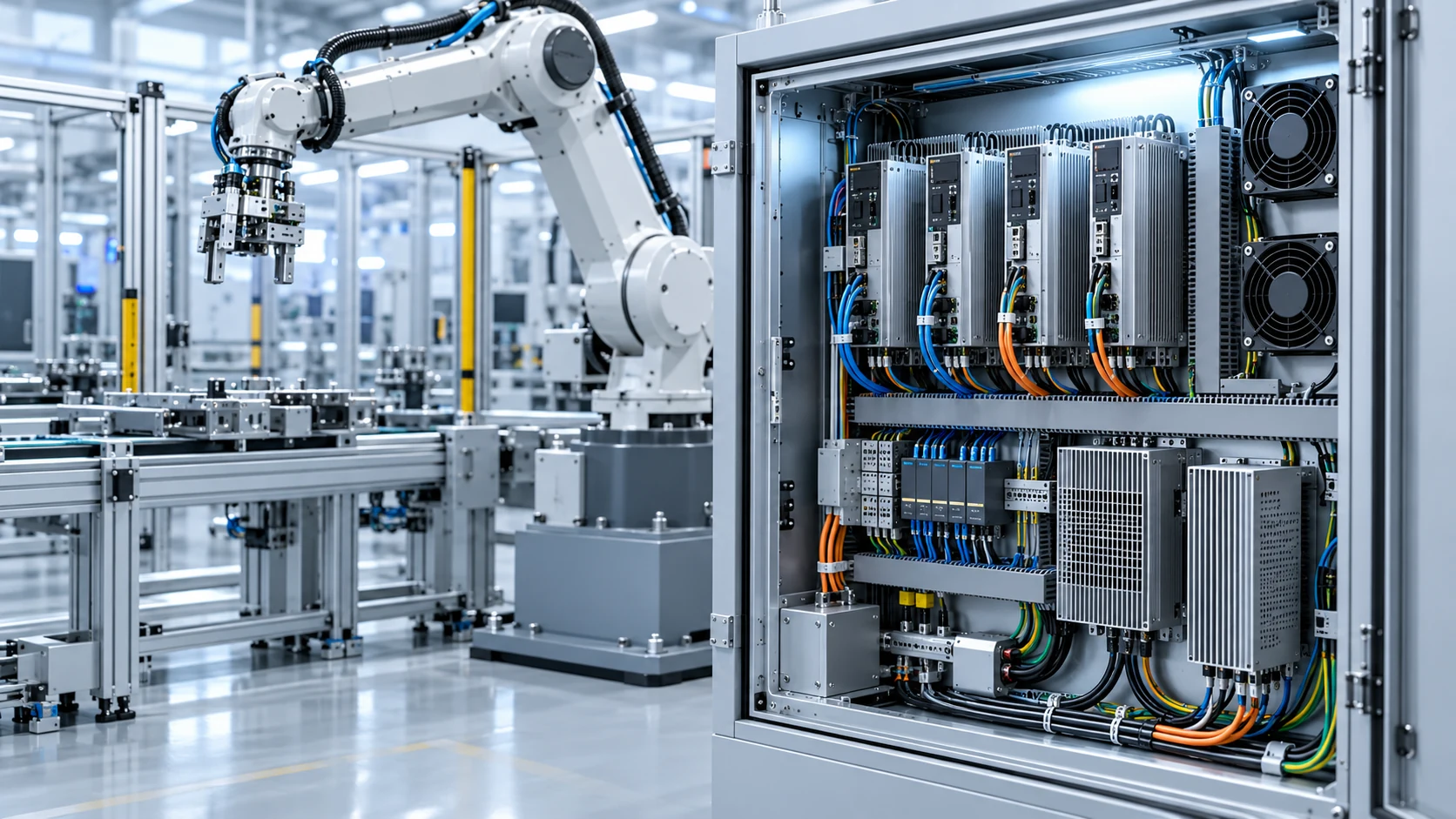
Drive electronics cooling
Airflow for servo drives, controllers, and compact automation modules.
Airflow for servo drives, robot controllers, and compact automation electronics
Understanding the specific thermal and environmental demands of Automation Equipment and Robot Controller Cooling environments is the foundation of every Herays solution.
Industrial automation equipment — servo drives, robot controllers, motion control hubs, vision system processors, and collaborative robot (cobot) joint electronics — combines high power density with demanding mechanical and environmental requirements. A six-axis robot controller may pack 6–12 servo drive axes into a cabinet that must operate reliably for 15+ years on a production line with minimal downtime. The cooling system must deliver consistent thermal performance across the full duty cycle of the production process, including peak loads during high-acceleration move sequences.
Cooling requirements specific to automation equipment and robot controller applications:
Herays DC axial fans in the HR1225 and HR1238 series cover the cooling requirements for most servo drive cabinets and robot controller enclosures, with the 24V variants matching the standard automation control bus voltage directly.
Tachometer output (−SF models) enables the machine controller or safety PLC to monitor fan health as part of the predictive maintenance program, logging fan speed trend data to detect bearing degradation before it causes a thermal fault on the production line.
How does robot arm vibration affect fan life? Vibration accelerates bearing wear and can cause resonance in fan blades, producing acoustic noise and accelerating fatigue. Ball bearings tolerate vibration significantly better than sleeve bearings. For fans mounted on the robot itself (rather than in the floor-mounted controller), specify vibration test data and consider adhesive-damped motor mounts to isolate the fan from structural vibration.
Should I use a dedicated fan for each servo drive axis or a shared plenum approach? Shared plenum cooling (one fan array serving multiple drives) is more space-efficient and allows N+1 fan redundancy. Individual per-drive fans provide independent thermal management but increase the total number of moving parts proportionally. For high-axis-count controllers, a shared plenum with redundant fans is generally the more reliable architecture.
What is the correct approach when a servo drive generates peak heat during acceleration but lower heat at constant speed? Use PWM fan speed control with a thermal sensor on the IGBT heatsink as the control input. This allows the fan to ramp up during high-RMS acceleration moves and coast at lower speed during constant-velocity segments, reducing noise and bearing wear without compromising thermal safety margins during the critical high-power phases.
Contact Herays for fan selection support for automation cabinet and robot controller cooling, including compact format fans for space-constrained controller designs and tachometer integration documentation.
Precision-engineered DC fan technologies tailored to the performance and reliability requirements of Automation Equipment and Robot Controller Cooling applications.
Airflow for servo drives, controllers, and compact automation modules.
Fan options for constrained industrial equipment layouts.
Repeatable specifications for OEM equipment production.
Herays DC fan and blower products engineered to meet the performance requirements of Automation Equipment and Robot Controller Cooling systems.
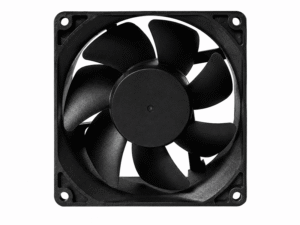 DC Axial Fan
DC Axial Fan
DC Axial Fan
DC Axial Fan
DC Axial Fan
DC Axial Fan
DC Axial Fan
DC Axial Fan
DC Axial Fan
DC Axial Fan
DC Axial Fan
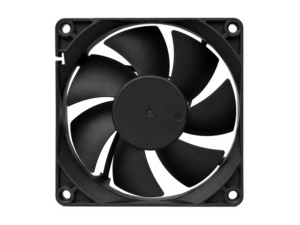 DC Axial Fan
DC Axial Fan
DC Axial Fan
Our application engineers are available to help you select the right product for your system requirements.