
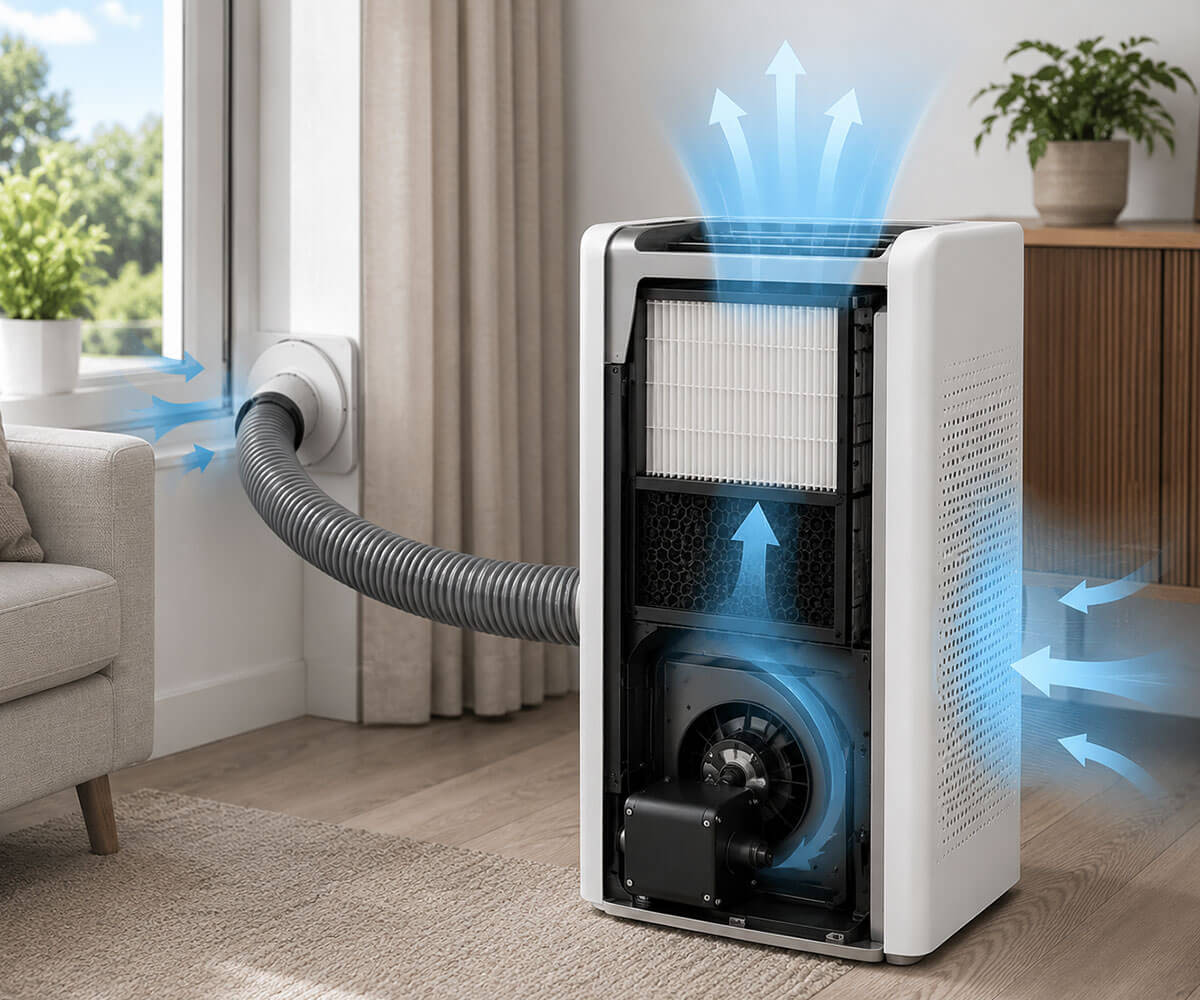
Filter airflow
Air movement options for HEPA, carbon, and compact filter paths.
Airflow support for filtration, fresh air exchange, and compact ventilation
Understanding the specific thermal and environmental demands of Air Purifier and Fresh Air Ventilation environments is the foundation of every Herays solution.
Air purifiers, HEPA filtration systems, and residential fresh air ventilation units must move substantial volumes of air continuously through dense filter media while producing noise levels acceptable in bedrooms, nurseries, and living spaces — and they must do this for 8,760 hours per year, year after year, with no maintenance between filter changes. The fan in an air purifier is not cooling a component; it is the core functional element of the product. Its performance, noise, and reliability directly determine whether the product delivers on its health claims and whether the customer returns it.
Herays DC axial fans and centrifugal blowers are used in residential and commercial air purifiers and fresh air ventilation systems, available in configurations suited to both filter-box (axial fan) and duct (centrifugal blower) air handling designs.
For larger room-size air purifiers and fresh air ventilation units requiring higher CADR (above 300 m³/h), centrifugal blowers with radial impellers are available from Herays — contact for specifications.
How do I calculate the CADR (Clean Air Delivery Rate) my air purifier fan achieves through a HEPA filter? Measure the actual airflow through your filter at its installed back-pressure using a calibrated anemometer or flow hood at the outlet. Multiply by filter capture efficiency (H13 HEPA = 99.95% at 0.3 µm) to get effective clean air delivery rate. Fan open-frame CFM ratings are not useful for CADR calculation — always measure through the filter in the actual enclosure.
Why does air purifier noise increase over the filter’s life? As the filter loads with particulates, its flow restriction increases. To maintain airflow (and CADR), the controller increases fan speed — which directly increases noise. Well-designed air purifiers incorporate PM2.5 feedback that varies both speed and noise throughout the filter life. Users who notice increasing noise over time should check filter replacement schedule first before assuming fan degradation.
What is the optimal fan position in an air purifier — before the filter (pulling) or after the filter (pushing)? Pulling air through the filter (fan after filter) keeps the fan motor in clean filtered air, prevents contamination of the motor, and reduces fan corrosion from corrosive particles captured by the filter. This is the standard design for HEPA air purifiers. Pushing (fan before filter) is sometimes used in ventilation units where the fan handles unfiltered air and the filter is downstream — this is acceptable but requires the fan to be specified for contaminated airstreams.
Contact Herays for air purifier and ventilation fan specifications, CADR test data, and OEM supply programs for air quality product manufacturers.
Precision-engineered DC fan technologies tailored to the performance and reliability requirements of Air Purifier and Fresh Air Ventilation applications.
Air movement options for HEPA, carbon, and compact filter paths.
Fan selections for user-facing indoor ventilation equipment.
Axial fan and blower choices for small fresh air modules.
Herays DC fan and blower products engineered to meet the performance requirements of Air Purifier and Fresh Air Ventilation systems.
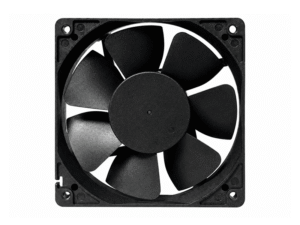 DC Axial Fan
DC Axial Fan
DC Axial Fan
DC Axial Fan
DC Axial Fan
DC Axial Fan
DC Axial Fan
DC Axial Fan
DC Axial Fan
DC Axial Fan
DC Axial Fan
Technical and application-specific questions about Herays fans for Air Purifier and Fresh Air Ventilation environments.
Our application engineers are available to help you select the right product for your system requirements.