A HEPA filter gets all the marketing attention on an air purifier's box, but the fan pushing air through that filter is what actually determines whether the unit delivers its rated clean-air output or quietly underperforms in your living room.
Air purifiers depend on DC fans that can maintain adequate airflow against a HEPA filter's real resistance, stay quiet enough for bedroom and living room use, meet appliance energy efficiency standards, and scale appropriately across different purifier sizes -- getting any of these wrong undermines the filter's actual air-cleaning performance.
- A HEPA filter creates meaningful airflow resistance, making static pressure capability more important than raw free-air CFM for air purifier fans.
- Air purifiers are frequently used in bedrooms and living rooms, making low noise a genuine purchasing factor, not a secondary consideration.
- Appliance energy efficiency standards apply to air purifiers in many markets, affecting fan motor selection.
- Fan sizing needs to scale with the purifier's rated room coverage area and filter surface area.
- A purifier's advertised CADR (Clean Air Delivery Rate) is only achievable if the fan can actually deliver adequate airflow against the installed filter's resistance.
Understanding how fan performance connects directly to an air purifier's actual cleaning effectiveness clarifies why fan selection deserves real attention in this product category.
Table of Contents
Why Does a HEPA Filter Change What Kind of Fan an Air Purifier Actually Needs?
Understanding the airflow resistance a HEPA filter introduces explains why purifier fan selection differs from general ventilation fan selection.
A HEPA filter's dense fiber structure, needed to capture fine particles, creates meaningful airflow resistance that a fan optimized purely for open-air CFM handles poorly -- fans optimized for static pressure maintain more of their airflow capability when pushing air through this resistance, directly determining how much filtered air the purifier actually delivers.
Why a High-CFM-Rated Fan Can Still Underperform Behind a HEPA Filter
A fan's headline CFM rating measured in open air can be substantially higher than what that same fan delivers once air has to pass through a dense HEPA media, meaning a purifier built around a fan chosen for impressive free-air specs rather than static pressure performance can quietly underperform its rated clean-air output. This is why air purifier fan selection should prioritize documented performance against realistic filter resistance, not open-air CFM figures alone.
How Much Does Airflow Actually Matter Compared to Static Pressure for HEPA Applications?
This is the central technical tradeoff in air purifier fan selection.
Both airflow volume and static pressure matter for air purifiers, but the balance shifts toward static pressure as filter density increases -- a purifier fan needs enough raw airflow to process a meaningful room volume per hour, while maintaining that airflow specifically against the resistance the HEPA filter and any pre-filter or carbon layer adds.
Why Multi-Stage Filtration Compounds the Static Pressure Requirement
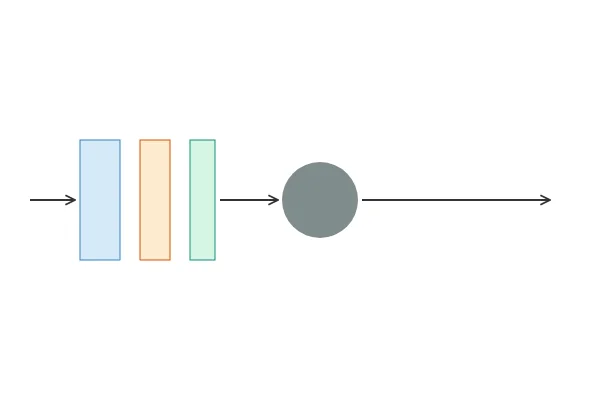
Many air purifiers stack multiple filtration stages -- a pre-filter, HEPA filter, and often an activated carbon layer -- and each additional stage adds its own airflow resistance, meaning the fan needs to maintain adequate airflow against the combined resistance of the entire filter stack, not just a single HEPA layer considered in isolation. This is why purifiers with more filtration stages generally require correspondingly more capable static-pressure performance from their fan to hit the same clean-air output as a simpler single-stage design.
Why Is Low Noise Such a Central Requirement for Air Purifier Fans Specifically?
Understanding why this application treats noise as a primary spec, not an afterthought.
Air purifiers are frequently run continuously in bedrooms overnight or in living rooms during quiet activities, making fan noise a genuinely central purchasing factor -- a purifier that delivers excellent clean-air performance but produces noticeable noise at that performance level is a meaningfully worse product for many buyers than a quieter unit with modestly lower output.
Why Purifier Noise Expectations Differ From General Appliance Noise Tolerance
Unlike appliances used briefly or in already-active environments, air purifiers are often chosen specifically for bedroom overnight use, where even modest fan noise becomes noticeable against a quiet nighttime baseline and can directly affect sleep quality -- this elevates noise from a nice-to-have into a core product requirement. This is why air purifier manufacturers frequently publish dBA ratings at multiple speed settings specifically to help buyers judge real-world bedroom suitability, not just headline maximum performance.
Do Energy Efficiency Standards Actually Constrain Fan Selection for Air Purifiers?
Understanding the regulatory dimension that shapes fan motor choice in this appliance category.
Air purifiers sold in many markets are subject to appliance energy efficiency standards and labeling requirements, which influence fan motor selection toward more efficient designs (commonly brushless DC motors) capable of delivering required airflow within an energy consumption target, rather than purely maximizing airflow output.
Why Efficiency Standards Push the Category Toward BLDC Motors Specifically
Brushless DC motors generally offer meaningfully better efficiency than brushed alternatives at comparable airflow output, making them the practical default for air purifier manufacturers needing to meet energy efficiency labeling requirements while still delivering adequate CADR performance for continuous, often 24/7, operation. This is why efficiency regulations, not just cost or performance alone, have pushed air purifier fan selection toward BLDC designs across most of the category.
How Should Fan Sizing Actually Scale Across Different Air Purifier Product Sizes?
Understanding the relationship between purifier coverage area and fan requirements.
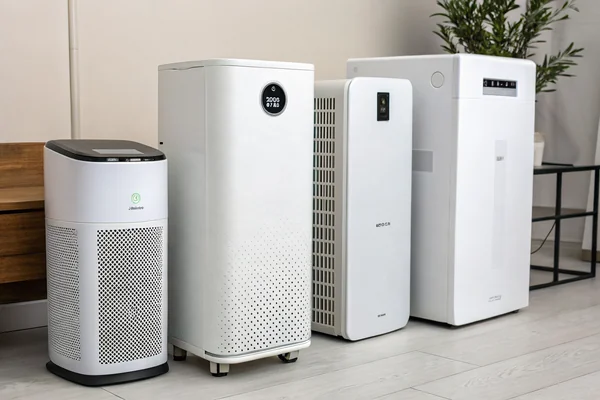
Fan size and airflow capacity need to scale with a purifier's rated room coverage area and corresponding filter surface area -- a compact desktop purifier and a whole-room unit rated for a much larger area require correspondingly different fan capabilities, not the same fan scaled only by enclosure size.
Why Simply Scaling Up Enclosure Size Without Scaling Fan Capacity Undermines Larger Units
A larger purifier housing with a bigger filter doesn't automatically deliver proportionally more clean air unless the fan powering it is also sized to move adequate airflow through that larger filter surface within a reasonable timeframe, meaning fan capacity needs to scale deliberately with the product's target room size and filter area, not simply follow the enclosure's physical dimensions. This is why a manufacturer's product line spanning multiple room-size ratings typically uses genuinely different fan specifications across the range, not a single fan model scaled by housing size alone.
What Should Air Purifier Manufacturers Actually Prioritize When Sourcing Fans?
Bringing these combined requirements together into practical sourcing guidance.
Prioritize fans with validated static pressure performance against your specific filter stack's resistance, genuinely quiet operation at the speeds your product actually uses, BLDC motor efficiency suited to energy labeling requirements, and capacity appropriately matched to your product's rated coverage area -- these combined factors matter more than any single spec considered alone.
Why This Combination Directly Determines Whether a Purifier Delivers Its Advertised Performance
An air purifier's entire value proposition rests on actually delivering its advertised CADR quietly and efficiently, meaning fan selection isn't a minor component decision but a factor that directly determines whether the finished product lives up to its own marketing claims -- evaluating candidate fans against all these factors together, validated against the actual filter stack, produces a purifier that performs as advertised rather than falling short in real-world use.
Our DC axial fan lineup includes static-pressure-optimized, low-noise models suited to HEPA-filtered air purifier applications, manufactured at our Dongguan facility under ISO 9001 certification. With over 20 years of production experience, we help air purifier manufacturers validate fan performance against their specific filter stack to ensure advertised CADR ratings are genuinely achievable.
Does Fan Placement Within the Purifier Housing Actually Affect Real-World Filtration Performance?
Where the fan sits relative to the filter stack matters as much as the fan's raw specifications.
Fan placement -- pulling air through the filter versus pushing it through, and how evenly airflow is distributed across the filter's full surface area -- affects whether the filter media is used efficiently across its entire area or whether airflow concentrates through one section, reducing effective filtration capacity and shortening the filter's useful life.
Why Uneven Airflow Distribution Wastes Filter Capacity Even With an Adequate Fan
A fan that concentrates airflow through the center of a HEPA filter while leaving the edges relatively unused effectively wastes a portion of the filter's total capacity, causing the used section to load with particles and increase resistance faster than if airflow were distributed evenly across the full filter area. This is why purifier housing design, including fan placement and any airflow-distributing ducting, needs to be evaluated alongside fan selection to ensure the filter's full surface area is genuinely being utilized.
FAQ
Does a dirtier, more loaded filter change the fan's required performance over the product's life?
Yes -- filter loading increases resistance over time, meaning a fan with some performance margin above the minimum requirement for a clean filter helps maintain adequate airflow as the filter accumulates particles between replacements.
Is a bigger fan always quieter in an air purifier, similar to PC case fans?
Generally yes, following the same principle -- larger fans can often achieve required airflow at lower RPM than smaller fans, though this depends on having adequate space within the purifier's housing design.
Do air purifiers need different fans for different filter types (HEPA vs activated carbon vs UV)?
The core airflow and static pressure requirements are primarily driven by the total filter stack's combined resistance, though very different stage combinations can shift the specific resistance profile the fan needs to handle.
How does altitude or ambient air density affect air purifier performance?
Similar to other fan applications, reduced air density at higher altitudes can somewhat reduce real-world airflow delivery, though this is a secondary consideration for most air purifier deployment locations compared to filter resistance and fan matching.
Can a purifier's fan be upgraded or replaced to improve underperforming units?
This varies by product design -- some purifiers allow component-level service, but many consumer units aren't designed for fan replacement, making correct fan selection during original product design the more reliable path to good performance.
Does purifier fan noise change significantly between speed settings?
Yes, typically significantly -- most purifiers offer multiple speed settings specifically because the noise-versus-airflow tradeoff is substantial, letting users choose maximum clean-air speed or quieter reduced-airflow operation depending on their needs.
Getting air purifier performance right comes down to fan selection that matches the HEPA filter stack's actual resistance, not just pairing any fan with a good filter. At Herays, our Dongguan facility manufactures static-pressure-optimized, low-noise DC axial fans, backed by over 20 years of production experience under ISO 9001 certification. If you're specifying fans for an air purifier product, we're glad to help validate performance against your specific filter stack.

Liang
I've been working with DC fans for 30 years — long enough to have seen the industry evolve from basic sleeve bearing designs to today's high-efficiency, IP68-rated systems built for the harshest environments imaginable. I founded Herays because I believed manufacturers and engineers deserved a supplier who could talk technical from day one. Not just hand over a datasheet, but actually help you select the right fan for your thermal load, your enclosure, your certification requirements. Most of what I write here comes directly from problems I've solved on the factory floor or in customer applications — medical devices, laser equipment, industrial automation, you name it. If it involves moving air efficiently and reliably, I've probably spent time thinking about it. When I'm not obsessing over airflow curves, I'm usually helping a customer figure out why their cooling system isn't performing the way their simulation said it would.
View all posts by Liang