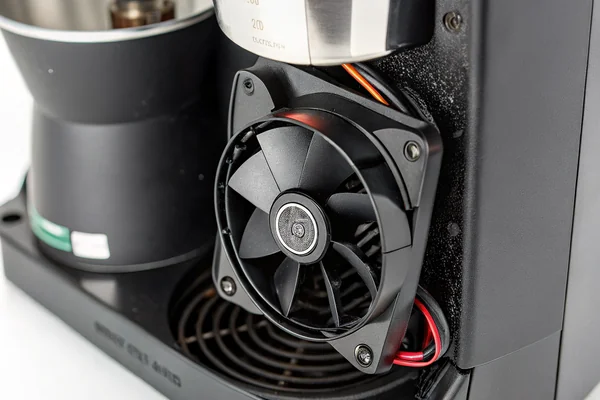
Choosing a fan is often the easy part -- deciding which physical connector terminal to actually put on the end of its wires is where a design can quietly get locked into compatibility problems down the road.
DC fan connector terminals come in several common standardized families -- including JST, Molex, and XH2.54-style connectors -- each with different pitch, current rating, and mating characteristics, and choosing the right one depends on your system's existing connector ecosystem, current requirements, and environmental exposure rather than defaulting to whichever terminal happens to be most familiar.
- Common DC fan connector terminal families include JST, Molex, and XH2.54-style connectors, each with distinct pitch and current handling characteristics.
- Connector current rating needs to match or exceed your fan's actual current draw, including inrush current at startup.
- Custom connector options exist for applications with unusual space, current, or environmental requirements that standard terminals don't adequately address.
- IP-rated connectors are necessary for fans operating in dusty, humid, or outdoor environments where standard open terminals would be vulnerable.
- Wiring harness design should be planned alongside connector selection, not treated as an afterthought once the connector type is chosen.
Understanding the practical differences between common connector families clarifies which one actually fits your specific design requirements.
Table of Contents
What Are the Most Common Fan Connector Terminal Types You'll Actually Encounter?
Getting oriented among the terminal families most commonly used in DC fan applications.
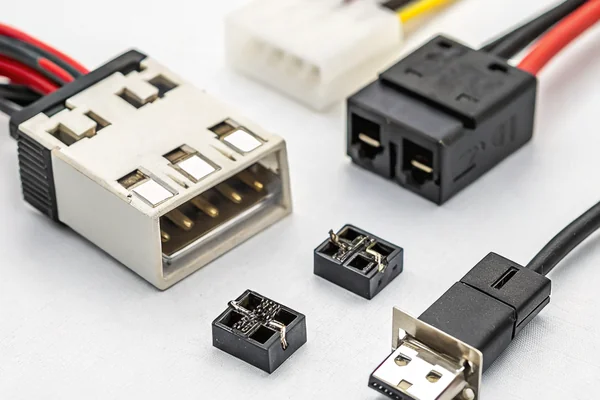
JST connectors (particularly JST-XH and JST-PH series) are common in smaller electronics for their compact size and reliable locking mechanism, Molex-style connectors (like Molex KK series) are widely used in general electronics and appear frequently in PC and industrial applications, and XH2.54-style connectors (2.54mm pitch) are a common general-purpose standard across many fan applications.
Why Terminal Family Choice Often Comes Down to Ecosystem Compatibility
Each connector family has broadly similar functional capability for typical DC fan applications, meaning the practical decision frequently comes down to which terminal family is already standard in your product's existing wiring ecosystem, what your assembly line's crimping and connector tooling already supports, and what your component supply chain readily stocks, rather than one family being objectively superior for most general applications. This is why many engineers select connector terminal type based on existing product platform standards as much as on the terminal's technical specifications alone.
How Should You Actually Match Connector Current Rating to Your Fan's Requirements?
Current handling capacity is a genuine safety and reliability requirement, not just a nominal spec to check off.
A connector's rated current capacity needs to comfortably exceed your fan's actual operating current, including brief inrush current at startup, which can meaningfully exceed steady-state running current for a moment -- undersizing connector current rating risks overheating at the connector interface, a genuine failure and safety concern.
Why Inrush Current, Not Just Steady-State Current, Should Drive This Decision
A DC fan motor typically draws a higher current briefly at startup than during steady-state operation, and while this inrush is usually brief, a connector rated only for steady-state current with minimal margin can experience real heating stress during repeated startup cycles over the product's lifespan. This is why connector current rating selection should include a safety margin beyond simple steady-state current, accounting for startup behavior and long-term thermal cycling rather than cutting margin too closely to nominal running current alone.
When Does a Standard Connector Terminal Actually Fail to Meet Your Needs?
Understanding the specific scenarios that push a design toward custom connector solutions.
Standard connector terminals can fall short when your application needs unusually high current handling in a compact space, specific environmental sealing (waterproof or dustproof) that standard open terminals don't provide, or physical space constraints that don't accommodate any standard terminal's footprint -- these situations are when custom connector solutions genuinely earn their added cost and lead time.
Why Custom Connectors Should Be a Deliberate Choice, Not a Default
Custom connector development involves real tooling cost, longer lead times, and reduced supply chain flexibility compared to standard terminals, meaning the decision to go custom should be driven by a genuine standard-terminal limitation your application faces, rather than pursued as a default "better" option when a standard terminal would actually serve the application adequately. This is why evaluating whether a standard terminal genuinely can't meet your requirements, rather than assuming custom is always superior, prevents unnecessary cost and complexity in the sourcing process.
Why Does IP Rating Actually Matter for Fan Connectors in Certain Environments?
Environmental sealing at the connector level is a distinct requirement from the fan's own housing sealing.
A fan's overall IP rating doesn't automatically mean its connector interface shares the same environmental protection -- in dusty, humid, or outdoor applications, the connector itself needs appropriate sealing (IP-rated connector terminals or additional potting/sealing at the connection point) to maintain the fan's overall environmental protection at this specific vulnerable junction point.
Why the Connector Is Often the Weakest Link in an Otherwise Sealed System
A fan housing can be genuinely well-sealed against dust and moisture, but the connector interface -- where wires exit the housing and mate with the system's wiring harness -- represents a physical opening that, if not specifically sealed or IP-rated itself, can undermine the fan's overall environmental protection regardless of how well the rest of the housing is sealed. This is why applications with genuine environmental exposure requirements need to specifically verify connector-level sealing, not just assume the fan's overall IP rating automatically extends to its wiring connection point.

How Should Wiring Harness Design Actually Factor Into Connector Selection?
Connector choice and harness design are interdependent decisions that benefit from being planned together.
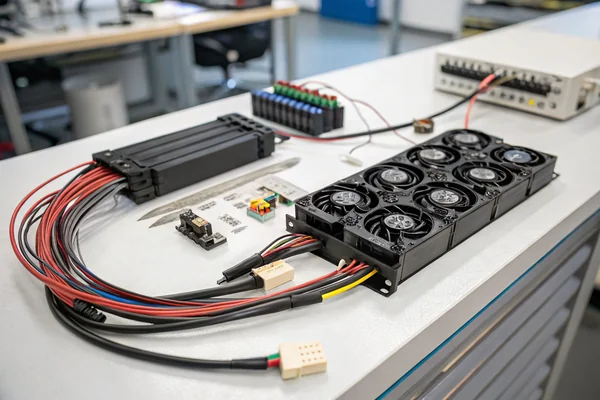
Wire gauge, harness length, routing path, and strain relief requirements all interact with connector selection -- choosing a connector terminal without considering the full harness design can result in a connector that's technically adequate in isolation but poorly suited to the actual assembly and installation process.
Why Treating Connector Selection as Separate From Harness Design Creates Integration Problems
A connector terminal that works well in isolation can still create assembly difficulties if the wire gauge it accepts doesn't match your harness design, if the connector's physical orientation doesn't suit your installation access, or if strain relief at the connector point wasn't adequately planned for your product's vibration or handling conditions during assembly and field use. This is why experienced engineers plan connector selection and harness design together from early in the process, rather than choosing a connector first and retrofitting harness design around it afterward.
What Should You Actually Prioritize When Finalizing Connector Choice for a New Design?
Bringing these factors together into a practical decision-making framework.
Confirm current rating with adequate margin for inrush current, verify environmental sealing needs match your application, check compatibility with your existing wiring ecosystem and assembly tooling, and plan harness design alongside connector selection rather than sequentially -- these combined checks catch most connector selection mistakes before they reach production.
Why This Combined Checklist Approach Beats Optimizing Any Single Factor Alone
No single connector attribute -- current rating, environmental sealing, ecosystem compatibility, or harness integration -- captures the full picture on its own, and a connector that excels on one dimension while falling short on another can still create real problems in production or field use. This is why working through this combined checklist, rather than optimizing for the single most obvious requirement and assuming the rest will work out, produces more reliable connector selection outcomes for new designs.
Our DC fan lineup supports multiple standard connector terminal options across our product range, manufactured at our Dongguan facility under ISO 9001 certification. With over 20 years of production experience, we help customers evaluate whether standard terminals meet their requirements or whether custom connector solutions are genuinely warranted for their specific application.
Does Connector Choice Actually Affect Field Serviceability and Replacement?
How easily a fan can be replaced in the field is a practical consequence of connector selection worth considering upfront.
A connector chosen primarily for initial assembly convenience without considering field replacement can make future fan servicing unnecessarily difficult -- accessible, standard connector types generally support easier field replacement than deeply embedded or unusual connector configurations, which matters for products expected to need occasional fan replacement over their service life.
Why Designing for Serviceability Pays Off Over a Product's Full Lifecycle
A connector and mounting configuration that's convenient during initial manufacturing assembly isn't automatically convenient for a field technician replacing a failed fan years later, particularly if the connector requires specialized tools or is positioned in a hard-to-reach location within the finished product. This is why products with an expected multi-year service life and field-replaceable fans benefit from considering technician accessibility and standard connector availability during the original design phase, not just manufacturing assembly efficiency.
FAQ
Can I convert between connector types using an adapter cable?
Yes, adapter cables are commonly available or can be custom-made for many connector type conversions, though this adds a connection point and potential failure mode worth considering for reliability-critical applications.
Does connector pitch (spacing between pins) matter beyond just physical fit?
Yes -- pitch affects current handling capacity and physical robustness, with tighter pitch connectors generally suited to lower current applications and wider pitch connectors better suited to higher current handling.
Are JST connectors interchangeable between different JST series (like XH and PH)?
No -- different JST series have different pitch and physical dimensions, making them non-interchangeable despite sharing the JST brand name, so confirming the specific series is important when sourcing or replacing connectors.
Is it worth paying more for a locking connector versus a simple friction-fit terminal?
For applications with vibration, movement, or where accidental disconnection would be problematic, a locking connector's added reliability generally justifies the modest cost premium over a simple friction-fit alternative.
How do I know what current rating a specific connector terminal actually supports?
Checking the connector manufacturer's datasheet for its specific rated current at your wire gauge is the reliable approach, since current rating depends on both the connector design and the wire gauge used with it.
Can the same connector type be used for both signal wires (PWM, tachometer) and power wires?
Often yes within a single multi-pin connector housing, as is common in 3-pin and 4-pin fan connectors, though very high current applications sometimes separate power and signal connections for better current handling and noise isolation.
Choosing the right fan connector terminal comes down to matching current rating, environmental needs, and ecosystem compatibility to your specific design, not defaulting to whatever's most familiar. At Herays, our Dongguan facility manufactures DC fans supporting multiple standard connector options, backed by over 20 years of production experience under ISO 9001 certification. If you're finalizing connector specifications for a new design, we're glad to help evaluate what genuinely fits your requirements.

Liang
I've been working with DC fans for 30 years — long enough to have seen the industry evolve from basic sleeve bearing designs to today's high-efficiency, IP68-rated systems built for the harshest environments imaginable. I founded Herays because I believed manufacturers and engineers deserved a supplier who could talk technical from day one. Not just hand over a datasheet, but actually help you select the right fan for your thermal load, your enclosure, your certification requirements. Most of what I write here comes directly from problems I've solved on the factory floor or in customer applications — medical devices, laser equipment, industrial automation, you name it. If it involves moving air efficiently and reliably, I've probably spent time thinking about it. When I'm not obsessing over airflow curves, I'm usually helping a customer figure out why their cooling system isn't performing the way their simulation said it would.
View all posts by Liang