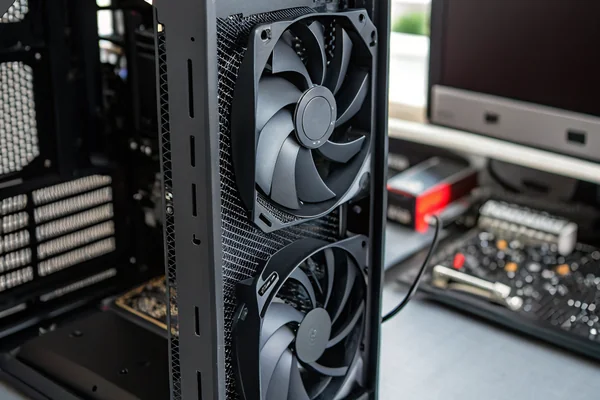
Picking the wrong control method doesn't just limit how fast a fan spins -- it can leave you unable to run it quietly at all, or watching it stall out at low speeds entirely.
PWM fan control uses a fixed supply voltage with a variable duty-cycle signal to modulate motor speed precisely across a wide RPM range, while DC voltage control simply reduces the supply voltage to slow the fan -- making PWM the more precise and stable method, especially at low speeds, though DC voltage control remains simpler to implement and still works well for many applications.
- PWM control sends a high-frequency on/off signal to the fan motor, keeping voltage constant while varying the proportion of time the motor receives power -- this gives precise, stable speed control even at very low RPM.
- DC voltage control (also called analog or linear control) works by reducing the actual supply voltage to the motor -- simpler to implement but with a meaningful minimum speed floor before the fan stalls.
- PWM typically allows a wider and more stable operating range, particularly at the low end, making it better suited for quiet, low-speed operation.
- Compatibility matters: 4-pin PWM fans and 3-pin DC fans use different header pinouts and control logic, and mixing them doesn't always work as expected without checking motherboard or controller support.
- For most modern PC case cooling builds prioritizing quiet operation, PWM is the more capable choice -- but DC voltage control remains a practical, cost-effective option for fixed-speed or less speed-sensitive applications.
Understanding exactly why these two methods behave differently -- and where each one breaks down -- makes it straightforward to pick the right one for a given build.
Table of Contents
How Does PWM Fan Speed Control Actually Work Under the Hood?
Most engineers understand that PWM "modulates" speed, but the mechanism is specific enough that it's worth being precise about.
PWM (Pulse Width Modulation)1 fan control keeps the supply voltage constant at 12V and instead sends a high-frequency square wave signal to the motor driver -- varying the duty cycle (the percentage of each cycle that the signal is "on") to control how much power the motor effectively receives per unit of time, and therefore how fast it spins.
Why Constant Voltage With a Variable Signal Matters
The key distinction here is that PWM doesn't starve the motor of voltage -- it rapidly switches full voltage on and off. At 50% duty cycle, the motor receives full 12V power for half of each cycle; at 20%, it receives full power for only 20% of each cycle. Because the voltage itself never drops below the motor's operating threshold, the motor can spin stably at very low effective speeds without the instability or stalling risk that comes with genuinely reducing voltage. The control signal on a 4-pin fan header typically operates at 25 kHz -- high enough that the switching isn't audible as a tone.
This architecture also means the fan motor's startup and low-speed behavior is generally more predictable, since the motor receives full voltage bursts rather than a reduced continuous supply that may not reliably hold the rotor in motion. The practical effect is a wider controllable RPM range, particularly at the quiet, low-RPM end where many builds spend most of their time.
How Does DC Voltage Speed Control Work, and Where Does It Fall Short?
DC voltage control is the older, simpler approach -- and its limitations come directly from how it works at a fundamental level.
DC voltage control reduces the actual supply voltage fed to the fan motor to slow it down -- no special signal required, just lower voltage -- which makes it simple to implement but creates a meaningful minimum speed floor, since below a certain voltage the motor can no longer generate enough torque to spin reliably and stalls.
The Stall Floor Problem
A typical 12V DC axial fan may begin to stall anywhere between 5V and 7V depending on its motor design and bearing type, which means the bottom 40–60% of the voltage range may simply not produce stable, controlled low-speed operation. This is not a failure of controller design -- it's a direct consequence of the motor needing a minimum torque threshold to overcome friction and inertia. Reducing voltage below that threshold doesn't produce a very slow fan; it produces an unreliable one that may stop, restart, or hunt erratically.
This stall floor is the primary reason DC voltage control is a poorer fit for builds where very quiet, ultra-low-speed operation is a priority. At higher speeds -- say, running a fan at 70–80% of its rated RPM -- the difference in behavior between PWM and DC control becomes much smaller in practice, since neither method is operating near its floor. The stall limitation mainly bites at the low end.
| Control Method | Voltage to Motor | Minimum Stable RPM | Controller Complexity |
|---|---|---|---|
| PWM | Fixed (full 12V) | Typically lower (10–20% duty cycle) | Requires PWM-capable controller/header |
| DC Voltage | Reduced proportionally | Higher (stall floor ~40–60% voltage) | Simpler -- any voltage regulator can drive it |
Which Method Gives Wider, More Precise Speed Control?
This is the practical question that determines which method a given build actually needs.
PWM delivers a wider and more precise speed range than DC voltage control in almost every case -- particularly at the low end -- because the motor always receives full voltage, making stable operation at 10–30% maximum RPM achievable where DC voltage control would produce stalls or hunting, not useful quiet operation.
Where the Precision Gap Is Most Consequential
For a case fan running at 1200 RPM maximum that a builder wants to dial down to near-silent operation at 400–500 RPM, PWM makes that range genuinely controllable. DC voltage control would likely produce stalling behavior long before reaching 400 RPM. The precision advantage is less important at midrange and high speeds, where both methods can deliver stable operation, and more important specifically in the low-RPM quiet regime.
Modern motherboard fan headers and dedicated fan controllers have become predominantly PWM-oriented for this reason -- the added precision is most valuable exactly where the user experience (noise level at idle or light load) is most sensitive. For industrial or server cooling applications where fans run at relatively high fixed or semi-fixed speeds and thermal headroom isn't the primary concern, DC voltage control remains entirely adequate.
Does Fan Noise Actually Differ Between PWM and DC Voltage Control?
Noise behavior between the two methods is more nuanced than a simple "one is quieter" answer.
At equivalent RPM, PWM and DC voltage control produce very similar acoustic output -- the noise difference most people notice comes not from the control method itself but from where each method lets you actually run the fan: PWM's lower speed floor means you can legitimately run quieter, while DC voltage control's stall floor prevents reaching those same low speeds stably.
Compatibility-Related Noise Surprises
A separate, often-overlooked noise issue is compatibility mismatch. Running a 4-pin PWM fan on a 3-pin DC header -- or vice versa -- doesn't necessarily stop the fan from spinning, but it can produce unintended behavior: some fans will run at full speed and ignore the control signal entirely, while others may produce audible buzzing if the PWM signal is improperly interpreted by a motor driver not designed for it. Checking header pinout compatibility between fan and controller before installation avoids this class of problem entirely, which is a more significant noise risk in practice than the control method itself.
Which Control Method Fits Which Application?
Matching the control method to the application's actual requirements is a straightforward decision once the key tradeoffs are clear.
PWM is the better fit for quiet PC case cooling builds, variable-load thermal management, and any application requiring stable operation across a wide RPM range -- while DC voltage control remains a practical choice for fixed or semi-fixed speed applications, cost-sensitive designs, and controllers that lack PWM output capability.
A Practical Decision Framework
The core question is whether the application genuinely needs low-RPM quiet operation. If a case fan will rarely drop below 60–70% of its rated speed -- because thermal loads keep it running relatively fast most of the time -- the DC voltage control stall floor is unlikely to ever be reached, and the simplicity of DC voltage control may be the more practical choice. If the build targets near-silent idle operation with the fan running at 20–40% RPM most of the time, PWM is the right method.
For industrial and embedded cooling applications using DC axial fans outside the PC case context -- telecom equipment, medical devices, industrial electronics -- the same logic applies: if variable quiet operation is needed, specify PWM-compatible fans and controllers; if the fan will run at a relatively fixed speed with only coarse adjustment needed, DC voltage control keeps the design simpler.
| Application Type | Recommended Control | Reason |
|---|---|---|
| Quiet PC case cooling, variable load | PWM | Wide stable speed range, low RPM floor |
| Fixed-speed industrial cooling | DC voltage | Simpler, adequate for constant or near-constant speed |
| Server/rack thermal management | PWM | Precise response to thermal events |
| Cost-sensitive low-complexity design | DC voltage | Fewer control components required |
What Should Engineers Know Before Sourcing PWM vs. DC Fans?
Procurement decisions around fan control method have downstream effects that aren't always obvious from a datasheet.
When sourcing fans, specifying control method isn't just about the fan itself -- it requires confirming that the fan's pinout, motor driver type, and minimum speed behavior are matched to the controller being used, since a mismatch in any of these can produce a fan that either runs uncontrolled at full speed or behaves erratically at low duty cycles.
What to Confirm Before Committing to a Specification
Several specific points are worth verifying with a supplier rather than assuming from general specs:
The fan's actual minimum stable duty cycle (for PWM fans) or minimum stable voltage (for DC fans) tells you how low the speed can actually go in practice, which is often not printed on a standard datasheet. The ANSI/AMCA Standard 210 governs aerodynamic performance testing methodology, but speed control range behavior is typically validated through manufacturer-specific testing rather than standardized curves, making direct supplier discussion the most reliable source for this data.
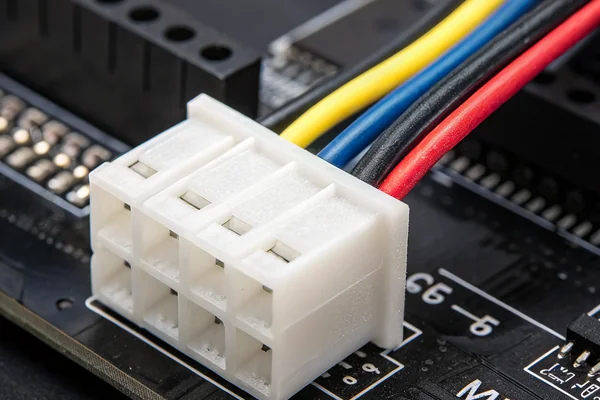
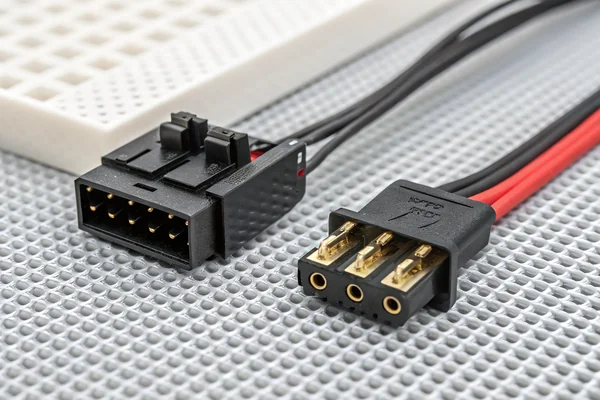
Pin count and connector type matter: 4-pin headers carry the PWM signal on the fourth pin, while 3-pin headers carry no PWM signal and use only voltage variation -- but many motherboards will drive a 3-pin fan from a 4-pin header by defaulting to voltage mode, and a 4-pin fan from a 3-pin header by running at full speed. These fallback behaviors are board-specific and worth confirming rather than assuming.
For custom or OEM fan sourcing, specifying whether the motor driver should be optimized for PWM or DC voltage control (rather than leaving it as a generic default) lets the manufacturer tune the motor's low-speed behavior for the actual operating mode, which produces meaningfully better results than a generic motor driver trying to handle both modes adequately.
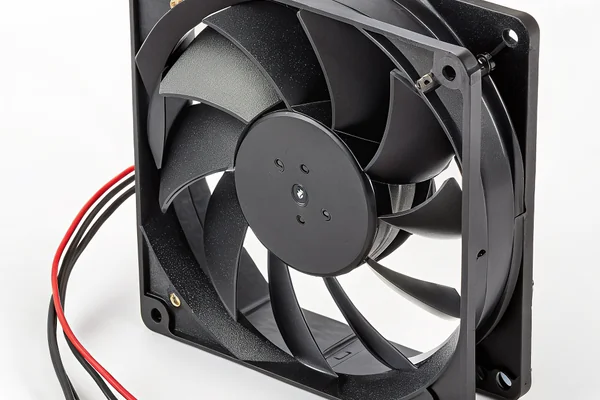
Our PC case cooling fan line covers both PWM and DC voltage control variants, with motor drivers tuned specifically for each control method rather than using a generic driver across both. We validate minimum stable duty cycle and minimum stable voltage behavior on in-house automated dynamic balance and CFM airflow test equipment as part of our ISO 9001 and IATF 16949 production process -- so the low-speed behavior you spec is the behavior the fan actually delivers. If your application has specific quiet-operation or speed range requirements, we're glad to discuss which variant and configuration fits.
FAQ
Can I run a 4-pin PWM fan on a 3-pin DC voltage header?
Usually yes -- most 4-pin PWM fans will run on a 3-pin header at full speed, since the PWM signal pin simply goes unconnected and the fan defaults to full voltage operation. Speed control won't function, but the fan will spin normally.
Can I run a 3-pin DC fan on a 4-pin PWM header?
Most motherboards handle this by switching the 4-pin header into DC voltage mode when a 3-pin fan is detected, giving functional (if less precise) speed control. Check your motherboard manual to confirm this behavior, since it varies by board.
Does PWM control reduce fan lifespan compared to DC voltage control?
No significant evidence supports this. The 25 kHz switching frequency doesn't produce mechanical stress on the motor in the way that audible frequencies might, and bearing life is determined by load, lubrication, and operating temperature rather than by the control method.
Why does my PWM fan buzz at certain duty cycles?
Audible buzzing at specific duty cycles is usually a motor driver resonance issue -- some motor designs interact with certain PWM frequencies to produce noise in the audible range. This is a fan design issue rather than a fundamental PWM problem; a well-designed PWM motor driver eliminates it.
Is there a meaningful efficiency difference between PWM and DC voltage control at the same RPM?
PWM is generally slightly more efficient at low speeds because the motor receives full voltage pulses rather than a continuous reduced voltage, but the difference in practice for typical case fan power levels (1–5W) is small enough that efficiency is rarely the deciding factor.
Does control method affect how quickly a fan responds to a temperature change?
PWM responds somewhat faster than DC voltage control in most implementations because the signal change propagates immediately through the duty cycle, while DC voltage control depends on the regulator's response time. For most PC cooling scenarios the difference is imperceptible, but in tight thermal control loops (server or industrial applications) PWM's faster response can matter.
How do I know if my fan controller or motherboard header supports PWM mode?
Check the header pin count: 4-pin headers support PWM; 3-pin headers are DC voltage only. Motherboard BIOS fan control settings will also typically show a "PWM mode" or "DC mode" toggle for headers that support both.
PWM delivers a wider, more stable speed range where it matters most -- at the quiet low end -- while DC voltage control remains the simpler, adequate choice for applications that never need to go there.
Herays has manufactured DC axial and PC case cooling fans from our Dongguan facility for over 20 years under ISO 9001 and IATF 16949 certification, covering both PWM and DC voltage-controlled variants validated on in-house airflow and dynamic balance test equipment. If you have a specific speed range or noise target, reach out -- we can help match the right control method and motor configuration to your application.
Pulse Width Modulation is a control technique that varies the proportion of time a signal is held at its high state (the duty cycle) within a fixed-frequency cycle to effectively vary the average power delivered to a load. In fan speed control, it matters because it allows precise motor speed adjustment without reducing supply voltage below the motor's reliable operating threshold. ↩

Liang
I've been working with DC fans for 30 years — long enough to have seen the industry evolve from basic sleeve bearing designs to today's high-efficiency, IP68-rated systems built for the harshest environments imaginable. I founded Herays because I believed manufacturers and engineers deserved a supplier who could talk technical from day one. Not just hand over a datasheet, but actually help you select the right fan for your thermal load, your enclosure, your certification requirements. Most of what I write here comes directly from problems I've solved on the factory floor or in customer applications — medical devices, laser equipment, industrial automation, you name it. If it involves moving air efficiently and reliably, I've probably spent time thinking about it. When I'm not obsessing over airflow curves, I'm usually helping a customer figure out why their cooling system isn't performing the way their simulation said it would.
View all posts by Liang