A pellet grill that can't maintain steady temperature isn't just annoying -- it ruins whatever's cooking, and the part most often responsible is a small blower most users never think about.
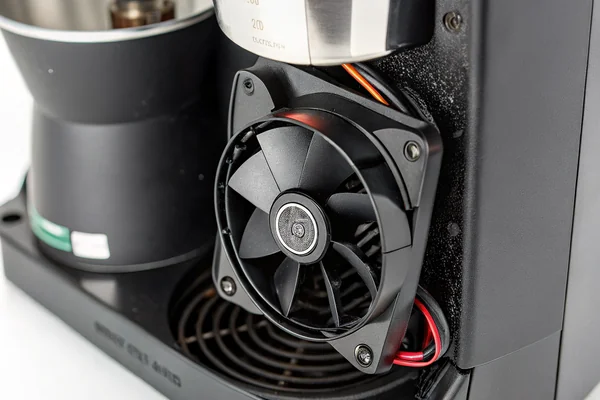
BBQ and pellet grill temperature control depends on a DC blower fan feeding controlled combustion air to the fire pot, with the blower's speed directly regulating burn rate and temperature -- without reliable, precisely controlled airflow, a pellet grill simply can't maintain the steady temperatures its cooking programs depend on.
- Pellet grills and many BBQ smokers use a blower to feed controlled combustion air, directly regulating fire intensity and cooking temperature.
- Airflow requirements for combustion are different from general cooling airflow -- consistency and controllability matter more than raw CFM.
- Blowers in BBQ equipment must tolerate sustained heat and smoke exposure well beyond typical electronics cooling conditions.
- Battery-powered and portable BBQ equipment need low-power blower operation to preserve usable battery life during long cook sessions.
- Blower size and airflow requirements vary meaningfully between compact portable grills and larger pellet smoker units.
Understanding how blowers actually drive temperature control clarifies why blower quality has an outsized effect on cooking consistency.
Table of Contents
Why Do Pellet Grills and Smokers Rely on Blowers for Temperature Control at All?
Understanding the basic mechanism explains why the blower is doing more than just "cooling."
A pellet grill's controller regulates temperature by adjusting the blower's airflow into the fire pot, since more airflow feeds a more intense burn (raising temperature) and less airflow lets the fire die down (lowering temperature) -- the blower is effectively the throttle for the entire cooking system, not a supplementary cooling component.
Why the Blower Is a Control Component, Not Just an Airflow Component
Unlike a cooling fan whose job is simply to move heat away from something, a pellet grill's blower is actively part of a closed-loop temperature control system, where the controller reads the current temperature and adjusts blower speed in response to maintain the target setpoint. This is why blower responsiveness and consistency directly affect cooking temperature stability -- a sluggish or inconsistent blower translates directly into temperature swings during a cook.
What Makes Combustion Airflow Requirements Different From Typical Cooling Airflow?
Combustion air has different priorities than the airflow requirements in most electronics cooling applications.
Combustion airflow needs to be consistent and precisely controllable across a range of speeds (to fine-tune burn rate) rather than simply maximized -- a blower that delivers smooth, repeatable airflow at a given control signal matters more here than one optimized purely for maximum CFM.
Why Controllability Matters More Than Peak Output for This Application
A cooling fan is often selected primarily for how much air it can move at its rated speed, but a pellet grill blower needs predictable, repeatable airflow output at each point across its control range, since the temperature control algorithm depends on consistent blower response to make accurate adjustments. This is why blower selection for combustion control applications weighs response consistency and control range alongside raw airflow capacity, rather than treating maximum CFM as the primary spec.
How Much Heat and Smoke Exposure Does a BBQ Blower Actually Need to Tolerate?
Environmental durability is a genuine engineering requirement, not just a nice-to-have for this application.
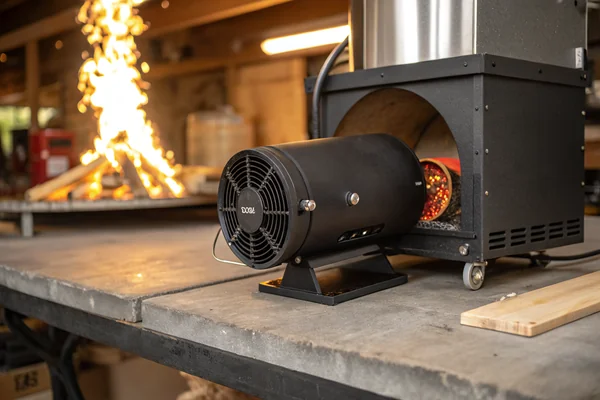
A BBQ or pellet grill blower must tolerate sustained proximity to combustion heat, direct smoke exposure, and grease vapor over the appliance's operating life -- this is meaningfully harsher than the clean, temperature-controlled environment most electronics cooling fans are designed for.
Why Standard Electronics-Grade Blowers Often Aren't Suitable for This Environment
A blower designed for general electronics cooling typically isn't validated for sustained smoke and grease vapor exposure, which can accumulate on internal components and bearings over time in ways that degrade performance or shorten lifespan faster than in a clean electronics environment. This is why BBQ and pellet grill applications benefit from blowers specifically selected or validated for this harsher combustion-adjacent operating environment, rather than a generic cooling fan chosen on airflow spec alone.
Why Does Battery-Powered Operation Change Blower Selection for Portable Grills?
Power efficiency becomes a real design constraint for battery-operated and portable BBQ equipment.
Portable and battery-powered pellet grills need blowers that deliver adequate combustion airflow while drawing modest current, since blower power consumption directly competes with the limited battery capacity available for an extended cook session lasting many hours.
Why Long Cook Sessions Make Blower Efficiency a Real Constraint
A typical smoking session can run for many hours, during which the blower cycles on and off or runs continuously depending on the control algorithm, meaning even a modest difference in blower current draw compounds significantly over a long cook -- this is a genuinely different power budget consideration than a blower running for a short burst. This is why battery-powered BBQ equipment manufacturers weigh blower current draw carefully against required airflow, rather than simply selecting the highest-airflow option available.

Does Blower Size Actually Scale With Grill Size, or Is One Size Adequate for Everything?
Understanding how requirements scale across the product range clarifies why one blower doesn't fit every application.
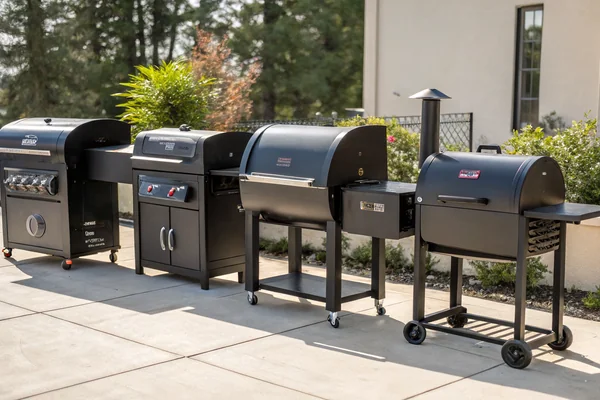
Blower size and airflow requirements scale with the grill's fire pot size and target maximum temperature -- compact portable grills generally use smaller, lower-airflow blowers, while larger pellet smokers with bigger fire pots and higher maximum temperature targets require correspondingly higher airflow capacity to maintain control.
Why Undersizing a Blower for a Larger Grill Causes Real Cooking Problems
A blower sized for a small portable grill's fire pot won't deliver adequate combustion air for a larger smoker's bigger fire pot, resulting in difficulty reaching or maintaining higher temperature setpoints and generally poor temperature stability at the top of the grill's intended range. This is why blower selection needs to be matched to the specific fire pot size and maximum temperature target of each grill model in a product line, rather than using a single blower specification across an entire size range.
What Should BBQ Equipment Designers Actually Prioritize When Sourcing a Blower?
Bringing these requirements together into practical sourcing guidance.
Prioritize a blower validated for sustained heat and smoke exposure, with airflow output and control range matched to your specific fire pot size and temperature target, and current draw appropriate for your power source (mains or battery) -- these combustion-specific requirements matter more here than general-purpose cooling fan specs.
Why Combustion-Specific Validation Beats General Cooling Fan Specs for This Application
A blower's general electronics cooling datasheet doesn't tell you how it will perform after repeated exposure to smoke, grease, and sustained heat cycling near a fire pot, which is a materially different stress profile than typical enclosure cooling. This is why sourcing a blower with genuine validation or a track record in combustion-adjacent applications, rather than one selected purely on airflow spec sheet comparison, reduces the risk of premature field failures in BBQ and pellet grill products.
Our DC blower fan line includes models suited to combustion airflow control applications like pellet grills and smokers, manufactured at our Dongguan facility under ISO 9001 certification. With over 20 years of production experience, we work with BBQ and outdoor cooking equipment manufacturers to match blower airflow, control range, and durability to their specific fire pot and power source requirements.
How Does Blower Placement Affect Fire Pot Performance and Ash Management?
Where the blower feeds air into the fire pot matters as much as how much air it delivers.
Blower placement relative to the fire pot affects how evenly combustion air reaches the burning pellets and how ash accumulates over a cook -- airflow directed too narrowly can create hot spots and uneven burn, while poor placement can accelerate ash buildup that eventually restricts the very airflow path the blower depends on.
Why Airflow Distribution Matters as Much as Airflow Volume
A blower can deliver adequate total airflow while still producing poor combustion if that air isn't distributed evenly across the fire pot, leading to a burn concentrated on one side with hot and cool zones that make temperature control less predictable. This is why pellet grill and smoker designs typically pair blower selection with fire pot geometry and airflow channel design as a combined system, rather than treating blower airflow output as the only variable that determines combustion quality.
FAQ
Can a pellet grill work without a blower at all?
Some very simple designs rely on natural draft, but most modern pellet grills with automated temperature control depend on a blower for both feeding combustion air and enabling precise, programmable temperature regulation.
Why does my pellet grill's temperature fluctuate even with a working blower?
Fluctuation can result from blower response lag, pellet feed inconsistency, ambient temperature and wind conditions, or a control algorithm not well-tuned to the specific blower's response characteristics -- diagnosing which factor is responsible usually requires isolating each variable.
Do pellet grill blowers need to be cleaned regularly?
Yes -- grease and ash buildup around the blower intake and housing can restrict airflow over time, making periodic cleaning part of standard pellet grill maintenance, especially for frequently used units.
Is a louder blower a sign of a problem in a pellet grill?
Not necessarily on its own, but a sudden increase in blower noise compared to normal operation can indicate bearing wear, debris interference, or another developing issue worth investigating.
Can the same blower be used across gas, charcoal, and pellet grill designs?
Not typically as a drop-in solution -- pellet grills use blowers specifically for combustion air control in a way gas and standard charcoal grills generally don't require, making blower selection specific to the pellet/smoker category.
How long do pellet grill blowers typically last before needing replacement?
This varies significantly by blower quality, usage frequency, and exposure to grease and moisture, but a well-selected blower validated for this environment should provide multiple cooking seasons of reliable service under normal use and maintenance.
Reliable pellet grill temperature control depends on a blower built for combustion airflow control, not just general cooling airflow. At Herays, our Dongguan facility manufactures DC blower fans suited to combustion-adjacent applications, backed by over 20 years of production experience under ISO 9001 certification. If you're sourcing a blower for a BBQ, smoker, or outdoor cooking product, we're glad to help match specifications to your fire pot size and durability requirements.

Liang
I've been working with DC fans for 30 years — long enough to have seen the industry evolve from basic sleeve bearing designs to today's high-efficiency, IP68-rated systems built for the harshest environments imaginable. I founded Herays because I believed manufacturers and engineers deserved a supplier who could talk technical from day one. Not just hand over a datasheet, but actually help you select the right fan for your thermal load, your enclosure, your certification requirements. Most of what I write here comes directly from problems I've solved on the factory floor or in customer applications — medical devices, laser equipment, industrial automation, you name it. If it involves moving air efficiently and reliably, I've probably spent time thinking about it. When I'm not obsessing over airflow curves, I'm usually helping a customer figure out why their cooling system isn't performing the way their simulation said it would.
View all posts by Liang