

A blower failure in a ventilator isn't an inconvenience -- it's a life-support event, which is why the selection bar for this application sits far above general industrial cooling.
A blower for ventilator and respiratory medical devices needs precise, stable pressure control, very low acoustic noise for clinical and home environments, validated reliability with redundancy considerations, and compliance with medical device regulatory pathways -- requirements that go well beyond what a standard industrial or consumer-grade blower is designed to meet.
- Life-support applications demand pressure control accuracy far tighter than general industrial blower use, since delivered pressure directly affects patient breathing support.
- Noise matters clinically, not just for comfort -- both hospital and home-use ventilators need to operate quietly enough not to disturb sleep or clinical environments.
- Medical device regulatory requirements (including quality system standards like ISO 13485) apply to the finished device and cascade down to component suppliers through documentation and traceability requirements.
- Reliability and redundancy design in ventilators often goes beyond a single blower's own MTBF, incorporating backup systems and fail-safe behavior at the device level.
- Sourcing a blower for this application means working with a supplier who understands medical-grade documentation and traceability requirements, not just one who can hit the performance spec.
Understanding why this application sits in its own category -- above standard industrial reliability expectations -- clarifies what actually needs to be verified before a blower is qualified for it.
Table of Contents
What Are the Critical Requirements for a Life-Support Blower?
Ventilators occupy a category where component failure has direct, immediate patient safety consequences.
A ventilator blower must deliver precisely controlled airflow and pressure within tight tolerances, maintain that precision reliably over the device's full service life, and behave predictably (rather than failing silently) if a fault does occur -- since delivered pressure and flow translate directly into the actual respiratory support a patient receives.
Why "Good Enough" Doesn't Apply Here
In most industrial blower applications, a performance drift of a few percent over time is a minor efficiency concern. In a ventilator, the same drift can mean a patient is receiving meaningfully different respiratory support than prescribed, which is why blower selection for this application prioritizes long-term precision stability as heavily as initial performance specs. Fault behavior matters just as much -- a blower that fails gradually with detectable warning signs is far preferable to one that fails abruptly and without warning in a device where failure has immediate patient impact.
Why Does Noise Matter So Much in Clinical and Home Settings?
Ventilator noise isn't just an annoyance -- it has real clinical and quality-of-life implications for both patients and caregivers.
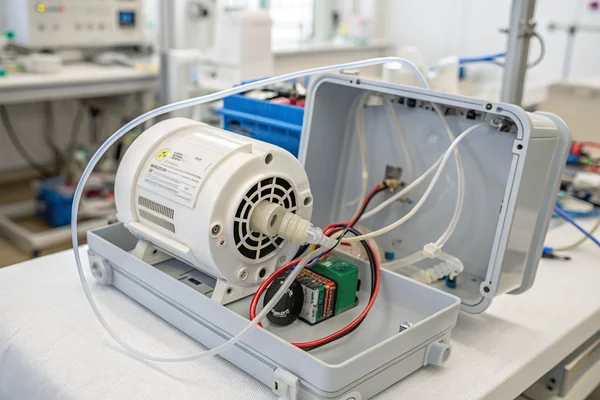
Ventilator and respiratory device noise needs to stay low enough not to disrupt patient sleep in home-use settings or interfere with clinical monitoring and communication in hospital settings -- both environments have genuine, not just preference-based, reasons to prioritize a quiet blower.
Why This Goes Beyond General Comfort
In hospital settings, excessive equipment noise can interfere with staff communication and patient monitoring, and contributes to a broader documented problem of hospital noise pollution affecting patient recovery. In home-use respiratory devices -- increasingly common as care shifts toward home settings -- device noise directly affects patient and caregiver sleep quality over what's often years of continuous nightly use. This makes acoustic performance a genuine clinical and quality-of-life consideration in this application, not simply a nice-to-have feature.
How Precise Does Pressure Control Actually Need to Be?
Pressure accuracy requirements in respiratory devices are tighter than in almost any other blower application.
Ventilator blowers typically need pressure control accuracy within a small margin of the target setting, maintained consistently across the device's breathing cycle and across its full service life -- achieving this requires both a blower capable of fine, responsive control and a control system that can compensate for drift over time.
Why Responsiveness Matters as Much as Steady-State Accuracy
A patient's breathing cycle changes pressure demand continuously, not just at a single steady operating point, meaning the blower needs to respond quickly and accurately to changing demand throughout each breath -- not just hold a stable pressure at one fixed condition. This dynamic responsiveness requirement is a meaningfully different design challenge than steady-state pressure accuracy alone, and it's why ventilator blower selection typically involves close collaboration between the blower supplier and the device manufacturer's control system engineers rather than simply matching a published spec sheet.
What Certifications and Standards Actually Apply to This Application?
Certification requirements for medical device components work differently than for general industrial or consumer products.
Respiratory medical devices themselves are typically regulated under frameworks like FDA clearance (US) or CE marking under the Medical Device Regulation (EU), with device manufacturers commonly required to operate under a quality management system such as ISO 13485 -- component suppliers aren't usually separately "medically certified," but device manufacturers require detailed documentation, traceability, and change-control processes from their component suppliers as part of the manufacturer's own regulatory compliance.
Why Component-Level Documentation Matters Even Without a Medical Certification
Because the finished device carries the regulatory burden, a device manufacturer needs confidence that their blower supplier can provide consistent, traceable, well-documented components and will notify them of any design or process changes that could affect the device's validated performance. This is why medical device manufacturers often qualify component suppliers through a rigorous documentation and change-control review, even when the component itself doesn't carry an independent medical certification -- the manufacturer needs a supplier relationship built around consistency and communication, not just a spec sheet.
How Does Reliability and Redundancy Design Work at the Device Level?
Individual component reliability is only part of how ventilator manufacturers manage failure risk.
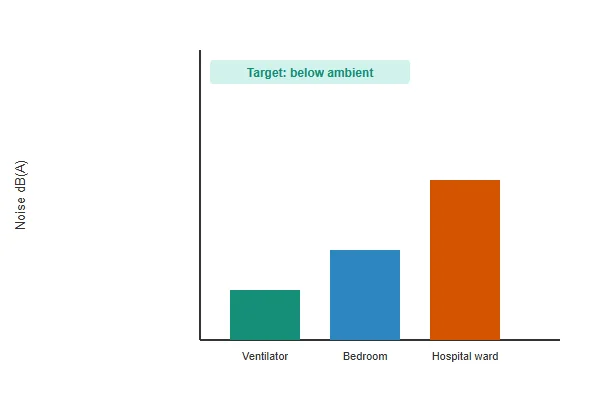
Ventilator reliability strategy typically extends beyond a single blower's own MTBF to device-level design choices -- backup power systems, alarm systems that alert clinicians or caregivers to performance drift or failure, and in some device classes, redundant blower systems -- meaning the blower supplier's role is providing consistent, well-characterized performance data the device manufacturer can design safety margins and monitoring systems around.
Why Device-Level Design Complements Component Reliability
No single component, however well-engineered, can be assumed failure-proof in a life-support context, which is why ventilator design philosophy generally assumes some non-zero failure probability and builds monitoring and backup systems to detect and respond to it rather than relying purely on component reliability. A blower supplier's most valuable contribution in this context is often detailed, honest performance and failure-mode data that lets the device manufacturer design appropriate monitoring and redundancy around the component's real characteristics.
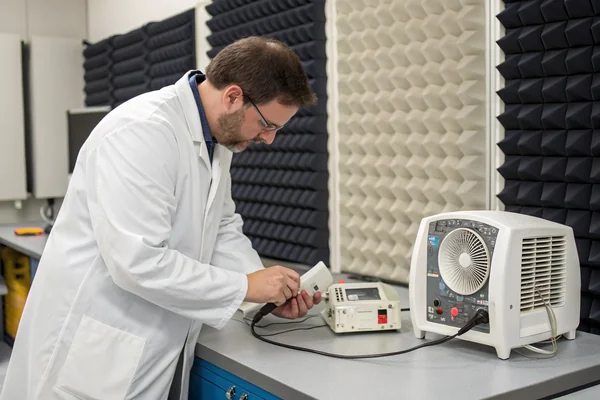
We manufacture DC high-speed vortex blower fans validated on our in-house CFM airflow test system and anechoic noise test chamber at our Dongguan facility, and we work directly with medical device manufacturers on the detailed documentation, traceability, and performance characterization their own regulatory qualification process requires. Our production operates under ISO 9001 and IATF 16949 certification with over 20 years of experience, and we're glad to discuss the specific documentation and validation data your qualification process needs.
What Does Blower Supplier Qualification Actually Involve for a Medical Device Manufacturer?
Qualifying a blower supplier for a ventilator program is a longer, more structured process than a typical component purchase.
Medical device manufacturers typically qualify a blower supplier through a documented review of manufacturing process controls, traceability systems, change-notification commitments, and sample performance validation against the device's specific requirements -- a process that usually takes considerably longer than sourcing a component for a non-regulated application.
Why This Process Justifies Starting Early
Because qualification involves reviewing process documentation, validating samples against real device requirements, and often multiple rounds of testing and feedback, treating it as a late-stage step risks delaying the entire device program. Manufacturers who engage a blower supplier during early device development, rather than after the design is otherwise finalized, generally complete qualification with fewer surprises and less schedule pressure than those who leave it until component sourcing becomes urgent.
FAQ
Does a blower need its own separate medical certification to be used in a ventilator?
Typically no -- the finished device carries the primary regulatory certification, but the device manufacturer requires thorough documentation, traceability, and change-control commitments from component suppliers as part of their own qualification process.
How is ventilator blower reliability testing different from standard industrial blower testing?
It typically involves more extensive long-term stability testing and closer attention to failure mode characterization, since the device manufacturer needs detailed data to design appropriate monitoring and redundancy systems around the component.
Can the same blower model serve both home-use and hospital ventilator applications?
Sometimes, if the performance and noise specs meet both environments' requirements, but home-use devices often have even tighter noise and long-term reliability expectations given years of continuous unattended nightly operation.
What happens if a ventilator blower's performance drifts slightly over its service life?
This is exactly why device-level monitoring and alarm systems exist -- well-designed ventilators are built to detect performance drift and alert clinicians or caregivers rather than assuming component performance stays perfectly constant indefinitely.
Is noise reduction ever traded off against pressure performance in these blowers?
It can be a real design tension, since some noise-reduction approaches (like reduced speed) can affect maximum achievable pressure -- this is part of why ventilator blower selection often involves close collaboration between supplier and device engineers rather than picking from a general catalog.
How early in device development should blower selection and supplier qualification begin?
As early as practical -- given the extensive documentation, testing, and qualification process involved, treating blower selection as a late-stage component swap risks significant redesign and requalification work if issues surface late.
Blower selection for ventilator and respiratory devices sits in a category defined by precision, reliability, and documentation rigor well beyond general industrial applications. At Herays, our Dongguan facility has engineered DC high-speed vortex blowers for demanding applications for over 20 years under ISO 9001 and IATF 16949 certification, and we work directly with device manufacturers on the documentation their regulatory qualification process requires. If you're sourcing a blower for a respiratory or life-support application, we're glad to discuss what that qualification process looks like together.

Liang
I've been working with DC fans for 30 years — long enough to have seen the industry evolve from basic sleeve bearing designs to today's high-efficiency, IP68-rated systems built for the harshest environments imaginable. I founded Herays because I believed manufacturers and engineers deserved a supplier who could talk technical from day one. Not just hand over a datasheet, but actually help you select the right fan for your thermal load, your enclosure, your certification requirements. Most of what I write here comes directly from problems I've solved on the factory floor or in customer applications — medical devices, laser equipment, industrial automation, you name it. If it involves moving air efficiently and reliably, I've probably spent time thinking about it. When I'm not obsessing over airflow curves, I'm usually helping a customer figure out why their cooling system isn't performing the way their simulation said it would.
View all posts by Liang

