

An air knife looks simple from the outside -- a thin blade of high-velocity air -- but the blower behind it has to hit a very specific pressure and volume combination to make that blade actually work.
Air knife systems need a blower capable of delivering high-velocity, focused airflow through a narrow slot nozzle, which requires substantial static pressure to overcome the nozzle's restriction -- undersizing the blower produces a weak, ineffective air curtain, while correctly matching pressure and volume to the specific nozzle design is what makes the air knife actually perform its intended job.
- An air knife concentrates airflow through a narrow slot to create a high-velocity, focused air curtain used for drying, cleaning, or moving material off a surface.
- Pressure requirements for air knives are typically higher than general ventilation applications, since the narrow nozzle slot creates substantial restriction the blower must overcome.
- Blower sizing for air knife systems depends on the specific nozzle's slot width and length, not a generic airflow target -- different nozzle geometries demand different blower specs.
- Continuous duty operation is common in industrial air knife applications, making duty-cycle-rated bearings and sustained thermal performance a real selection criterion.
- Air knives serve genuinely different applications -- drying, cleaning, and conveying -- with somewhat different performance priorities depending on the specific use case.
Understanding the specific pressure and volume demands an air knife nozzle creates clarifies why blower selection here differs meaningfully from general ventilation sizing.
Table of Contents
What Is an Air Knife, and How Does It Actually Work?
Understanding the basic mechanism clarifies why this application has such specific blower requirements.
An air knife is a nozzle assembly that concentrates blower-supplied airflow through a narrow slot, accelerating it into a thin, high-velocity curtain of air used to blow liquid, debris, or contaminants off a surface, or to create a directed drying or cooling effect across a moving product line.
Why Concentration, Not Raw Volume, Defines the Effect
The narrow slot geometry is what converts a blower's moderate-velocity airflow into the high-velocity curtain that makes an air knife effective -- the same total airflow spread across a wider opening wouldn't achieve the same velocity or cutting effect. This concentration effect is precisely why air knife performance depends so heavily on matching blower output to the specific nozzle's slot dimensions, rather than simply providing more airflow in general.
What Pressure and Volume Does an Air Knife System Actually Need?
Getting this specification right is the core engineering challenge in air knife system design.
Air knife nozzles typically require higher static pressure than general ventilation applications, since forcing air through a narrow slot creates substantial restriction -- the specific pressure and volume requirement depends on the nozzle's exact slot width and length, meaning blower sizing needs to reference the nozzle manufacturer's specification rather than a generic industrial blower target.
Why Nozzle-Specific Sizing Matters More Than General Blower Selection Rules
A wider or longer slot nozzle demands proportionally more airflow volume to maintain the same velocity across its full length, while a narrower slot demands more pressure to push the same velocity through a tighter restriction -- these are related but distinct requirements that depend on the specific nozzle geometry being used. Working from the nozzle manufacturer's stated pressure and volume requirements, or testing the actual assembled system, gives a far more reliable blower sizing basis than applying a generic industrial blower sizing rule to this specialized application.
How Do You Actually Size a Blower for a Specific Air Knife System?
Translating nozzle requirements into an actual blower selection follows a systematic process.
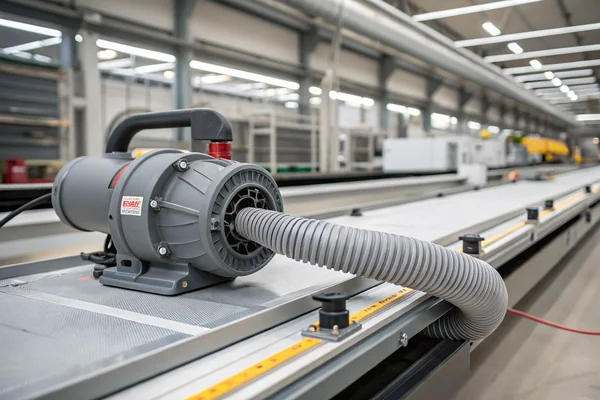
Size an air knife blower by starting with the nozzle manufacturer's rated pressure and volume requirement at your target air velocity, adding ducting losses between the blower and nozzle, and selecting a blower whose P-Q curve delivers that combined requirement with reasonable margin -- treating the nozzle spec as the starting requirement, not the blower's own free-air rating.
Why Ducting Losses Between Blower and Nozzle Deserve Explicit Accounting
Any distance and bends in the ducting connecting the blower to the air knife nozzle add their own resistance on top of the nozzle's own restriction, meaning the blower needs to overcome both combined, not just the nozzle's rated requirement in isolation. Longer or more convoluted ducting runs between blower and nozzle can meaningfully increase the total pressure requirement, which is worth estimating explicitly rather than assuming the nozzle's standalone spec is sufficient for sizing the complete system.
| Nozzle Slot Width | Typical Pressure Need | Typical Volume Scaling |
|---|---|---|
| Narrow (< 0.5mm) | Higher pressure | Lower volume for given velocity |
| Wide (> 1mm) | Lower pressure | Higher volume for given velocity |
Why Does Continuous Duty Operation Matter So Much for Air Knife Blower Selection?
Many industrial air knife applications run for extended periods, making duty cycle a genuine selection criterion.
Industrial air knife systems -- particularly those integrated into continuous production lines for drying, cleaning, or conveying -- often run for full shifts with minimal downtime, making duty-cycle-rated bearings and sustained thermal performance as important as the pressure and volume specs discussed above.
Why Undersized Duty Cycle Rating Causes Problems That Look Unrelated to Airflow
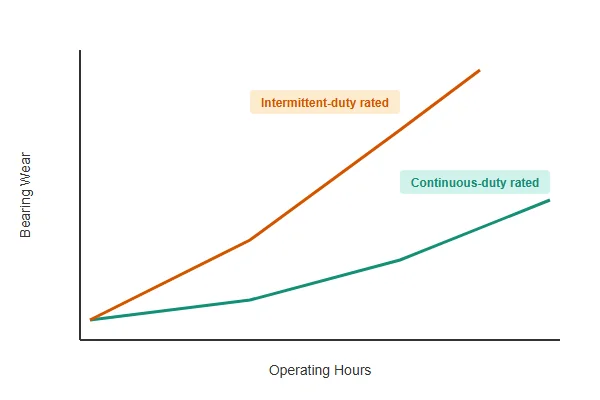
A blower rated for intermittent use but deployed in continuous air knife service can develop bearing wear and thermal stress faster than its datasheet MTBF would suggest, sometimes presenting as gradually declining air knife effectiveness that's misdiagnosed as a nozzle or ducting issue rather than the actual root cause of blower degradation. Confirming a blower's duty cycle rating explicitly covers your actual continuous operating pattern, not just peak momentary performance, prevents this less obvious failure mode.
What Are the Main Applications for Air Knife Systems, and Do Their Blower Needs Differ?
Air knives serve several distinct industrial purposes, each with somewhat different performance priorities.
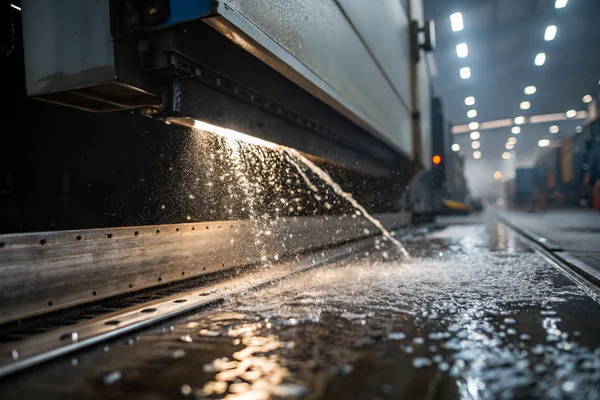
Common air knife applications include drying (removing surface moisture after washing or coating), cleaning (blowing debris or contaminants off a surface before further processing), and conveying (moving light material along a production line) -- drying applications often prioritize consistent velocity across the full nozzle length, while cleaning applications may prioritize peak velocity for effective debris removal.
Why Application Context Shapes Which Spec Matters Most
A drying application benefits from uniform velocity across the entire slot length to avoid uneven drying patterns, making nozzle and blower matching for consistency a priority, while a cleaning application removing stubborn debris may prioritize maximum velocity at a specific point over perfect uniformity. Understanding which performance characteristic actually matters most for your specific application helps prioritize the right tradeoffs when a perfect match across every dimension isn't available or necessary.
We manufacture DC high-speed vortex blower fans engineered for high-pressure, continuous-duty applications like air knife systems, validated on our in-house CFM airflow test system at our Dongguan facility under sustained operating conditions. With over 20 years of production experience under ISO 9001 and IATF 16949 certification, we work directly with equipment manufacturers to match blower specifications to specific nozzle requirements.
How Should You Approach Sourcing a Blower for a New Air Knife System Design?
Early engagement with both nozzle and blower suppliers produces a better-matched final system.
When designing a new air knife system, share your target air velocity, nozzle slot dimensions, ducting layout, and duty cycle expectations with your blower supplier early -- this allows them to recommend a blower genuinely matched to your complete system's pressure and volume demands, including ducting losses, rather than sizing based on the nozzle spec alone.
Why System-Level Sizing Beats Component-Level Sizing in This Application
Because the nozzle, ducting, and blower all interact to determine actual delivered air velocity at the workpiece, sizing the blower in isolation from the complete system's ducting layout risks an undersized result even if the blower matches the nozzle manufacturer's standalone spec. Sharing the complete system context with your blower supplier, rather than just the nozzle's isolated requirement, produces a more reliable final sizing recommendation.
FAQ
Can one blower supply multiple air knife nozzles on the same production line?
Sometimes, if the combined pressure and volume requirement across all nozzles falls within a single larger blower's capability and the ducting can distribute airflow evenly -- otherwise, separate blowers per nozzle position is often more reliable.
Does air knife nozzle material affect blower requirements?
Not directly, though nozzle material affects durability and maintenance in ways that indirectly matter for continuous operation -- the blower sizing itself depends primarily on the nozzle's slot geometry, not its material.
How do I know if my current air knife system's blower is undersized?
Inconsistent or visibly weak air curtain effectiveness, especially if it wasn't always present or worsens over time, points toward either blower degradation or an original undersizing that's worth investigating against the nozzle's actual specification.
Is noise a significant consideration for air knife blower selection?
It can be in shared facility environments, though air knife applications generally prioritize functional performance (pressure and velocity) over acoustic considerations, given the industrial context most air knife systems operate in.
Can air knife blowers be used for general ventilation when not actively running the air knife?
Generally not efficiently -- air knife blowers are typically sized and optimized for high-pressure, moderate-volume performance specific to nozzle restriction, which doesn't necessarily translate well to general low-restriction ventilation duty.
Does ambient temperature in the facility affect air knife blower selection?
Yes, particularly for continuous-duty applications -- elevated facility ambient temperature reduces a blower's thermal headroom, worth confirming against the blower's rated operating temperature range for sustained industrial use.
Air knife blower selection comes down to matching pressure and volume precisely to your specific nozzle geometry and ducting layout, not applying general industrial blower sizing rules. At Herays, our Dongguan facility has engineered DC brushless blowers for high-pressure continuous-duty applications for over 20 years under ISO 9001 and IATF 16949 certification. If you're specifying a blower for an air knife system, we're glad to work through the complete system sizing with you directly.

Liang
I've been working with DC fans for 30 years — long enough to have seen the industry evolve from basic sleeve bearing designs to today's high-efficiency, IP68-rated systems built for the harshest environments imaginable. I founded Herays because I believed manufacturers and engineers deserved a supplier who could talk technical from day one. Not just hand over a datasheet, but actually help you select the right fan for your thermal load, your enclosure, your certification requirements. Most of what I write here comes directly from problems I've solved on the factory floor or in customer applications — medical devices, laser equipment, industrial automation, you name it. If it involves moving air efficiently and reliably, I've probably spent time thinking about it. When I'm not obsessing over airflow curves, I'm usually helping a customer figure out why their cooling system isn't performing the way their simulation said it would.
View all posts by Liang

