A retail kiosk running the same software for years without a reboot puts real, sustained stress on its internal cooling -- and unlike an office PC that gets turned off overnight, that blower rarely gets a break.
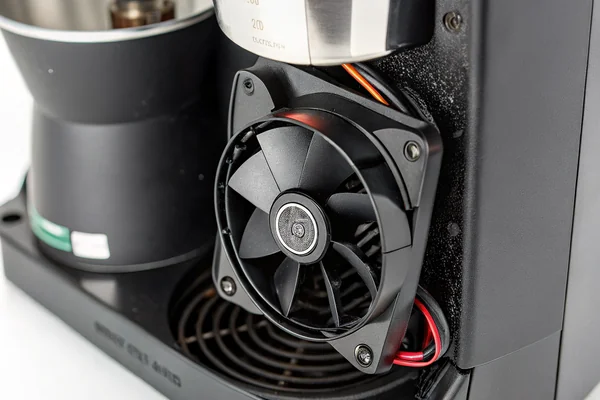
Point-of-sale systems and self-service kiosks depend on compact DC blowers to cool densely packed electronics running continuously in public-facing environments, requiring reliable 24/7 operation, low noise appropriate for retail settings, a compact footprint that fits tight enclosure designs, and durability against the dust and temperature variation common in public installation locations.
- POS systems and kiosks typically run continuously (24/7 or long daily hours) rather than being powered off regularly, placing sustained demand on cooling components.
- Compact enclosure designs common in embedded retail systems leave limited space for cooling, requiring efficient, small-footprint blowers.
- Low noise matters in retail environments where kiosks operate near customers and staff throughout business hours.
- Kiosks installed in varied public locations face wider temperature swings and more environmental exposure than typical indoor office electronics.
- Reliability directly affects revenue, since a failed POS or kiosk system due to overheating means lost transactions until it's repaired or replaced.
Understanding why POS and kiosk cooling requirements differ from typical office electronics clarifies what actually matters in blower selection for this category.
Table of Contents
Why Does Continuous 24/7 Operation Actually Change Cooling Requirements for POS Systems?
Understanding the duty cycle difference between kiosks and typical office electronics explains the elevated reliability demand.
Unlike office computers that are typically powered down overnight and on weekends, POS systems and self-service kiosks often run continuously to support extended business hours or round-the-clock availability, meaning cooling components accumulate far more total operating hours per year and rarely get the "rest" that helps typical electronics avoid sustained thermal stress.
Why Continuous Operation Compounds Wear in Ways Intermittent Use Doesn't
A blower that cycles on and off with regular use gets periodic opportunities to cool down and avoids continuous bearing wear at operating temperature, while a blower running genuinely continuously for months or years accumulates wear and thermal stress in a fundamentally different pattern, making component reliability and bearing quality disproportionately important for this duty cycle. This is why blower selection for POS and kiosk applications should weight sustained-operation reliability data more heavily than specifications validated primarily for intermittent use.
How Much Does Enclosure Space Actually Constrain Blower Selection in Embedded Retail Systems?
Physical design constraints in kiosks and POS terminals limit cooling options in ways that matter for component selection.
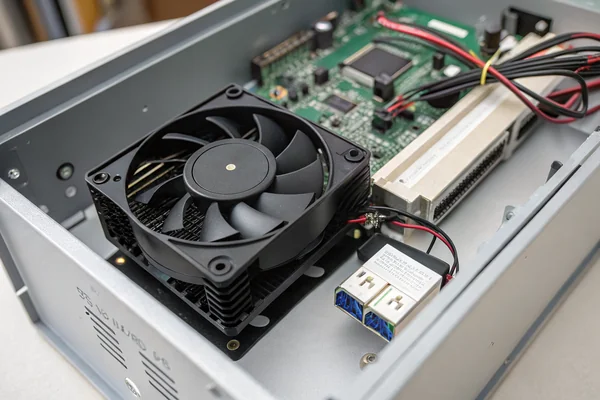
POS terminals and kiosks are frequently designed with compact, often sealed or semi-sealed enclosures to protect internal electronics from spills, dust, and tampering in public settings, leaving limited internal space and airflow pathways for cooling -- this pushes designers toward compact, efficient blowers rather than larger, more spacious cooling solutions.
Why Public-Facing Enclosure Design Works Against Simple Cooling Solutions
Unlike an office PC that can use an open, well-ventilated case, POS and kiosk enclosures need to balance cooling requirements against protecting electronics from the public environment -- spills, dust, tampering, and sometimes weather exposure for outdoor kiosks -- meaning the enclosure design itself often restricts natural airflow in ways that shift more of the cooling burden onto compact, efficient blowers working within a constrained space. This is why kiosk and POS thermal design often requires more careful blower selection and airflow engineering than a comparably powered office device with a more open enclosure.
Why Does Blower Noise Matter Specifically for Retail and Public-Facing Kiosk Environments?
Noise considerations in this category stem from the equipment's constant proximity to customers and staff.
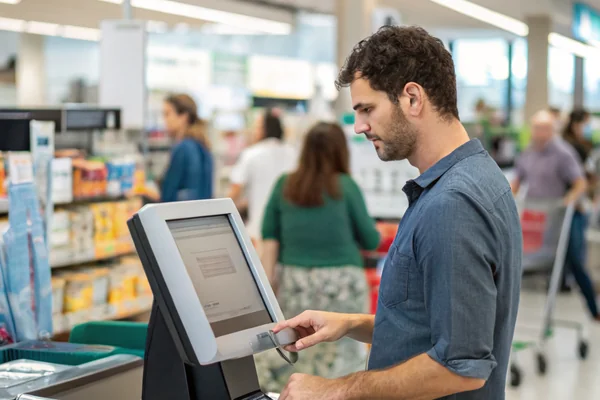
POS systems and kiosks operate in close proximity to customers and staff throughout business hours, making blower noise a genuine factor in the retail environment's overall ambiance -- a noisy kiosk or checkout terminal contributes to a less pleasant shopping experience, especially in quieter retail settings like boutiques or upscale stores.
Why Retail Ambiance Considerations Elevate Noise From a Technical Spec to a Business Concern
Retail environments are often deliberately designed around a specific ambiance -- quiet and upscale, energetic and busy, or somewhere between -- and equipment noise that clashes with that intended atmosphere, even if technically minor, can be noticed by customers and staff over the course of a full business day. This is why retailers and kiosk manufacturers frequently specify low-noise blowers as a genuine business requirement, not merely a technical nice-to-have, particularly for kiosks placed in customer-facing areas rather than back-office equipment rooms.
How Does Installation Location Actually Affect Environmental Durability Requirements?
Where a kiosk is physically installed introduces real variation in the environmental stress its cooling components face.
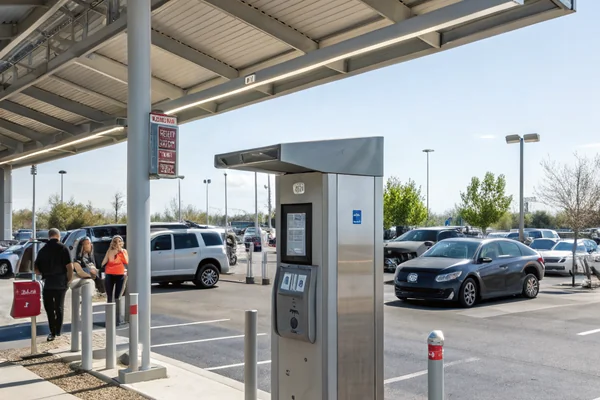
Kiosks installed in varied locations -- from climate-controlled indoor malls to semi-outdoor transit stations to genuinely outdoor drive-through or parking payment terminals -- face meaningfully different temperature ranges, humidity, and dust exposure, requiring blower selection matched to the specific installation environment rather than a single universal specification.
Why "Indoor Kiosk" and "Outdoor Kiosk" Represent Genuinely Different Engineering Problems
An indoor kiosk in a climate-controlled shopping mall experiences a relatively narrow, stable temperature and humidity range, while an outdoor payment terminal faces seasonal temperature extremes, humidity swings, and potentially direct weather exposure, meaning the blower and broader thermal design appropriate for one installation type can be significantly under-specified for the other. This is why kiosk manufacturers serving both indoor and outdoor deployment scenarios typically maintain distinct thermal designs and component specifications for each environment, rather than using identical cooling solutions across their full product range.
What's the Real Business Cost When a POS or Kiosk System Fails Due to Overheating?
Understanding the direct revenue connection clarifies why reliability investment in cooling components is justified.
A POS system or kiosk taken offline by overheating-related failure directly stops transactions at that location until repaired or replaced, translating cooling reliability directly into measurable revenue impact -- this is a meaningfully different cost calculation than a cooling failure in a less transaction-critical application.
Why Downtime Cost Justifies Reliability Investment That Might Seem Excessive Elsewhere
A brief cooling-related outage on a single retail kiosk might seem like a minor technical issue, but multiplied across a chain with many locations, or considered against the lost transaction revenue and customer frustration from an out-of-service checkout terminal, the cumulative cost of unreliable cooling components can substantially exceed the incremental cost of selecting more reliable, better-suited blowers upfront. This is why POS and kiosk manufacturers serving revenue-critical retail applications generally treat cooling component reliability as a business-continuity investment, not just a technical specification to minimize cost on.
What Should POS and Kiosk Manufacturers Actually Prioritize When Sourcing Blowers?
Bringing these application-specific factors together into practical sourcing guidance.
Prioritize blowers with genuine continuous-duty reliability data, a compact footprint suited to sealed or semi-sealed enclosures, validated low-noise operation, and environmental durability matched to your specific installation locations -- these combined factors matter more for this application than general-purpose blower specifications alone.
Why This Combination of Priorities Reflects the Category's Genuine Operating Reality
POS and kiosk cooling sits at the intersection of continuous-duty reliability demands, tight enclosure space constraints, public-facing noise sensitivity, and variable environmental exposure -- no other common blower application combines quite this specific set of requirements, which is why evaluating candidate blowers against all four factors together, rather than any single specification in isolation, produces better sourcing outcomes for this category.
Our DC blower fan line includes compact, low-noise models suited to continuous-duty embedded retail applications, manufactured at our Dongguan facility under ISO 9001 certification. With over 20 years of production experience, we help POS and kiosk manufacturers match blower reliability, footprint, and environmental durability to their specific installation requirements.
Does Remote Fleet Monitoring Actually Change How Kiosk Cooling Failures Get Handled?
Chains operating many kiosk locations increasingly use remote monitoring, which changes the practical calculus around cooling component reliability.
Remote monitoring systems that track kiosk temperature and component health can catch a degrading blower before it causes a full outage, shifting the practical value proposition from purely "how reliable is this component" toward "how predictably does it degrade and how early can that degradation be detected."
Why Predictable Degradation Matters More When Remote Monitoring Is Part of the System
A blower that shows gradual, detectable warning signs (rising temperature trends, increasing noise, reduced airflow) before outright failure is more valuable in a remotely monitored fleet than one with a similar average lifespan but a more abrupt failure mode, since the monitored fleet can schedule proactive replacement before a customer-facing outage occurs. This is why kiosk operators with fleet monitoring capability increasingly factor failure predictability, not just raw reliability figures, into their cooling component sourcing decisions.
FAQ
Do outdoor kiosks need completely different cooling solutions than indoor ones?
Generally yes -- outdoor installations require blowers and broader thermal designs validated for wider temperature ranges, humidity, and dust exposure than typical climate-controlled indoor kiosk environments.
How long do POS and kiosk cooling blowers typically last under continuous operation?
This varies significantly by blower quality and specific operating conditions, but continuous-duty applications generally benefit from selecting blowers with reliability data specifically validated for sustained operation rather than assuming standard specifications apply equally.
Can passive cooling alone work for compact POS terminals instead of active blowers?
For lower-power terminals with adequate heat sink design and enclosure ventilation, passive cooling can sometimes suffice, but many POS and kiosk systems with more capable processors and continuous operation still require active airflow to stay within safe temperature ranges.
Does kiosk cooling noise really matter if it's placed in a busy, noisy retail area?
It matters less in already-loud environments, but many retail settings (boutiques, upscale stores, quieter service areas) genuinely benefit from low-noise equipment, making this a context-dependent rather than universal requirement.
How often should kiosk cooling systems be inspected or maintained?
This depends on installation environment and duty cycle, but public-facing kiosks in dustier or higher-traffic locations generally benefit from more frequent inspection than climate-controlled, low-dust indoor installations.
Is redundant cooling ever used in POS or kiosk systems?
It's less common than in servers given space and cost constraints, but higher-value or particularly critical kiosk deployments sometimes incorporate cooling redundancy or health monitoring to reduce the business impact of a single component failure.
Cooling a POS system or kiosk reliably comes down to matching blower selection to continuous-duty demands, compact enclosure constraints, and your specific installation environment. At Herays, our Dongguan facility manufactures compact, low-noise DC blower fans suited to embedded retail applications, backed by over 20 years of production experience under ISO 9001 certification. If you're sourcing components for a POS or kiosk product, we're glad to help match blower reliability to your deployment requirements.

Liang
I've been working with DC fans for 30 years — long enough to have seen the industry evolve from basic sleeve bearing designs to today's high-efficiency, IP68-rated systems built for the harshest environments imaginable. I founded Herays because I believed manufacturers and engineers deserved a supplier who could talk technical from day one. Not just hand over a datasheet, but actually help you select the right fan for your thermal load, your enclosure, your certification requirements. Most of what I write here comes directly from problems I've solved on the factory floor or in customer applications — medical devices, laser equipment, industrial automation, you name it. If it involves moving air efficiently and reliably, I've probably spent time thinking about it. When I'm not obsessing over airflow curves, I'm usually helping a customer figure out why their cooling system isn't performing the way their simulation said it would.
View all posts by Liang