A PCB that comes out of reflow with cold solder joints or tombstoned components often traces back to something invisible on the outside of the oven -- inconsistent airflow that never delivered even heat across the board.
PCB wave soldering and reflow processes depend on blowers to circulate hot air (or nitrogen) evenly across the board, since inconsistent airflow directly causes uneven heating, defective solder joints, and component damage -- these blowers need to tolerate sustained high temperatures, resist flux vapor corrosion, and deliver genuinely uniform airflow across the entire process zone.
- Reflow ovens depend on forced-air convection to heat PCBs evenly, making blower performance directly tied to solder joint quality.
- Blowers in this application must tolerate sustained high operating temperatures well beyond general electronics cooling requirements.
- Flux vapors released during soldering are chemically corrosive, requiring blower materials and construction resistant to this exposure.
- Airflow uniformity across the entire process zone matters more than raw airflow volume, since uneven heating causes defects even with adequate total airflow.
- Sourcing blowers for this application requires suppliers who understand the combined thermal and chemical exposure profile, not just general industrial blower specifications.
Understanding why reflow oven airflow directly determines product quality clarifies why blower selection deserves careful engineering attention in PCB manufacturing.
Table of Contents
Why Does a Reflow Oven Actually Depend on Forced-Air Convection to Work Properly?
Understanding the basic heating mechanism explains why blower performance connects directly to solder quality.
Modern reflow ovens use forced-air convection -- blowers circulating heated air throughout multiple temperature zones -- to bring PCBs through a precise temperature profile (preheat, soak, reflow, cooling) required to properly melt solder paste and form reliable joints, rather than relying on radiant heat alone, which heats unevenly across a board's varied component and copper density.
Why Convection Heating Solves a Problem Radiant Heat Alone Can't
A PCB's surface has widely varying thermal mass across its area -- dense copper planes, large components, and bare board areas all absorb and hold heat differently -- and radiant heat alone tends to heat these areas unevenly, while forced-air convection actively moves heat to all areas more uniformly regardless of the underlying thermal mass variation. This is why virtually all modern reflow ovens rely on blower-driven forced-air convection as their primary heating mechanism, making blower performance a direct, first-order factor in solder joint quality across the entire board.
How Does Inconsistent Blower Airflow Actually Cause Solder Defects?
Understanding the direct link between airflow quality and specific defect types clarifies why this isn't an abstract quality concern.
Uneven airflow across the reflow zone causes some board areas to reach proper reflow temperature while others remain under- or over-heated, directly causing defects like cold solder joints (insufficient heat), tombstoning (uneven heating causing small components to lift on one end), and component damage from localized overheating.
Why These Specific Defects Trace Directly Back to Airflow Uniformity, Not Just Total Heat
Cold solder joints occur when a board area doesn't reach adequate reflow temperature despite the oven's overall temperature setting being correct, which happens when airflow fails to deliver sufficient heat to that specific area -- similarly, tombstoning often results from uneven heating across a single small component, where one end reaches reflow temperature before the other, creating a surface tension imbalance that lifts the component. This is why reflow defect troubleshooting frequently traces back to airflow uniformity investigation, not just oven temperature setting verification, once basic profile parameters have been ruled out.
Why Do Reflow and Wave Soldering Blowers Need to Tolerate Such Extreme Temperatures?
Understanding the sustained thermal exposure this application demands clarifies why standard blowers aren't suitable.
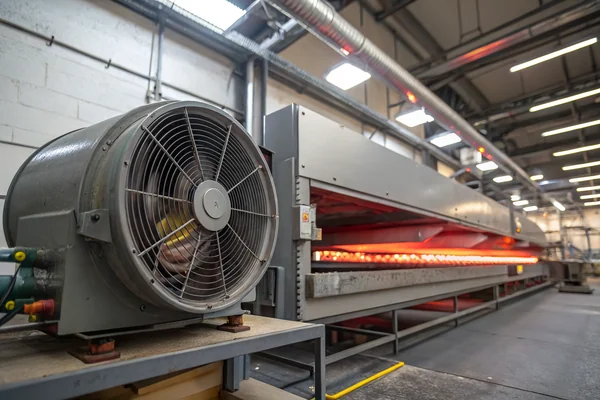
Reflow oven blowers operate continuously within zones reaching temperatures often well above 200°C, and wave soldering process blowers face similarly demanding thermal environments -- this sustained high-temperature operation is far beyond what general electronics cooling blowers are designed or rated to handle.
Why Standard Electronics-Grade Blower Materials Fail in This Environment
Typical electronics cooling blowers use plastic housings, standard bearing lubricants, and windings rated for relatively moderate operating temperatures, all of which can degrade rapidly or fail outright when exposed to the sustained high temperatures inside a reflow oven's process zones. This is why blowers for this application require high-temperature-rated materials, specialized lubricants, and motor windings specifically engineered for continuous operation at temperatures that would quickly destroy a standard cooling fan.
How Much Does Flux Vapor Exposure Actually Affect Blower Material Selection?
Chemical resistance is a genuine, separate engineering requirement alongside thermal tolerance.
Flux materials used in soldering release corrosive vapors when heated, and these vapors circulate throughout the reflow or wave soldering process area, meaning blower components need materials resistant to this chemical exposure in addition to tolerating high temperatures -- standard metals and plastics can corrode or degrade under sustained flux vapor exposure.
Why Combined Heat and Chemical Exposure Is More Demanding Than Either Alone
A material that tolerates high temperature in a clean environment may still degrade when that same temperature is combined with continuous flux vapor exposure, since heat can accelerate chemical degradation processes that would occur more slowly at lower temperatures -- this combined stress is specifically why reflow and wave soldering equipment components require validation under actual combined thermal and chemical operating conditions, not separate testing of each factor in isolation. This is why blower suppliers serving PCB manufacturing equipment need genuine experience with this specific combined exposure profile, not just general high-temperature or general chemical-resistance credentials separately.
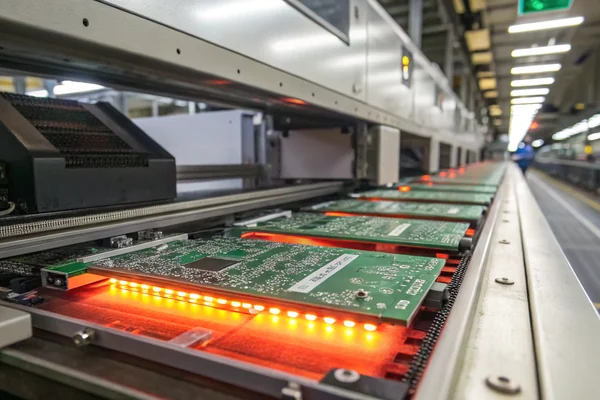
Why Does Airflow Uniformity Matter More Than Raw Airflow Volume for This Application?
Understanding why uniformity, not just quantity, is the key performance metric here.
A reflow oven can have entirely adequate total airflow volume while still producing defects if that airflow isn't distributed evenly across the entire process zone -- uniformity of temperature and airflow across the board's full width and length is the metric that actually determines consistent solder quality, not the oven's aggregate CFM rating.
Why Uniformity Requires Considering Blower Placement and Ducting Together, Not Blower Specs Alone
Achieving genuine airflow uniformity across a process zone depends on blower placement, ducting design, and airflow distribution engineering working together as a system, meaning a powerful blower poorly integrated into the oven's airflow path can still produce uneven heating despite strong raw specifications. This is why reflow oven manufacturers validate airflow uniformity through actual temperature profiling across representative boards, rather than relying on blower spec sheets alone to predict real-world heating consistency.
What Should PCB Equipment Manufacturers Actually Prioritize When Sourcing Blowers for This Application?
Bringing these demanding requirements together into practical sourcing guidance.
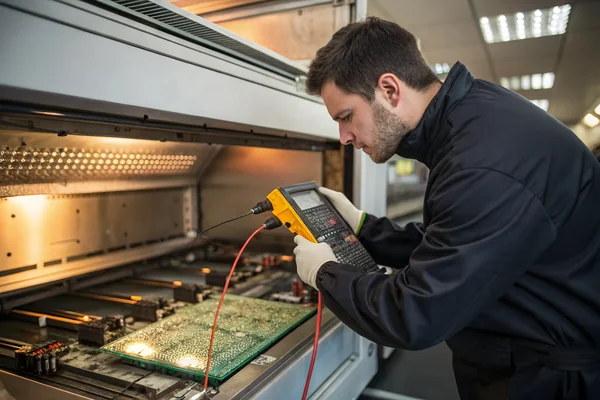
Prioritize blowers with validated high-temperature material ratings, genuine flux-vapor chemical resistance, and airflow characteristics suited to your specific oven's ducting and zone design -- validated through actual thermal profiling testing in your equipment, not datasheet specifications alone.
Why This Application Rewards Deep Supplier Collaboration Over Simple Spec Matching
Given the combined thermal, chemical, and uniformity requirements unique to reflow and wave soldering applications, working closely with a blower supplier who understands this specific combined operating environment -- rather than treating it as a standard high-temperature blower sourcing exercise -- tends to produce components genuinely suited to sustained reliable operation in this demanding equipment category.
Our DC blower fan line includes models engineered for demanding industrial thermal environments, manufactured at our Dongguan facility under ISO 9001 certification. With over 20 years of production experience, we work with PCB manufacturing equipment builders to match blower material and performance specifications to the combined thermal and chemical exposure profile of reflow and wave soldering applications.
How Does Blower Placement Within the Oven Actually Affect Zone-to-Zone Temperature Transitions?
The boundaries between temperature zones present a specific airflow engineering challenge worth understanding separately.
Reflow ovens step a board through distinct temperature zones (preheat, soak, reflow, cooling), and blower placement near zone boundaries needs to prevent excessive airflow mixing between zones that would blur the intended temperature profile -- poor zone separation can flatten the carefully engineered temperature curve a specific solder paste requires.
Why Zone Boundary Airflow Control Is a Distinct Engineering Challenge From In-Zone Uniformity
Achieving uniform airflow within a single zone is only part of the challenge -- reflow ovens also need to prevent adjacent zones' airflow from significantly mixing at the boundaries, since a solder paste's reflow profile depends on the board experiencing genuinely distinct preheat, soak, and reflow temperatures in sequence rather than a blurred, gradually blended transition between them. This is why reflow oven airflow engineering considers blower placement and ducting design specifically at zone transitions, not just within each zone's interior, as a distinct design challenge.
FAQ
Do all reflow ovens use the same blower design across all temperature zones?
Not necessarily -- different zones (preheat, soak, reflow, cooling) can have different temperature and airflow requirements, sometimes calling for different blower specifications matched to each zone's specific thermal profile.
How often do reflow oven blowers typically need replacement given this harsh environment?
This varies by blower quality, oven usage intensity, and maintenance practices, but blowers specifically rated for this environment generally provide meaningfully longer service life than standard blowers pressed into an unsuitable application.
Can nitrogen atmosphere reflow ovens use the same blowers as air-atmosphere ovens?
Blower material compatibility with a nitrogen atmosphere generally isn't the limiting factor, but nitrogen reflow systems have their own sealing and circulation considerations that should be confirmed with equipment-specific specifications.
Does blower failure in a reflow oven usually happen gradually or suddenly?
This varies, but material degradation from combined heat and chemical exposure often shows gradual performance decline before outright failure, making periodic inspection and airflow verification a useful preventive practice.
Is wave soldering blower sourcing different from reflow oven blower sourcing?
Both applications share similar combined thermal and flux exposure challenges, though the specific equipment design and airflow requirements differ enough that sourcing should be validated against each equipment type's specific operating conditions.
Can airflow uniformity problems in a reflow oven be fixed without replacing the blower?
Sometimes -- ducting adjustments or airflow baffle modifications can improve uniformity without a blower change, though if the blower itself is degraded or undersized, a component change may be necessary alongside any ducting adjustments.
Reliable PCB reflow and wave soldering quality comes down to blowers that combine genuine high-temperature durability, flux-vapor resistance, and validated airflow uniformity. At Herays, our Dongguan facility manufactures DC blowers engineered for demanding industrial thermal environments, backed by over 20 years of production experience under ISO 9001 certification. If you're sourcing components for PCB manufacturing equipment, we're glad to help match specifications to your process's specific thermal and chemical requirements.

Liang
I've been working with DC fans for 30 years — long enough to have seen the industry evolve from basic sleeve bearing designs to today's high-efficiency, IP68-rated systems built for the harshest environments imaginable. I founded Herays because I believed manufacturers and engineers deserved a supplier who could talk technical from day one. Not just hand over a datasheet, but actually help you select the right fan for your thermal load, your enclosure, your certification requirements. Most of what I write here comes directly from problems I've solved on the factory floor or in customer applications — medical devices, laser equipment, industrial automation, you name it. If it involves moving air efficiently and reliably, I've probably spent time thinking about it. When I'm not obsessing over airflow curves, I'm usually helping a customer figure out why their cooling system isn't performing the way their simulation said it would.
View all posts by Liang