

Every brand claims to make the "best" case fan, but the real differences show up in what each one actually optimizes for -- and that's rarely the same thing across brands.
Consumer case fan brands differ mainly in what they prioritize -- Noctua and be quiet! are broadly known for acoustic engineering and build quality at a premium price, Corsair and similar brands lean into RGB ecosystem integration and gaming aesthetics, and budget or OEM-sourced options compete primarily on price -- picking the right one depends on which of those priorities actually matters for your build.
- No single brand wins on every dimension -- acoustic performance, RGB ecosystem integration, and price each pull in different directions, and premium brands trade higher cost for measurable gains in their specific focus area.
- Noctua and be quiet! have built reputations specifically around acoustic engineering and long-term reliability, generally at a price premium over mainstream alternatives.
- Corsair and comparable brands compete heavily on RGB ecosystem integration and software, which matters more for aesthetics-focused builds than for pure thermal performance.
- Budget and OEM-sourced fans can perform adequately for many builds, but typically come with less acoustic engineering refinement and shorter or less transparent reliability data.
- Behind many retail-facing brands and custom PC builds sits an OEM/ODM manufacturing layer that most consumers never see directly -- worth understanding if you're sourcing fans for a product rather than a personal build.
Understanding what each tier of brand actually optimizes for -- rather than assuming "premium" means universally better -- makes the buying decision much more straightforward.
Table of Contents
What Actually Makes a Case Fan Brand "Good," Beyond Marketing?
Brand reputation in this category tends to track a small number of concrete, testable factors rather than vague quality claims.
A case fan brand's real reputation comes down to measurable factors -- acoustic performance at a given airflow, bearing longevity and failure rates, manufacturing consistency across units, and whether the RGB/software ecosystem actually works reliably -- rather than general marketing claims about being "premium" or "gaming-grade."
Why Independent Testing Matters More Than Brand Claims
Because these factors are measurable, independent reviewers who test dB(A) at matched airflow, or track long-term failure rates across large sample sizes, provide more reliable brand comparison data than any manufacturer's own marketing material. A brand's reputation built over years of consistent independent test results -- not just polished packaging -- is the more trustworthy signal when comparing options for a specific build priority.
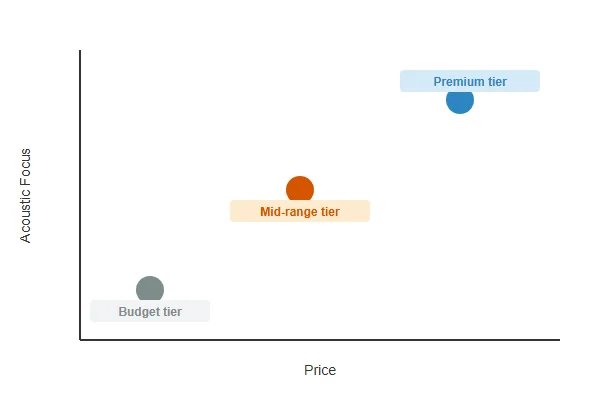
| Brand Tier | Primary Focus | Typical Price Position |
|---|---|---|
| Noctua, be quiet! | Acoustic engineering, build quality | Premium |
| Corsair, Fractal, Arctic | RGB ecosystem, balanced performance | Mid-range |
| Budget/OEM-sourced | Price | Entry-level |
What Sets Noctua and be quiet! Apart in the Premium Tier?
These two brands have built reputations around a specific, narrow focus rather than trying to compete on every front.
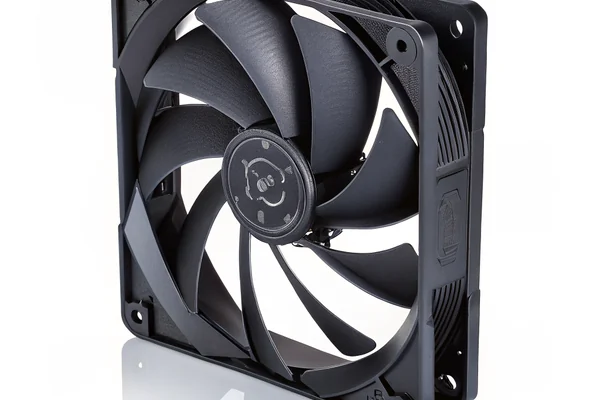
Noctua and be quiet! are widely recognized for acoustic engineering -- blade design, bearing quality, and vibration isolation specifically aimed at minimizing noise at a given airflow -- along with a general reputation for manufacturing consistency, at a price point that reflects that focused engineering investment rather than broad feature sets.
Why Acoustic Focus Tends to Come at a Cost Premium
Optimizing specifically for low noise at a target airflow requires more refined blade geometry, higher-grade bearings, and tighter manufacturing tolerances than a general-purpose fan design, all of which add cost. This is a large part of why these brands sit at the top of the price range -- the premium reflects real engineering investment in a specific, measurable outcome (acoustic performance), not primarily marketing spend. Buyers whose primary build priority is minimizing noise at a given cooling target are the audience this tier is built for.
How Do Corsair, Fractal, and Arctic Compete in the Mid-Range?
This tier generally balances performance against price while leaning into a different priority than the acoustic-focused premium tier.
Corsair, Fractal, and similar mid-range brands generally compete on a balance of acceptable acoustic performance, RGB ecosystem integration and software support, and broader product line breadth -- often prioritizing ecosystem compatibility (syncing lighting and control across many components) as much as pure acoustic optimization.
Why Ecosystem Integration Is a Real Differentiator Here
For builders assembling a system with multiple RGB components, having fans, RAM, and other parts sync reliably through one software ecosystem is a meaningful practical advantage that pure acoustic performance doesn't address. This is why mid-range brands often invest heavily in software compatibility and broader RGB ecosystem support -- it's a different value proposition than the acoustic-first approach of the premium tier, not simply a lesser version of it.
What Should You Expect From Budget or OEM-Sourced Fan Options?
Budget options fill a real role in the market, provided expectations are calibrated correctly.
Budget and OEM-sourced fans typically compete primarily on price, often with less acoustic engineering refinement and less publicly available long-term reliability data than established premium or mid-range brands -- they can still perform adequately for cost-sensitive builds or non-critical positions, but usually involve some compromise on noise or documented longevity.
Why "Budget" Doesn't Automatically Mean "Bad"
A budget fan positioned as a secondary case exhaust in a build that isn't acoustically sensitive can be a perfectly reasonable choice, since the compromise (somewhat higher noise, less bearing refinement) may not matter much in that specific role. The mistake is applying a budget fan to a position where its limitations do matter -- a primary intake fan in a quiet workstation build, for instance -- without accounting for the tradeoff being made. Matching the fan tier to the specific role it plays in the build, rather than assuming any given tier is uniformly right or wrong, produces better outcomes.
Who Actually Manufactures the Fans Behind These Consumer Brands?
The retail brand on the box isn't always the whole story of where and how a fan is actually made.
Many consumer-facing fan brands design and market their products while relying on OEM/ODM manufacturing partners -- specialized factories that produce fans to a brand's specification -- for actual production, a layer of the supply chain most consumers never interact with directly but that's central to how custom PC builders, system integrators, and product manufacturers source fans at volume.
Why This Layer of the Industry Matters for Different Buyers
Individual consumers typically buy the finished retail-branded product and never need to think about who manufactured it. But system integrators, custom PC builders sourcing at volume, and companies building fans into their own products often work directly with OEM/ODM manufacturers rather than buying retail-branded units -- getting access to customization, volume pricing, and direct engineering collaboration that retail channels don't offer. This is a fundamentally different sourcing relationship than buying a boxed Noctua or Corsair fan off a shelf, aimed at a different kind of buyer entirely.
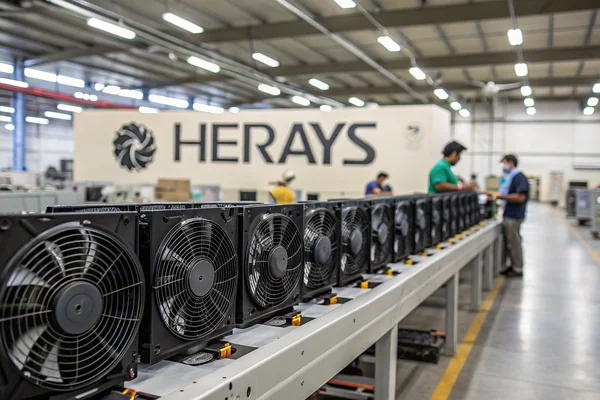
We operate as an OEM/ODM manufacturer of DC axial and case cooling fans from our Dongguan facility -- rather than a retail consumer brand, we work directly with system integrators, custom equipment builders, and companies sourcing fans at volume for their own products. Every fan we produce is validated on our in-house CFM and anechoic noise testing equipment under ISO 9001 and IATF 16949 certification, and we're glad to discuss custom specifications for buyers whose needs go beyond what a retail-channel purchase can offer.
How Should You Actually Evaluate Any Brand Before Buying?
A consistent evaluation approach works better than defaulting to brand reputation alone.
Evaluate any case fan brand by checking independent, matched-condition test data for noise and airflow at your target operating point, researching documented failure rates or warranty experiences rather than relying on marketing claims, and matching the brand's stated focus (acoustic performance, RGB ecosystem, or price) to what actually matters for your specific build.
Why a Consistent Checklist Beats Brand Loyalty
Buyers who default to "whichever brand I used last time" or purely reputation-based decisions often end up paying for strengths (RGB ecosystem depth, for instance) that don't matter for their current build's priorities. Working from a consistent checklist -- independent test data at your actual target operating conditions, documented reliability information, and an honest match to your build's real priority -- produces better decisions than brand loyalty or marketing claims alone, regardless of which tier you ultimately choose.
FAQ
Is Noctua's brown-and-beige color scheme purely aesthetic, or does it relate to performance?
It's primarily a brand identity choice rather than a performance factor, though some builders specifically avoid or seek it out for aesthetic reasons in build theming.
Do premium brands actually have measurably lower failure rates than mid-range options?
This varies by specific model and generation, and is worth checking against current independent long-term reliability data rather than assuming premium price automatically means lower failure rates across the board.
Can budget fans be a reasonable choice for a gaming PC?
Yes, particularly in secondary airflow positions where acoustic performance is less critical, though a primary intake or exhaust fan in a noise-sensitive build typically benefits more from a brand with stronger acoustic engineering.
Does RGB ecosystem lock-in actually limit future upgrade flexibility?
It can -- committing heavily to one brand's RGB software ecosystem sometimes makes mixing brands in a future upgrade more complicated to keep lighting synced, worth considering if ecosystem consistency matters to you long-term.
How do I find independent test data comparing these brands fairly?
Look for reviewers who test multiple fans on the same rig at matched airflow or RPM settings, since this controls for the variables that make raw manufacturer specs hard to compare directly across brands.
If I'm sourcing fans for my own product rather than a personal PC build, should I look at these consumer brands at all?
Generally no -- consumer retail brands aren't typically set up for OEM customization, volume pricing, or the engineering collaboration a product manufacturer needs. Working directly with an OEM/ODM manufacturer is usually the more appropriate path for that use case.
Choosing between case fan brands comes down to matching what each tier actually optimizes for to what your specific build needs, not defaulting to whichever brand is most talked about. At Herays, our Dongguan facility operates as an OEM/ODM manufacturer for DC axial and case cooling fans, supporting system integrators and volume buyers with custom specifications and in-house testing under ISO 9001 and IATF 16949 certification. If you're sourcing fans for a product rather than a personal build, we're glad to talk through what that OEM relationship looks like.

Liang
I've been working with DC fans for 30 years — long enough to have seen the industry evolve from basic sleeve bearing designs to today's high-efficiency, IP68-rated systems built for the harshest environments imaginable. I founded Herays because I believed manufacturers and engineers deserved a supplier who could talk technical from day one. Not just hand over a datasheet, but actually help you select the right fan for your thermal load, your enclosure, your certification requirements. Most of what I write here comes directly from problems I've solved on the factory floor or in customer applications — medical devices, laser equipment, industrial automation, you name it. If it involves moving air efficiently and reliably, I've probably spent time thinking about it. When I'm not obsessing over airflow curves, I'm usually helping a customer figure out why their cooling system isn't performing the way their simulation said it would.
View all posts by Liang

