

A datasheet tells you what a supplier claims their fan does. The right questions tell you whether they can actually back that claim up with process, data, and consistency.
Evaluating a DC fan supplier means asking specific questions about testing methodology, certification documentation, quality control processes, lead times, and after-sales support -- vague general questions produce vague general answers, while specific questions reveal whether a supplier can actually support your application.
- Technical questions about specs and tolerances should ask for actual test data and methodology, not just accept a datasheet number at face value.
- Quality and certification questions should request specific documentation you can independently verify, not just a general claim of compliance.
- Lead time, MOQ, and pricing questions reveal a supplier's actual capacity and flexibility, which matters as much as their catalog offerings.
- After-sales and warranty questions are frequently skipped during initial sourcing conversations but become critical once a real quality issue surfaces months into production.
- A supplier's willingness and ability to answer specific questions in detail is itself a meaningful signal about how they'll behave once you're a committed customer, not just during the sales process.
Working through a structured set of questions -- rather than a general "tell me about your fans" conversation -- produces sourcing decisions that hold up once real volume and real problems arrive.
Table of Contents
Why Does Supplier Selection Matter This Much for a Component-Level Purchase?
A fan is often a small line item, but a poor supplier relationship can create outsized downstream problems.
Supplier selection matters disproportionately for fans because a fan failure often causes a disproportionate downstream problem -- thermal failure of the larger system it cools -- and because fan quality issues frequently surface only after months of field deployment, well after the initial purchasing decision was made and hard to reverse.
Why Fan Sourcing Deserves More Scrutiny Than Its Line-Item Cost Suggests
A $2 fan protecting a $2,000 piece of equipment represents asymmetric risk that's easy to underweight during initial sourcing, especially when the fan seems to be a straightforward, interchangeable commodity component. The reality is that fan quality varies significantly between suppliers in ways that don't show up on a datasheet -- manufacturing consistency, bearing longevity, and real-world reliability under your specific operating conditions all depend on supplier quality practices that require direct questioning to uncover.
What Technical Questions Actually Reveal Whether Specs Are Real?
Datasheet numbers alone don't tell you how a fan was tested or whether it will perform consistently in your application.
Ask suppliers what testing standard and conditions were used to generate published specs (temperature, voltage, orientation), request the full P-Q curve rather than accepting a single CFM number, and ask about unit-to-unit manufacturing tolerance -- these questions reveal whether specs reflect rigorous, repeatable testing or optimistic best-case marketing numbers.
Why "What Standard Were You Tested To" Is the Single Most Revealing Question
A supplier who can immediately cite a specific testing standard (like ANSI/AMCA 210 for airflow) and describe their testing setup has clearly invested in rigorous, repeatable measurement -- a supplier who can't answer this specifically, or who deflects to "industry standard testing" without naming one, is a meaningful signal worth weighing. Similarly, requesting the full P-Q curve rather than accepting a single headline CFM number reveals whether a supplier has actually characterized their product's performance across its operating range or is only reporting a favorable single data point.
| Question Category | What to Ask | What It Reveals |
|---|---|---|
| Technical | Testing standard used for specs | Rigor of published data |
| Quality | Specific certifications with file numbers | Verifiable compliance |
| Commercial | MOQ, lead time, capacity | Flexibility for your volume |
| After-sales | Warranty terms, RMA process | Support when issues arise |
What Quality and Certification Questions Should You Never Skip?
General claims of quality or compliance need to be backed by documentation you can actually verify independently.
Ask for specific certification numbers you can independently verify (UL file numbers, CE Declaration of Conformity documents), ask about in-house testing equipment and quality control processes, and ask what percentage of units undergo testing before shipment -- vague answers to any of these are a meaningful red flag.
Why Verifiable Documentation Beats General Assurances
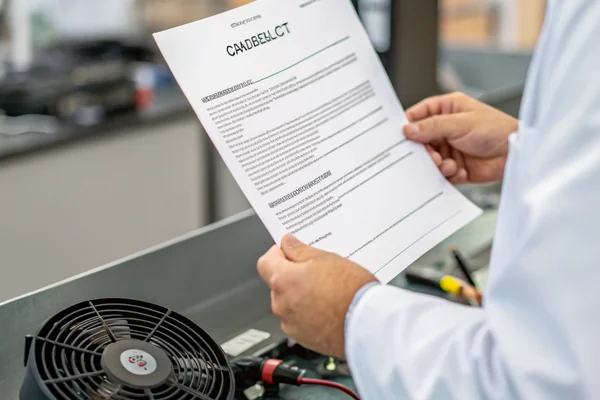
A supplier confidently stating "we're fully certified" without providing a specific file number or document is fundamentally different from one who immediately provides a UL file number you can look up independently. The same applies to quality control claims -- asking specifically what percentage of units are tested (100% inspection versus statistical sampling) and what in-house equipment supports that testing reveals whether quality control is a genuine process or a marketing claim.
How Should You Question Lead Time, MOQ, and Pricing?
These commercial terms reveal a supplier's actual operational capacity, not just their willingness to quote a number.
Ask about lead time under normal versus high-demand conditions, whether MOQ is negotiable for prototype or pilot quantities, and what drives pricing tiers across volume breaks -- suppliers who give specific, consistent answers with clear reasoning behind them are generally more reliable partners than those offering vague or shifting terms.
Why Consistency in Commercial Answers Matters as Much as the Numbers Themselves
A supplier whose quoted lead time changes significantly between conversations, or who can't clearly explain their MOQ logic, may be less operationally mature than one who consistently and confidently explains their capacity constraints and pricing structure. Asking specifically about high-demand-period lead times (rather than just best-case numbers) reveals whether a supplier is being realistic about capacity constraints that could affect your production schedule during your own busy periods.
What After-Sales and Warranty Questions Get Overlooked Most Often?
These questions matter most exactly when they're least top-of-mind -- during the initial, optimistic sourcing conversation.
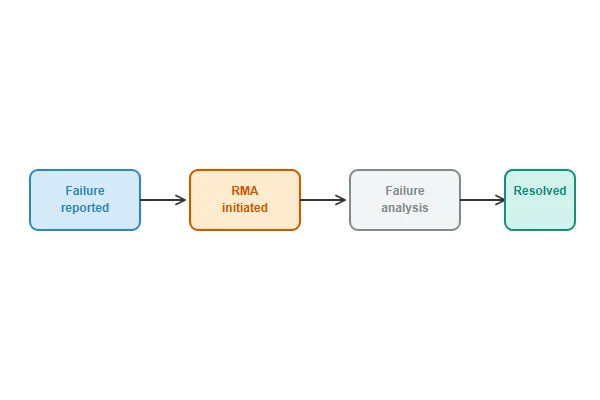
Ask specifically about warranty duration and what it actually covers, the RMA process and expected turnaround time, and whether the supplier provides field failure analysis support -- these questions are commonly skipped during initial sourcing but become critical the first time a real quality issue surfaces in production.
Why This Category of Question Prevents the Most Painful Surprises
Warranty terms that sound reassuring in general conversation ("we stand behind our products") sometimes turn out to be narrower than expected once you read the actual terms -- specific exclusions, documentation requirements, or response time commitments that only surface when you actually need to file a claim. Asking these questions upfront, and getting the answers in writing, avoids discovering unfavorable terms during an already-stressful field failure situation.
Are There Questions Specific to International or Cross-Border Sourcing?
Sourcing from an overseas manufacturer adds a layer of questions beyond the core technical and commercial evaluation.
For cross-border sourcing specifically, ask about shipping and customs documentation support, communication responsiveness across time zones, and whether the supplier has experience shipping to your specific destination market's regulatory requirements -- gaps in any of these can cause delays that have nothing to do with the fan itself.
Why Logistics Questions Are Easy to Underweight Until They Cause a Delay
A technically excellent fan from a supplier unfamiliar with your destination market's import documentation requirements can still cause significant shipment delays that have nothing to do with product quality. Asking specifically about a supplier's experience shipping to your particular country or region, and their process for providing customs and compliance documentation, surfaces this risk before it becomes a live problem holding up your own production schedule.
We welcome detailed technical and quality questions from prospective customers -- our Dongguan facility operates under ISO 9001, ISO 14001, and IATF 16949 certification, with in-house CFM airflow, anechoic noise, and dynamic balance testing equipment we're glad to walk you through directly. Over 20 years of production experience means we've built processes around exactly the kind of documentation and traceability questions serious buyers ask, and we're happy to provide specific answers rather than general assurances.

FAQ
How many of these questions should I ask before making a sourcing decision?
There's no fixed number, but covering each category (technical, quality, commercial, after-sales) at least once gives a reasonably complete picture. Prioritize the categories most relevant to your specific risk -- a high-volume buyer weighs commercial terms heavily, while a safety-critical application weighs quality documentation most heavily.
Should I ask these questions in writing or in a live conversation?
Both have value -- live conversation reveals how quickly and confidently a supplier responds, while getting key answers in writing (especially warranty terms and certifications) creates a documented reference for later.
What's a reasonable response time to expect from a supplier answering these questions?
This varies by question complexity, but a supplier who takes an unusually long time to answer straightforward questions about their own testing or certifications may be a signal worth noting, separate from more complex custom engineering questions that legitimately take longer.
Is it reasonable to ask a supplier for reference customers?
Yes, particularly for larger volume commitments -- a supplier confident in their quality and service history should be willing to provide at least general reference information, though specific customer names may be withheld for confidentiality.
Should these questions differ for a prototype order versus a production volume order?
The core categories stay the same, but weighting shifts -- prototype orders weight technical accuracy and lead time more heavily, while production volume orders weight quality consistency, capacity, and after-sales support more heavily.
What if a supplier can't answer some of these questions well?
It doesn't automatically disqualify them, but it's useful information -- weigh gaps against how critical that specific category is for your application, and consider whether the gap reflects a genuine limitation or simply an area they haven't been asked about before.
The right questions turn a sourcing decision from a gamble on marketing claims into an evaluation based on verifiable evidence. At Herays, our Dongguan facility has built our processes around the documentation, testing, and transparency serious buyers look for, backed by over 20 years of experience under ISO 9001 and IATF 16949 certification. If you're evaluating suppliers for an upcoming project, we're glad to answer these questions directly.

Liang
I've been working with DC fans for 30 years — long enough to have seen the industry evolve from basic sleeve bearing designs to today's high-efficiency, IP68-rated systems built for the harshest environments imaginable. I founded Herays because I believed manufacturers and engineers deserved a supplier who could talk technical from day one. Not just hand over a datasheet, but actually help you select the right fan for your thermal load, your enclosure, your certification requirements. Most of what I write here comes directly from problems I've solved on the factory floor or in customer applications — medical devices, laser equipment, industrial automation, you name it. If it involves moving air efficiently and reliably, I've probably spent time thinking about it. When I'm not obsessing over airflow curves, I'm usually helping a customer figure out why their cooling system isn't performing the way their simulation said it would.
View all posts by Liang

