

Most premature fan failures trace back to one of a handful of well-understood root causes, and nearly all of them are preventable with the right selection or installation choices made upfront.
Cooling fans most commonly fail early from bearing wear and lubrication loss, overheating and thermal stress, vibration and mechanical shock, contamination from dust and moisture, and electrical issues like voltage instability -- identifying which of these applies to a specific failure is the first step toward preventing recurrence.
- Bearing wear and lubrication loss is the single most common root cause of fan failure, and bearing type selection significantly affects how quickly this happens under given operating conditions.
- Overheating doesn't just affect the equipment a fan cools -- the fan's own motor and bearings degrade faster when the fan itself operates above its rated temperature range.
- Vibration and mechanical shock cause failures that are often misdiagnosed as bearing wear, since the symptoms can look similar without closer inspection.
- Contamination from dust and moisture ingress accounts for a significant share of field failures, particularly in fans without adequate IP rating for their environment.
- Voltage instability and electrical issues are a less common but real root cause, often overlooked because the symptoms can resemble mechanical failure.
Working through these five root causes systematically, rather than guessing, is what actually prevents a failure from recurring across your next production run or deployment.
Table of Contents
Why Do Fans Fail Prematurely in the First Place?
Understanding the general pattern behind premature failure helps frame the specific root causes that follow.
Fans fail prematurely when a component -- most often the bearing, but sometimes the motor winding, blade, or housing -- degrades faster than its design life due to operating conditions exceeding what it was rated or selected for, whether that's temperature, contamination, vibration, or electrical stress beyond the fan's specification.
Why "Rated Lifespan" Assumes Specific Operating Conditions
A fan's published MTBF or rated lifespan is measured under specific reference conditions -- a defined temperature, voltage, and clean environment -- and any deployment that deviates meaningfully from those reference conditions will see actual field lifespan diverge from the datasheet number, sometimes significantly. This is why failure analysis starts by comparing actual deployment conditions against the fan's rated conditions, since a mismatch there is often the fastest path to identifying root cause.
| Root Cause | Common Symptom | Typical Trigger |
|---|---|---|
| Bearing wear | Increased noise, wobble | Time, heat, wrong bearing type for duty |
| Overheating | Reduced lifespan, discoloration | Ambient temp exceeding rating |
| Vibration/shock | Sudden failure, bearing damage | Poor mounting, impact events |
| Contamination | Reduced airflow, seizure | Inadequate IP rating for environment |
| Electrical issues | Erratic speed, no start | Voltage instability, driver fault |
How Does Bearing Wear and Lubrication Loss Actually Cause Failure?
This is consistently the leading root cause across most fan failure analyses, making it worth understanding in detail.
Bearing wear occurs as lubricant breaks down or migrates away from contact surfaces over time and operating cycles, increasing friction and heat at the bearing until it eventually seizes or produces enough noise and vibration to be considered failed -- the rate of this process depends heavily on bearing type, operating temperature, and duty cycle.
Why Bearing Type Selection Is the Primary Lever Here
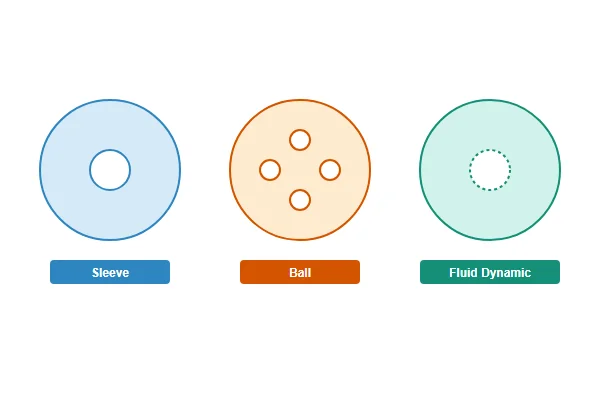
Sleeve bearings are generally the most prone to this failure mode, since their lubricant reserve is smaller and lubricant loss more directly translates to increased friction; ball bearings hold up better under continuous operation but can develop their own tonal noise as they wear; fluid dynamic bearings generally offer the best combination of longevity and stability for demanding continuous-duty applications. Selecting a bearing type matched to the actual duty cycle and expected service life -- not just the lowest-cost option -- is the single most effective lever for preventing this failure mode from being the limiting factor in a fan's field lifespan.
How Does Overheating Actually Damage the Fan Itself, Not Just What It Cools?
It's easy to focus on what a fan is cooling and forget the fan's own thermal limits, but the fan is also a heat-sensitive component.
A fan operating above its rated ambient temperature range experiences accelerated degradation of motor winding insulation, bearing lubricant breakdown, and in severe cases, plastic housing or blade deformation -- meaning overheating shortens the fan's own service life independent of whatever thermal problem it may also be failing to solve for the equipment it cools.
Why This Is Often a Root Cause Hiding Behind Another Symptom
A fan installed in an enclosure that's already running hotter than expected -- due to inadequate ventilation elsewhere, or higher-than-anticipated heat load from other components -- experiences elevated ambient temperature that accelerates its own internal degradation, even if the fan is otherwise correctly specified for its cooling task. This is why failure analysis should include checking actual measured ambient temperature at the fan's location against its rated range, not just assuming ambient conditions match the original design assumption.
How Do Vibration and Mechanical Shock Actually Cause Fan Failure?
This root cause is frequently underdiagnosed because its symptoms overlap with ordinary bearing wear.
Vibration and mechanical shock -- from poor mounting, transportation impact, or nearby equipment vibration -- can cause bearing damage, blade imbalance, or structural fatigue in the fan frame that presents similarly to ordinary wear-related failure, but stems from a mechanical stress root cause that requires a different fix (isolation mounts, better packaging, addressing the vibration source) rather than simply replacing the fan with an identical unit.
Why Distinguishing This From Ordinary Wear Actually Matters
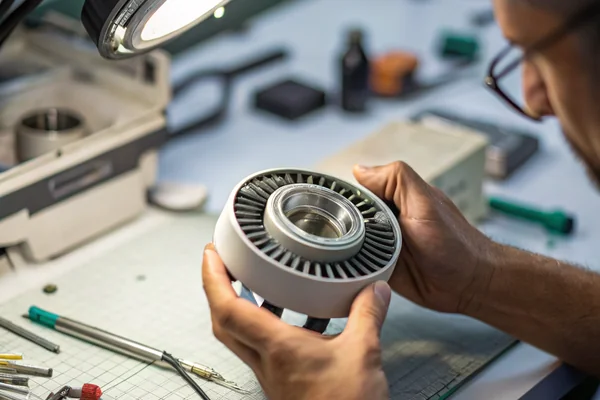
Replacing a vibration-damaged fan with an identical unit, without addressing the underlying vibration source or mounting method, typically results in the replacement fan failing on a similar timeline -- the root cause wasn't the fan itself but the mechanical environment it was installed into. Inspecting a failed fan for asymmetric wear patterns, bent components, or damage inconsistent with gradual wear can help distinguish vibration-related failure from ordinary bearing degradation, pointing toward mounting or isolation fixes rather than a simple like-for-like replacement.
How Significant Is Contamination as a Root Cause, and How Do You Prevent It?
Dust and moisture ingress account for a meaningful share of field failures, particularly in fans deployed without adequate environmental protection.
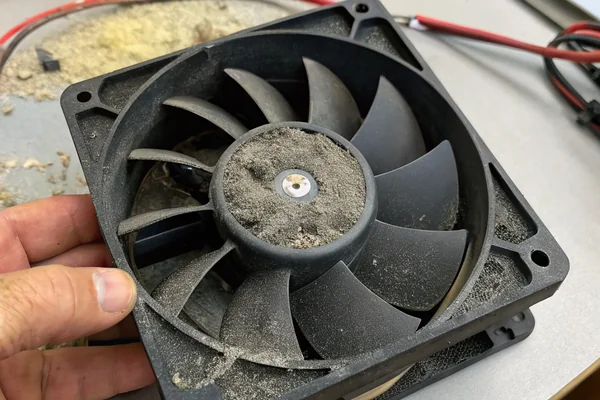
Dust accumulation restricts airflow and can work into bearing assemblies, while moisture ingress can cause corrosion or electrical short circuits -- both are largely preventable by selecting a fan with an IP rating appropriate for the actual deployment environment, rather than assuming a standard commercial-rated fan will be adequate for a dusty, humid, or outdoor application.
Why IP Rating Mismatches Are a Common, Avoidable Root Cause
A fan rated for standard indoor commercial environments deployed into a dusty industrial floor, an outdoor enclosure, or a humid environment without adequate IP rating is set up for contamination-related failure regardless of how well the fan otherwise matches performance requirements. This is a genuinely avoidable failure mode -- confirming actual environmental conditions (dust level, humidity, outdoor exposure) against the fan's IP rating during initial specification prevents a significant category of field failures before they happen.
We support root cause failure analysis for our customers directly, drawing on our in-house testing equipment -- including dynamic balance correction, salt spray testing, and temperature cycling -- at our Dongguan facility to help distinguish bearing wear, vibration damage, contamination, and electrical root causes. Over 20 years of production experience under ISO 9001 and IATF 16949 certification means we can help match bearing type and IP rating to your actual deployment conditions before failures occur, not just after.
Can Electrical Issues Really Cause What Looks Like a Mechanical Failure?
This root cause is less common than the mechanical categories but genuinely underappreciated when it does occur.
Voltage instability, driver circuit faults, or EMI-related issues can cause erratic fan speed, failure to start, or in some cases accelerated motor winding degradation that presents similarly to mechanical wear-related failure -- ruling out electrical root causes requires checking actual supply voltage stability and driver circuit behavior, not just inspecting the fan mechanically.
Why Electrical Root Causes Get Overlooked
Because mechanical failure modes (bearing wear, contamination) are more common and more intuitive to diagnose visually, electrical root causes sometimes get missed in failure analysis that focuses primarily on physical inspection of the fan itself. Voltage instability or driver circuit issues upstream of the fan can cause symptoms -- erratic speed, intermittent operation, premature motor degradation -- that look mechanical without a closer look at the actual electrical supply the fan is receiving in the field.
FAQ
What's the fastest way to narrow down which root cause applies to a specific failure?
Start by checking actual deployment conditions (temperature, environment, voltage stability) against the fan's rated specifications -- a mismatch there often points directly to the likely root cause before detailed physical inspection is even needed.
Is bearing type alone enough to prevent premature failure, or do other factors matter as much?
Bearing type is a major lever but not the only one -- operating temperature, contamination exposure, and mounting/vibration isolation all interact with bearing type to determine actual field lifespan, so addressing bearing type alone without the others may not fully solve a recurring failure pattern.
How can I tell if a failure was caused by shipping/transportation damage versus in-service conditions?
Failures appearing very early in service life, especially with physical damage inconsistent with normal wear, often point toward transportation or handling damage rather than an in-service root cause -- worth checking packaging and handling procedures if this pattern recurs.
Does fan orientation (horizontal vs vertical mounting) affect which failure modes are more likely?
It can, particularly for bearing types sensitive to orientation -- some sleeve bearing designs perform differently in different mounting orientations, worth confirming with the specific fan's specification if orientation varies across your deployment.
Is there a way to predict failure before it happens, rather than analyzing it after the fact?
Monitoring fan tachometer signal for gradual speed or noise changes over time can provide early warning of developing bearing issues before outright failure, particularly valuable in critical applications where unplanned failure is costly.
Should failure analysis findings change future purchasing decisions, or just the immediate fix?
Both -- a root cause that traces back to fan specification (wrong bearing type, inadequate IP rating for the environment) should inform future purchasing criteria, not just the immediate replacement, to prevent the same failure pattern recurring across future units.
Most premature fan failures trace back to one of these five root causes, and identifying which one applies is what separates a fix that actually prevents recurrence from one that just replaces the symptom. At Herays, our Dongguan facility supports root cause failure analysis using our in-house testing equipment, backed by over 20 years of production experience under ISO 9001 and IATF 16949 certification. If you're seeing a recurring fan failure pattern, we're glad to help work through the root cause with you directly.

Liang
I've been working with DC fans for 30 years — long enough to have seen the industry evolve from basic sleeve bearing designs to today's high-efficiency, IP68-rated systems built for the harshest environments imaginable. I founded Herays because I believed manufacturers and engineers deserved a supplier who could talk technical from day one. Not just hand over a datasheet, but actually help you select the right fan for your thermal load, your enclosure, your certification requirements. Most of what I write here comes directly from problems I've solved on the factory floor or in customer applications — medical devices, laser equipment, industrial automation, you name it. If it involves moving air efficiently and reliably, I've probably spent time thinking about it. When I'm not obsessing over airflow curves, I'm usually helping a customer figure out why their cooling system isn't performing the way their simulation said it would.
View all posts by Liang

