Your device is overheating, and a faster fan seems like the simple fix. But a 10,000 RPM fan could be loud, power-hungry, and fail quickly. So when is it necessary?
You need a 10,000+ RPM fan only when your system has high airflow resistance1, such as in servers or devices with dense heatsinks. The high rotational speed is necessary to generate enough static pressure to push air through these tight spaces and overcome the obstruction.
Focusing on the highest RPM on a datasheet is a common engineering mistake. A fan with a high RPM rating might be completely unsuitable for a given application if the system's impedance is not properly considered. The goal is to match the fan's performance characteristics to the system's unique thermal challenges. To make an informed choice, it's important to first understand what "high speed" means in the context of DC cooling fans.
Table of Contents
What Counts as High Speed?
While fan speeds are a common specification, the term "high speed" is subjective without context. A 10,000 RPM rating can be excessive for one application and insufficient for another.
"High speed" is relative to the fan's size2. For a small 40mm fan, 10,000 RPM is a common specification, but for a large 120mm fan, 3,000 RPM is already considered very high speed. It's not a single number but a performance category defined by the fan's physical dimensions.
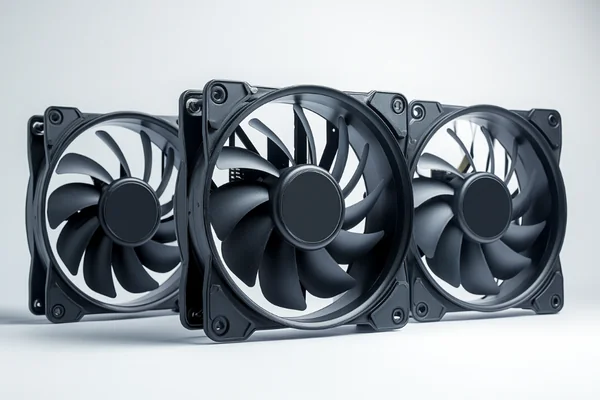
Engineers often specify a target RPM, but the initial design consideration should be the fan's size. A small fan must spin much faster than a large fan to move a similar volume of air. Because the blade tips on a small fan travel a shorter distance per rotation, more rotations are required to achieve equivalent airflow. This is why a 12,000 RPM speed on a 40mm fan might be standard for a 1U server, while a 120mm fan operating at 3,000 RPM would be an extremely powerful and loud solution reserved for niche applications like high-performance PC cooling. RPM is a means to an end; the true engineering goals are achieving the required airflow and, critically for high-speed fans, generating sufficient static pressure.
| Fan Size | Typical RPM Range | "High Speed" RPM | Common Use Case |
|---|---|---|---|
| 40mm | 3,000 - 8,000 RPM | 10,000 - 15,000 RPM | 1U Servers, 3D Printer Hot-ends |
| 80mm | 2,000 - 4,000 RPM | 5,000 - 6,000 RPM | Compact Industrial Cabinets, Telecom |
| 120mm | 1,200 - 2,500 RPM | 3,000 - 5,000 RPM | High-Performance PC Radiators |
Applications That Require High-RPM Fans
Selecting the appropriate fan is crucial for effective cooling; a mismatch can result in poor thermal performance or excessive noise.
High-RPM fans are essential for high-impedance systems3. This includes 1U/2U rackmount servers, telecom equipment, dense heatsinks, and devices with long air ducts or restrictive dust filters. These applications obstruct airflow, requiring high static pressure to overcome the resistance and maintain component cooling.
The key concept is "system impedance4," a technical term for airflow resistance. Imagine the difference between breathing through a wide pipe versus a narrow straw; the straw represents a high-impedance path. High-speed fans are specifically designed for these "straw-like" scenarios where air movement is restricted.
High-Density Servers
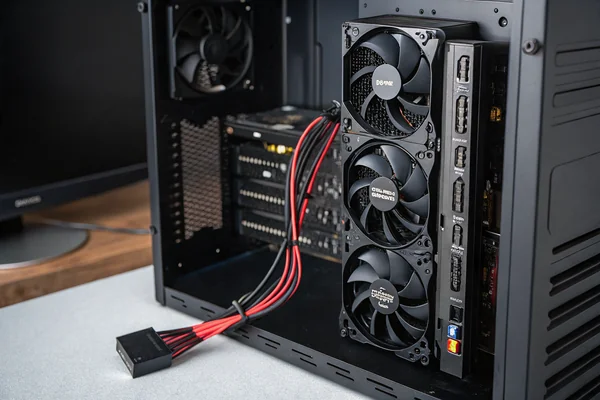
In 1U or 2U rackmount servers, components are packed tightly with minimal free space, creating a convoluted and obstructed air path. A standard fan cannot generate enough force to push air through this maze. A high-speed, high-pressure fan is required to force cooling air over CPUs and other heat-generating components.
Industrial and Telecom Equipment
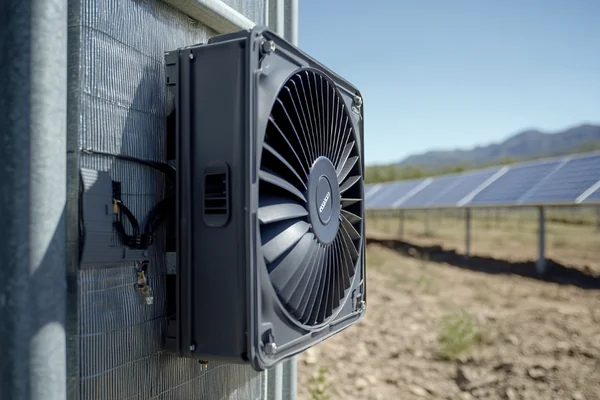
This same principle applies to industrial control cabinets and telecommunications hardware. These devices are often sealed for protection against environmental factors, and their internal layouts are complex. Air must often travel down long, winding paths, and only a fan with high static pressure—driven by high RPMs—can maintain effective airflow from inlet to outlet.
Specialized Devices
Consider the compact hot-end cooler on a 3D printer or the cooling system in a portable medical device. These products often feature small vents and may incorporate filters that create significant backpressure. A high-RPM blower or axial fan is the only way to deliver a concentrated stream of air to the critical components.
The Tradeoffs: Noise, Lifespan & Power
While effective for high-impedance applications, high-RPM fans come with significant tradeoffs in noise, longevity, and power consumption that must be factored into the design.
The main trade-offs of high-RPM fans are significant. They produce much more noise, consume more power (which adds heat), and wear out their bearings faster. These factors must be weighed against the cooling performance gain in your specific application.
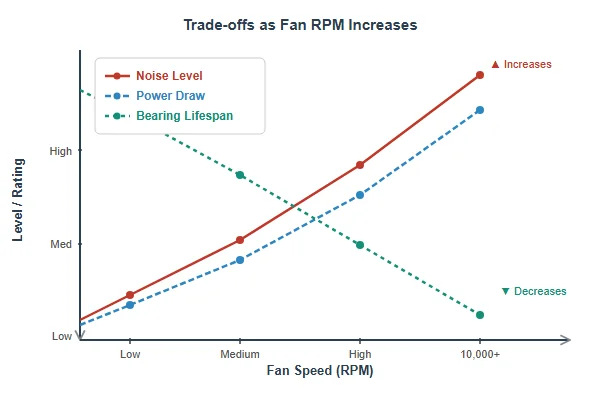
These three costs are critical considerations in ensuring a cooling solution is sustainable for the product's entire lifecycle.
The Noise Factor
Noise does not increase linearly with speed; it increases exponentially5. A fan spinning at 10,000 RPM is not merely twice as loud as one at 5,000 RPM—it is many times louder. The characteristic high-pitched whine is caused by the blade tips cutting through the air at very high velocities. For products intended for use in office or home environments, this level of noise is often unacceptable.
Power Consumption and Heat
To spin faster, the motor requires more electrical power. This increased power draw directly impacts operating costs. Furthermore, due to motor inefficiencies, the fan motor itself generates more heat6. In a tightly constrained enclosure, the fan can become a secondary heat source, partially negating the cooling it provides.
Reduced Lifespan
High RPM places immense mechanical stress on the fan's bearings. This constant, high-speed rotation accelerates wear and tear, which significantly shortens the fan's operational lifespan7. If a product must operate reliably for years without maintenance, specifying a fan to run constantly at its maximum rated speed introduces a significant reliability risk.
Bearing Selection for High-Speed Operation
Once a high-speed fan is deemed necessary, selecting the correct bearing type is critical to ensure long-term reliability and prevent premature failure.
For high-speed fans, dual ball bearings are the best choice8. They handle high temperatures and mechanical stress far better than sleeve bearings. While they have a higher unit cost, they provide the necessary reliability and longevity for high-RPM operation.
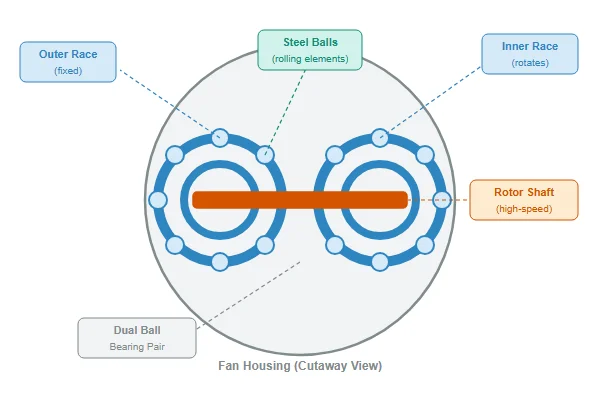
The bearing system is the most critical component for reliability in high-speed applications. The extreme heat and constant rotational force generated during high-RPM operation will cause an inferior bearing to fail in a short amount of time.
| Bearing Type | Suitability for High RPM | Key Reason |
|---|---|---|
| Dual Ball Bearing | Excellent | Highly durable and resistant to heat and constant stress. The industry standard for reliability in demanding applications. |
| Sleeve Bearing | Poor | Lubricant dries out quickly at high speeds and temperatures9, leading to seizure and rapid failure. |
| Hydraulic/FDB | Moderate | An improvement over sleeve bearings, but can still struggle with the extreme stress of 10,000+ RPM compared to a true dual ball bearing system. |
At Herays, we exclusively specify dual ball bearings for any fan intended for sustained operation above 5,000 RPM. While a sleeve bearing may offer a small reduction in the bill of materials, this cost is insignificant compared to the potential expense of field failures and warranty claims. For any application demanding high-speed performance, investing in dual ball bearings is essential for product reliability.
Key Specifications for High-Speed Fans
A fan datasheet contains numerous specifications, but focusing solely on RPM can lead to suboptimal fan selection for the system's actual requirements.
Beyond RPM, the most important specifications are Maximum Static Pressure (in mmH2O) and Maximum Airflow (in CFM). These two values define the fan's performance (P-Q) curve. The objective is to match the fan's P-Q curve to the system's impedance curve to ensure optimal performance at the actual operating point.
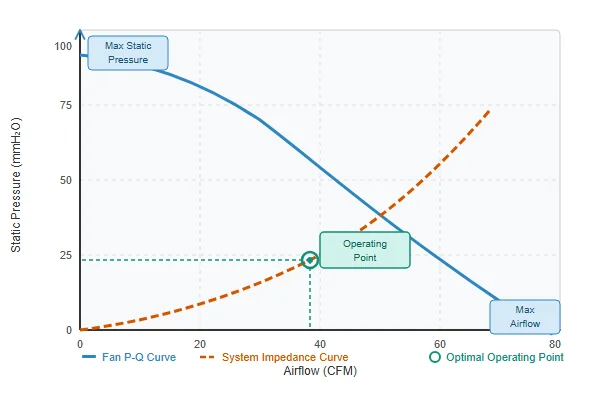
Instead of asking, "How fast does it spin?", the correct engineering question is, "How does it perform under pressure?". This reframes the selection process from chasing a single number to solving a system-level challenge.
Static Pressure (mmH2O)
This is the single most important spec for high-impedance systems10. It measures the fan's ability to push air against resistance. High RPM is the primary method fan designers use to achieve high static pressure. If your device has dense filters, tightly packed components, or a convoluted air path, you must prioritize a fan with a high static pressure rating.
Airflow (CFM)
Cubic Feet per Minute (CFM) measures the total volume of air a fan can move in an open, unrestricted environment (zero static pressure). While this "free air" rating is an important metric, the actual delivered airflow will be lower once system resistance is introduced. A fan with high CFM but low static pressure will be ineffective in a high-impedance environment like a server chassis.
The P-Q Curve11
This graph, provided on any comprehensive fan datasheet, illustrates the inverse relationship between static pressure (P) and airflow (Q). It shows exactly how much airflow the fan will deliver at different levels of system resistance. The goal is to select a fan that provides the target CFM at the system's specific impedance—the true mark of a successful cooling solution.
Conclusion
A 10,000+ RPM fan is a specialized component designed for high-pressure, high-impedance applications, not a general-purpose upgrade. To ensure a reliable and effective thermal solution, engineers must analyze the tradeoffs of noise, power consumption, and lifespan against their system's specific cooling requirements, focusing on static pressure and the P-Q curve rather than RPM alone.
""Improving Cooling Efficiency Of Servers By Replacing Smaller ...", https://mavmatrix.uta.edu/mechaerospace_theses/389/. An engineering source would explain that high rotational speeds are required to generate the static pressure needed to overcome high airflow impedance, a condition common in densely packed electronics like servers. ↩
"[PDF] Fan Fundamentals - Greenheck", https://content.greenheck.com/public/DAMProd/Original/10002/FanFundamentals.pdf. A technical paper or engineering guide on fan selection would confirm that because tip speed is a function of both RPM and diameter, smaller fans require significantly higher rotational speeds to achieve performance levels comparable to larger fans. ↩
"High impedance - Wikipedia", https://en.wikipedia.org/wiki/High_impedance. An engineering resource on thermal management would define high-impedance systems as those with significant obstruction to airflow, providing examples such as densely packed server racks, ducted enclosures, and systems with fine-pitch heatsinks or filters. ↩
"Fan Configuration and Airflow Impedance", https://www.sjsu.edu/people/nicole.okamoto/courses/me_146/Fan%20Configuration%20and%20Airflow%20Impedance%20Lab%20Manual%20Part%201%20%20ME146.doc. Technical documentation on fan selection defines system impedance as the total resistance to airflow presented by the system's components, including grilles, filters, circuit boards, and heatsinks. It is typically measured in units of pressure. ↩
"Computational AeroAcoustics for [Fan Noise](https://herays.com/dc-axial-fan-noise-reduction-how-to-choose-a-quiet-cooling-fan/) Prediction", https://ntrs.nasa.gov/citations/20020073512. According to the fan affinity laws, the noise level generated by a fan is proportional to the fifth to sixth power of its rotational speed, confirming a rapid, non-linear increase in noise with RPM. ↩
"Fan Motor Power Consumption : r/MEPEngineering - Reddit", https://www.reddit.com/r/MEPEngineering/comments/1ivnc6a/fan_motor_power_consumption/. Research on brushless DC motor efficiency shows that power consumption increases significantly with rotational speed. This increased power draw, combined with motor inefficiencies, results in greater generation of waste heat by the fan motor itself. ↩
"Multidimensional Study on the Wear of High-Speed ... - PMC - NIH", https://pmc.ncbi.nlm.nih.gov/articles/PMC10096244/. Bearing life models, such as the L10 life equation, demonstrate that the expected lifespan of a bearing is inversely proportional to its rotational speed. Therefore, operating a fan at higher RPMs increases mechanical stress and accelerates wear, reducing its operational life. ↩
"Fan Bearing Types – Weighing the Pros and Cons | Same Sky®", https://www.sameskydevices.com/blog/fan-bearing-types-weighing-the-pros-and-cons?srsltid=AfmBOoq5uX6Ancm7UXd4FeGZ2PZOTjjADAnxmmFutWxJMatLe5ReBln5. Engineering guides on fan selection consistently recommend dual ball bearings for applications requiring high reliability, high temperature tolerance, and long life under high rotational speeds, noting their superior durability compared to sleeve or fluid dynamic bearings in these conditions. ↩
"[PDF] HI GH TEMPERATURE SOLID LUBRICANTS", https://ntrs.nasa.gov/api/citations/19730011810/downloads/19730011810.pdf. Studies on fan reliability identify the evaporation or degradation of lubricant as the primary failure mechanism for sleeve bearings, a process that is accelerated by the higher operating temperatures and rotational friction associated with high-RPM use. ↩
"[DOC] Fan Configuration and Airflow Impedance", https://www.sjsu.edu/people/nicole.okamoto/courses/me_146/Fan%20Configuration%20and%20Airflow%20Impedance%20Lab%20Manual%20Part%201%20%20ME146.doc. Engineering best practices for thermal design state that for systems with high airflow resistance, the fan's static pressure rating is the most critical parameter, as it determines the fan's ability to deliver airflow against the system's backpressure. ↩
"What is a PQ curve and how do you read it? - Corsair", https://www.corsair.com/us/en/explorer/diy-builder/blogs/what-is-a-pq-curve-and-how-do-you-read-it/?srsltid=AfmBOor_F9Sg7kx3QNgxxsxZShkjPN8JEpUOnM2gNPWubP7tdhaIwTVl. A fan's performance (P-Q) curve is a graph that plots the static pressure it can generate against the volume of airflow it produces. This curve is used in conjunction with a system impedance curve to determine the actual operating point (airflow and pressure) of the fan within a specific application. ↩

Liang
I've been working with DC fans for 30 years — long enough to have seen the industry evolve from basic sleeve bearing designs to today's high-efficiency, IP68-rated systems built for the harshest environments imaginable. I founded Herays because I believed manufacturers and engineers deserved a supplier who could talk technical from day one. Not just hand over a datasheet, but actually help you select the right fan for your thermal load, your enclosure, your certification requirements. Most of what I write here comes directly from problems I've solved on the factory floor or in customer applications — medical devices, laser equipment, industrial automation, you name it. If it involves moving air efficiently and reliably, I've probably spent time thinking about it. When I'm not obsessing over airflow curves, I'm usually helping a customer figure out why their cooling system isn't performing the way their simulation said it would.
View all posts by Liang