

Small form factor builds pack the same heat-generating components as a full tower into a fraction of the airflow path, which means every fan decision matters more than it would in a spacious case.
Cooling a small form factor build effectively means prioritizing static-pressure-capable fans that can push air through tight, restrictive internal spacing, choosing fan sizes that actually fit your specific case's mounting points, and accepting that SFF builds generally trade some acoustic headroom for their compact footprint -- though thoughtful fan selection narrows that gap significantly.
- SFF cases pack the same components into less internal volume, creating more airflow restriction than a full tower with equivalent parts, which changes fan selection priorities.
- Common SFF fan sizes range from 92mm up to 140mm depending on the specific case, with mounting options often more constrained than larger case categories.
- Static pressure matters more than raw CFM for SFF builds specifically, since tight internal spacing and radiator/heatsink proximity add more resistance than open airflow paths.
- Fan configuration recommendations differ meaningfully across popular SFF case models, since internal layout varies more between compact cases than between similarly-sized full towers.
- A few consistent thermal management principles -- positive pressure, direct component-adjacent airflow, and careful cable management -- meaningfully improve SFF thermal performance regardless of specific case choice.
Understanding why SFF cooling is a genuinely different problem than scaled-down full-tower cooling clarifies which fan choices actually matter for a compact build.
Table of Contents
What Makes Cooling a Small Case Genuinely Harder Than a Full Tower?
The core challenge isn't just less space -- it's how that reduced space changes airflow behavior throughout the case.
Small form factor cases pack full-size components into a fraction of a standard case's internal volume, which means less distance for air to travel before hitting a restriction, tighter clearances around fans and heatsinks that increase static pressure resistance, and generally less room for airflow to naturally distribute across all components.
Why Airflow Restriction Compounds in Compact Spaces
In a full tower, air has room to flow around components with minimal obstruction before reaching an exhaust point, but in an SFF case, the same components sit much closer together, creating more surface area for airflow to encounter resistance in a shorter physical distance. This compounding restriction is why SFF thermal design generally requires more deliberate fan selection and placement than simply shrinking a full-tower cooling approach proportionally.
What Fan Sizes Are Actually Common in SFF Cases?
Understanding the realistic size range helps set expectations before selecting a specific case and fan combination.
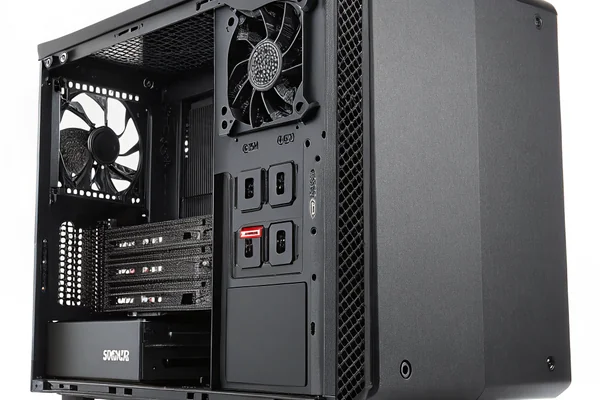
SFF cases commonly support fan sizes from 92mm up through 140mm depending on the specific model, with many compact cases limited to 92mm or 120mm at certain mounting positions due to space constraints -- fan size availability varies significantly between SFF case models more than it does between comparably-sized full towers.
Why Checking Case-Specific Fan Mounting Is Essential Here
Unlike full towers where 120mm and 140mm mounting is nearly universal, SFF case manufacturers make different tradeoffs between component clearance and fan size support, meaning one popular SFF case might support 140mm top-mount fans while a similarly-sized competitor is limited to 92mm at the same position. Checking your specific case's documented fan compatibility, rather than assuming based on general case size category, is essential before planning fan purchases for an SFF build.
Should You Prioritize High Airflow or Low Noise in an SFF Build?
This tradeoff is more pronounced in SFF builds than in more spacious cases, making the decision more consequential.
SFF builds generally face a sharper airflow-versus-noise tradeoff than full towers, since the same thermal load needs to move through more restrictive internal spacing -- prioritizing static-pressure-capable fans over pure high-CFM fans, and accepting a somewhat higher noise floor than an equivalent full-tower build, is often the realistic approach rather than expecting SFF-silent performance identical to a spacious case.
Why Static Pressure Specifically Matters More Here
Because SFF internal layouts create more restriction than open full-tower airflow paths, fans optimized for high static pressure (able to maintain airflow against resistance) generally outperform fans optimized purely for high free-air CFM in this specific context, even if the high-CFM fan has a higher headline airflow number. This is a case where reading a fan's full P-Q curve, not just its free-air CFM rating, matters more than in less restrictive case types.
What Fan Configurations Actually Work Well for Popular SFF Case Types?
General principles translate differently depending on the specific SFF case's internal layout and airflow design.
SFF cases generally fall into a few layout categories -- sandwich-style (motherboard and PSU on opposing sides with a shared airflow path), traditional shrunk-tower layouts, and cube-style designs -- and the effective fan configuration differs by category, with sandwich-style cases often benefiting from a single strong intake paired with GPU/PSU exhaust, while shrunk-tower designs can more closely follow traditional front-intake, rear-exhaust logic.
Why Layout Category Matters More Than Case Size Alone
Two SFF cases of similar external dimensions can have meaningfully different internal airflow paths depending on whether they use a sandwich, cube, or shrunk-tower layout, which affects where intake and exhaust fans are most effective far more than the case's overall size does. Researching your specific case's recommended airflow pattern -- often documented by the case manufacturer or discussed extensively in SFF-focused community resources -- gives more useful guidance than applying general full-tower fan placement logic to a fundamentally different layout.

What Thermal Management Principles Help Regardless of Specific SFF Case Choice?
A few consistent principles apply across most SFF builds even though specific fan placement varies by case.
Positive pressure configuration, positioning fans to deliver airflow as directly as possible to the hottest components rather than relying on general case circulation, and deliberate cable management to avoid blocking the case's already-limited airflow paths are principles that improve SFF thermal performance regardless of the specific case's layout category.
Why Cable Management Matters More in SFF Builds Specifically
In a full tower with generous internal volume, a loose cable or two rarely meaningfully obstructs airflow, but in an SFF case's tighter confines, poorly routed cables can create a real airflow restriction in a case that already has limited margin. Deliberate cable routing -- using the case's designated cable channels and keeping bulk away from fan intake and exhaust paths -- is a low-cost thermal improvement that matters proportionally more in compact builds than in spacious ones.
Our PC case cooling fan line includes compact sizes with static-pressure-optimized blade designs suited to restrictive SFF airflow paths, validated on our in-house CFM airflow test system at our Dongguan facility. With over 20 years of production experience under ISO 9001 certification, we can support SFF case manufacturers and system integrators with fan specifications matched to specific compact case layouts.
What Should You Verify Before Sourcing Fans for a Compact Case Product Design?
For manufacturers designing compact enclosures, fan selection deserves the same scrutiny as thermal simulation results.
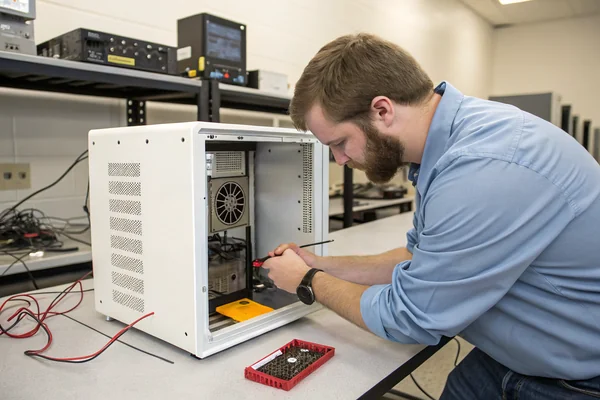
Before finalizing fan specifications for a compact enclosure product, confirm the fan's actual static pressure performance at your specific internal resistance point, verify physical clearance against your tightest internal component spacing, and validate acoustic performance under the restrictive conditions your actual enclosure presents, not the fan's open-air rating.
Why Open-Air Fan Specs Mislead Compact Enclosure Design More Than Spacious Ones
A fan's headline free-air CFM and noise specs are measured with no obstruction, which diverges further from real-world performance in a tightly packed enclosure than in a spacious one, since restriction has a proportionally larger effect on both airflow and noise output. Validating candidate fans under conditions that actually replicate your enclosure's internal resistance -- ideally on a working prototype -- gives a far more reliable picture than comparing open-air datasheet numbers alone.
FAQ
Is liquid cooling generally better than air cooling for SFF builds?
It can be for CPU cooling specifically, since a compact radiator can move heat rejection to a case wall position, but liquid cooling adds its own space and fan requirements for the radiator itself, so it's not automatically simpler in an SFF context.
Do SFF builds need more fans than full towers for equivalent cooling?
Not necessarily more fans, but often more carefully selected ones -- static pressure capability and precise placement typically matter more than simply adding fan count in a space-constrained case.
Does GPU choice affect SFF cooling fan strategy significantly?
Yes -- GPU thermal design and exhaust behavior (blower-style versus open-air) significantly affects how case fans should be configured in a tightly packed SFF build, more so than in a full tower with more airflow margin to absorb GPU exhaust heat.
Can undervolting or power-limiting components reduce SFF cooling fan requirements?
Yes, this is a common SFF-specific strategy -- reducing component power draw through undervolting or power limits directly reduces thermal load, easing the demand on an inherently more restrictive cooling path.
Is it worth paying a premium for SFF-specific fan models over standard fans?
Sometimes -- fans specifically designed or tuned for higher static pressure at compact sizes can offer a genuine performance benefit in restrictive SFF layouts, though checking actual P-Q curve data for specific models matters more than trusting "SFF-optimized" marketing alone.
How much noisier should I realistically expect an SFF build to be versus a full tower with the same components?
This varies by specific build, but a modest noise increase for equivalent cooling performance is a realistic expectation given SFF's inherent airflow restriction -- thoughtful fan and component selection narrows this gap but doesn't eliminate it entirely.
SFF cooling rewards deliberate fan selection matched to your specific case's layout, rather than scaling down full-tower assumptions. At Herays, our Dongguan facility manufactures compact, static-pressure-optimized case cooling fans validated for restrictive airflow applications, backed by over 20 years of experience under ISO 9001 certification. If you're specifying fans for a compact case design, we're glad to help match specifications to your layout.

Liang
I've been working with DC fans for 30 years — long enough to have seen the industry evolve from basic sleeve bearing designs to today's high-efficiency, IP68-rated systems built for the harshest environments imaginable. I founded Herays because I believed manufacturers and engineers deserved a supplier who could talk technical from day one. Not just hand over a datasheet, but actually help you select the right fan for your thermal load, your enclosure, your certification requirements. Most of what I write here comes directly from problems I've solved on the factory floor or in customer applications — medical devices, laser equipment, industrial automation, you name it. If it involves moving air efficiently and reliably, I've probably spent time thinking about it. When I'm not obsessing over airflow curves, I'm usually helping a customer figure out why their cooling system isn't performing the way their simulation said it would.
View all posts by Liang

