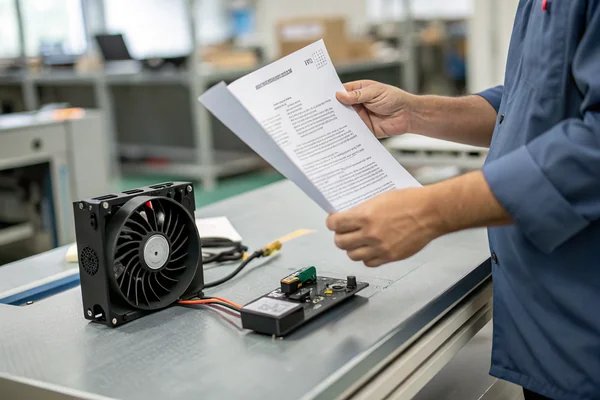
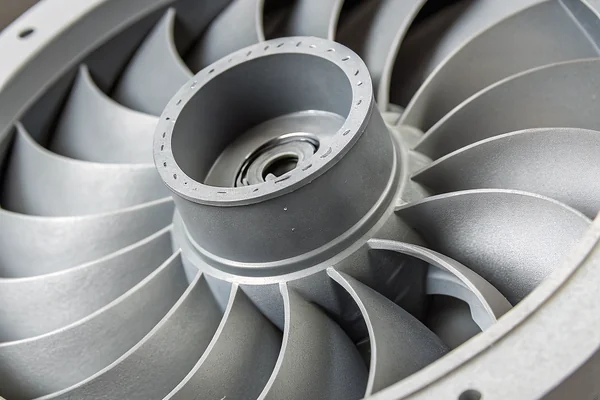
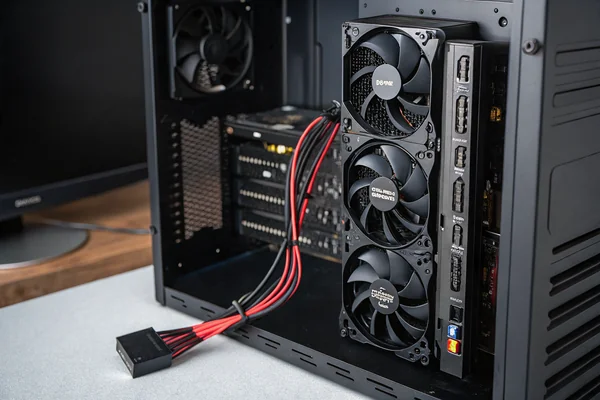
Take a fan that works fine indoors and drop it into a salt-spray marine environment or an outdoor cabinet, and the unprotected electronics become the weak link fast -- that's usually where conformal coating enters the conversation.
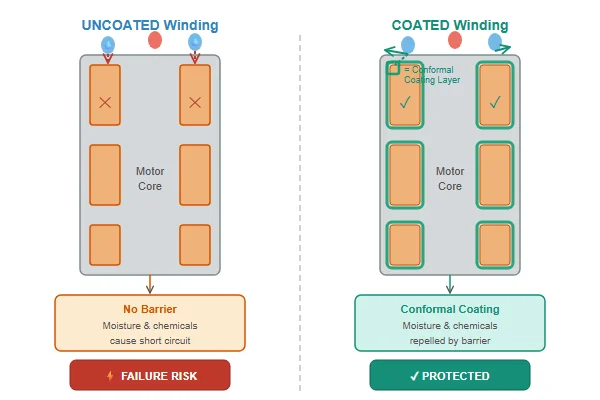
- Conformal coating is a thin protective film over the motor and control circuit that shields against moisture, salt spray, dust, and chemical exposure.
- It becomes necessary once a fan is headed for marine, automotive, industrial, or outdoor use -- environments where a standard fan just won't last.
- Acrylic, silicone, and urethane are the three main coating types, each with its own trade-off between protection level, temperature tolerance, and how complex it is to apply.
- Coating does cost you something thermally -- expect roughly a 5-15% reduction in dissipation, which means it needs to be factored into the thermal design, not added as an afterthought.
- Coated fans usually mean longer lead times and a higher unit price, but that premium is small next to the cost of a field failure.
When DC axial fans operate in benign indoor environments, their standard construction handles most conditions without issue. But move that same fan into a salt-spray marine environment, an industrial chemical plant, or an outdoor enclosure exposed to rain and humidity, and unprotected electronics quickly become the weak link. In 30 years of working with DC fans, I've seen too many projects where customers discover environmental protection requirements only after early field failures — which is exactly why understanding conformal coating options upfront saves both time and warranty costs.
Table of Contents
What Is Conformal Coating and How Does It Protect DC Fans?
Conformal coating is a thin protective film — typically 25 to 100 micrometers thick — applied to electronic assemblies to shield them from environmental hazards. On DC axial fans, coating primarily protects the motor windings, control circuits, and sensor components from moisture ingress, corrosive atmospheres, dust accumulation, and temperature cycling damage.
The coating "conforms" to the shape of the components it covers, creating a barrier that allows the fan to continue operating while blocking contaminants that would otherwise cause short circuits, corrosion, or insulation breakdown. Unlike sealed enclosures that trap heat, conformal coating maintains airflow while adding protection. For fans that also need to resist direct water ingress rather than just humidity, I usually point customers toward a proper IP-rated waterproof fan instead of, or in combination with, coating — the two solve overlapping but distinct problems.
For DC fans specifically, the most vulnerable areas are the motor commutation points, any speed-feedback sensors, and the junction between the motor housing and PCB assembly. Standard fan construction assumes these components operate in clean, dry air — an assumption that breaks down quickly in industrial or outdoor environments.
When Is Coating Necessary for DC Axial Fans?
Based on the applications I support, conformal coating becomes essential rather than optional in several key environments:
Marine and coastal installations face constant salt spray exposure that rapidly corrodes unprotected copper windings and creates conductive paths between circuit traces.
Automotive and transportation applications deal with road salt, automotive fluids, temperature cycling, and vibration that accelerate both chemical and mechanical degradation.
Industrial process environments expose fans to chemical vapors, high humidity, particulate contamination, and washdown procedures that overwhelm standard protection levels.
Outdoor telecommunications and infrastructure equipment must survive rain ingress, UV exposure, dust storms, and extreme temperature swings over multi-year service lives.
Food processing and pharmaceutical facilities require fans that can withstand frequent sanitization with aggressive cleaning chemicals while maintaining reliable airflow.
The decision point typically isn't gradual degradation — it's sudden failure when contamination creates a short circuit or breaks down motor insulation. Prevention through coating costs far less than emergency replacements and system downtime.
What Are the Different Types of Conformal Coatings?
| Coating Type | Temperature Range | Chemical Resistance | Moisture Protection | Application Method | Best Use Cases |
|---|---|---|---|---|---|
| Acrylic | -65°C to +125°C | Moderate | Good | Brush, spray, dip | General protection, easy rework, cost-sensitive |
| Silicone | -65°C to +200°C | Excellent | Excellent | Brush, spray, selective | High-temperature, flexible applications |
| Urethane (Polyurethane) | -65°C to +150°C | Very Good | Excellent | Brush, spray, dip | Abrasion resistance, permanent protection |
Acrylic coatings offer the best balance of protection, cost, and reworkability for most DC fan applications. They provide solid moisture and dust protection while remaining removable if repair becomes necessary. Temperature tolerance covers most fan operating ranges without degradation — worth checking against the fan's rated operating temperature range to make sure the coating and the motor's own thermal limits actually line up.
Silicone coatings excel in high-temperature environments and applications requiring flexibility during thermal cycling. Their superior chemical resistance makes them ideal for process industries, but they're more difficult to remove for service and typically cost more than acrylic alternatives.
Urethane coatings deliver the highest mechanical durability and chemical resistance, making them suitable for fans exposed to vibration, abrasion, or aggressive chemicals. However, urethane coatings are essentially permanent — removal for repair is difficult and may damage underlying components.
With more than 20 years of production and R&D experience, Herays manufactures DC axial fans as an OEM partner for several well-known brands, under a quality system certified to ISO 9001, ISO 14001, QC 080000, and IATF 16949. For conformal coating applications, our salt spray test system and temperature cycling test equipment validate coating performance under accelerated environmental stress, ensuring coated fans meet the extended lifespan requirements of marine, automotive, and industrial OEM/ODM customers before they ship to field installations.
How Does Conformal Coating Affect Thermal Performance?
Adding any insulating layer to electronic components impacts heat dissipation, and conformal coatings are no exception. While the coating thickness is minimal, it creates an additional thermal barrier between heat-generating components and the cooling airflow.
In my testing experience, conformal coating typically reduces thermal dissipation efficiency by 5-15% depending on coating type and thickness. Silicone coatings generally have less thermal impact than urethane, while acrylic falls between them. This reduction isn't usually critical for the fan motor itself, but it can affect associated drive electronics or temperature-sensitive components mounted nearby.
The thermal impact becomes more significant in applications where fans already operate near their thermal limits. When upgrading from uncoated to coated fans in an existing design, consider whether the thermal margin can accommodate the slight reduction in heat transfer efficiency — this is closely tied to overall DC axial fan efficiency, since a coated fan operating near its efficiency limit has less margin to absorb the added thermal resistance.
Design considerations for coated fans:
- Verify adequate thermal margin before specifying coating
- Consider slightly uprating airflow if thermal headroom is limited
- Monitor operating temperatures during initial deployment to confirm performance
- Account for coating thermal impact in overall system thermal modeling
How Do You Source and Specify Conformal-Coated DC Fans?
Sourcing coated fans requires more upfront specification work than standard fans, because coating type, coverage area, and testing requirements must be defined clearly to get comparable quotes and consistent results.
Key specifications to define:
- Coating type and standard — IPC-CC-830 is the industry qualification standard most coating suppliers test against 1, alongside legacy references like MIL-I-46058 and UL-746E, and citing it on a drawing ensures consistent application and performance across suppliers
- Coverage requirements — specify which components need coating and any areas that must remain uncoated
- Environmental test requirements — salt spray duration, temperature cycling, humidity exposure based on your application
- Touch-up and rework accessibility — identify critical components that may need service access
Typical lead time and cost impacts:
- Standard coated fans: 2-4 weeks additional lead time, 15-40% cost premium over uncoated
- Custom coating specifications: 4-8 weeks additional, 25-60% cost premium depending on complexity
- Testing and validation requirements: Additional time and cost for environmental testing if required
Most suppliers maintain stock of commonly-specified coated fans (typically acrylic-coated standard sizes), but custom coating types or coverage patterns usually trigger a build-to-order process with longer lead times.
FAQ
What is the lifespan improvement from conformal coating on DC fans? In harsh environments, coated fans typically last 3-10 times longer than uncoated equivalents. The exact improvement depends on environmental severity — salt spray and chemical exposure show the most dramatic differences, while dust protection offers more modest gains.
Can conformal coating be applied to existing uncoated fans? Yes, but it requires proper surface preparation and controlled application conditions. Field-applied coating rarely matches factory-applied quality and coverage, so specifying coating during initial procurement is preferred when possible.
Does conformal coating affect fan noise or vibration? Properly applied coating has minimal impact on mechanical performance. However, uneven coating application can create imbalance, and coating that bridges moving parts can cause binding or increased friction.
How do you remove conformal coating for fan repair? Removal method depends on coating type: acrylic can be dissolved with appropriate solvents, silicone requires mechanical removal, and urethane is difficult to remove without damaging underlying components. Consider rework requirements when selecting coating type.
Are there environmental regulations affecting conformal coating selection? Yes — RoHS compliance, VOC emissions during application, and disposal requirements vary by coating chemistry and region. Verify regulatory compliance for both the coating material and application process in your target markets.
"IPC-CC-830 Conformal Coating Qualification Standard", https://www.conformalcoating.co.uk/knowledge-hub/technical-articles/conformal-coating-inspection-hub/ipc-cc-830-conformal-coating/. A specialist industry technical article describing IPC-CC-830 as the qualification and performance standard for conformal coatings used to protect electronic assemblies. ↩

Liang
I've been working with DC fans for 30 years — long enough to have seen the industry evolve from basic sleeve bearing designs to today's high-efficiency, IP68-rated systems built for the harshest environments imaginable. I founded Herays because I believed manufacturers and engineers deserved a supplier who could talk technical from day one. Not just hand over a datasheet, but actually help you select the right fan for your thermal load, your enclosure, your certification requirements. Most of what I write here comes directly from problems I've solved on the factory floor or in customer applications — medical devices, laser equipment, industrial automation, you name it. If it involves moving air efficiently and reliably, I've probably spent time thinking about it. When I'm not obsessing over airflow curves, I'm usually helping a customer figure out why their cooling system isn't performing the way their simulation said it would.
View all posts by Liang