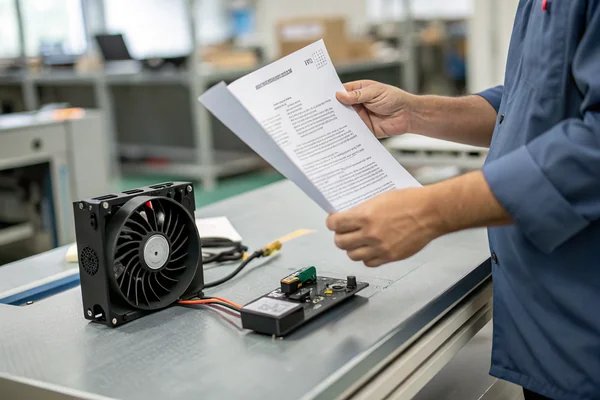
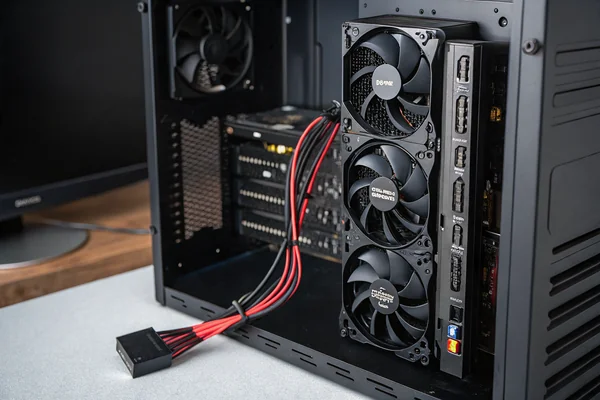
The system responsible for keeping a battery pack safe generates real heat of its own, and if nobody cools the cooling controller, the whole safety chain is only as reliable as its weakest, most overlooked link.
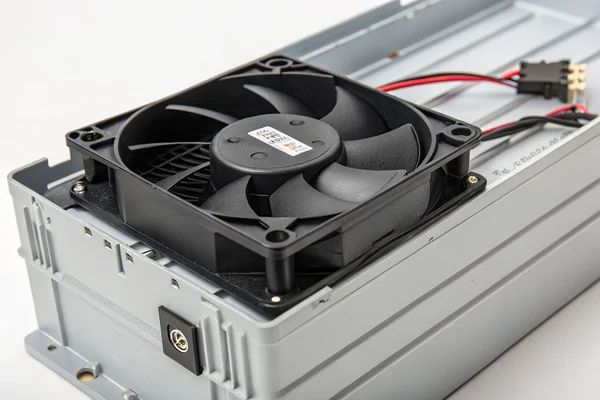
A DC axial fan matters for battery management systems because the BMS itself contains power electronics that generate heat under load, and reliable BMS operation -- including accurate temperature monitoring and cell balancing -- depends on the BMS staying within its own safe operating temperature.
- A BMS isn't just a passive monitor -- it contains active power electronics for cell balancing and protection switching that generate real heat under load.
- Fan triggering in a BMS cooling system is usually tied to real-time temperature monitoring, activating cooling before thermal limits are actually reached.
- Fan sizing for battery pack cooling depends on pack chemistry, charge/discharge rate, and enclosure design, not a generic one-size-fits-all spec.
- 12V and 24V are both common in EV auxiliary systems, and the right choice depends on matching the vehicle or equipment's existing low-voltage architecture.
- EV components generally face stricter reliability expectations than typical consumer electronics, given the safety implications of battery system failure.
Getting cooling right for a BMS means recognizing it as an active power electronics system in its own right, not just a passive sensor network.
Table of Contents
Why Does a BMS Need Active Cooling of Its Own?
The battery management system does real electrical work, not just monitoring.
A BMS1 needs active cooling because it contains power switching components for cell balancing and protection circuits that generate genuine heat under load, separate from the battery pack's own thermal management needs.
What Actually Generates Heat Inside a BMS
Cell balancing circuits actively move small amounts of current between cells to keep them at matched voltage levels, and that current flow generates heat in the balancing resistors or switching components. Protection circuits -- the switches that can disconnect the pack during a fault condition -- also carry the pack's full current when active, generating heat proportional to that current. A BMS handling a high-capacity pack under demanding charge or discharge conditions can generate enough internal heat to need dedicated cooling, distinct from cooling the battery cells themselves.
| BMS Function | Heat Source |
|---|---|
| Cell balancing | Balancing resistor or switching losses |
| Protection switching | Current-carrying switch losses under load |
| Communication/processing | Modest, continuous baseline heat |
How Does Temperature Monitoring Actually Trigger the Cooling Fan?
BMS cooling is typically reactive to real-time thermal data, not running on a fixed schedule.
Temperature monitoring triggers the cooling fan through onboard temperature sensors feeding the BMS's control logic, which activates or ramps up fan speed once temperature crosses a defined threshold -- keeping the system quiet and efficient at low load while ready to respond as thermal demand increases.
Why Threshold-Based Control Makes Sense Here
Running a BMS cooling fan at full speed constantly would waste power and add unnecessary noise for a system that spends much of its time at low thermal load. Threshold-based control, tied to real sensor data, lets the fan stay off or run at reduced speed during normal operation and ramp up specifically when balancing activity, high charge/discharge rates, or elevated ambient temperature actually push BMS temperature toward its operating limit -- matching cooling effort to actual need rather than worst-case assumption.
How Do You Size a Fan for Battery Pack Cooling, Specifically?
Battery pack cooling has its own sizing logic distinct from general electronics cooling.
Size a fan for battery pack cooling based on the pack's chemistry-specific thermal tolerance, expected charge and discharge rates, and enclosure airflow path -- higher discharge rates and fast-charging capability both increase the cooling demand beyond what a lower-power pack of similar physical size would need.
Why Chemistry and Duty Cycle Both Matter
Different battery chemistries have different ideal operating temperature ranges and different sensitivity to temperature excursions, which directly affects how aggressively a pack needs to be cooled to stay within its safe and long-life range. High discharge rate applications -- power tools, EVs under hard acceleration -- and fast-charging capability both generate more heat than moderate, steady-rate use, meaning two packs with identical capacity can have very different real cooling requirements depending on how they're actually used.
12V or 24V: Which Fits Your EV Auxiliary System?
Voltage selection for BMS cooling follows the same logic as other automotive auxiliary systems.
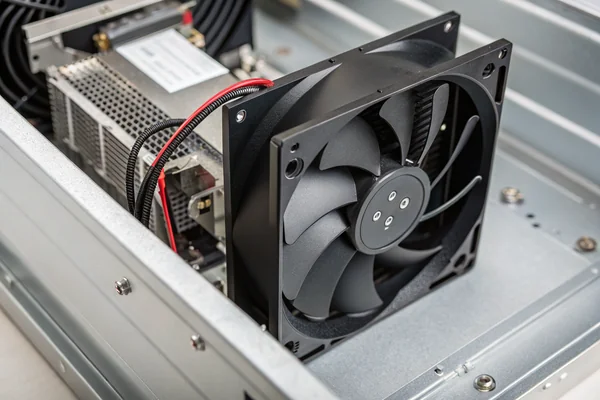
12V and 24V are both used in EV auxiliary systems depending on the specific vehicle or equipment platform's low-voltage architecture -- the choice should match the existing auxiliary rail, not be selected independently based on fan performance alone.
Matching the Auxiliary Rail
EV and battery-powered equipment typically maintain a separate low-voltage auxiliary system (distinct from the high-voltage traction battery) to power fans, control electronics, and accessories, commonly at 12V or 24V depending on the platform. A BMS cooling fan needs to match whichever auxiliary voltage the specific platform provides, since this is a compatibility requirement rather than a performance decision.
What Reliability Bar Do EV Components Actually Need to Clear?
EV and battery system components generally face a higher reliability expectation than typical consumer electronics.
EV components, including BMS cooling fans, typically need to meet higher reliability standards than general consumer electronics, reflecting both the safety implications of battery system failure and the difficulty and cost of field service on installed EV or energy storage equipment.
Why the Bar Is Higher Here
A battery management system sits at the intersection of safety and reliability engineering -- its failure modes can range from reduced pack performance to genuine safety risk depending on what specifically fails and how the system responds. Combined with the reality that many EV and energy storage installations aren't easily accessible for routine service, this pushes component selection -- including the cooling fan -- toward automotive or industrial-grade reliability specifications rather than general consumer-grade parts, even for what might look like a minor supporting component.
Does Battery Chemistry Change the Cooling Requirement?
Chemistry-specific thermal behavior directly shapes how a BMS and its cooling should be designed.
Different battery chemistries -- lithium iron phosphate, NMC, and others -- have different thermal tolerance ranges and different consequences for operating outside them, which means BMS cooling design should account for the specific chemistry in use rather than applying a generic thermal management approach across all pack types.
Why One-Size-Fits-All Doesn't Work Here
Some chemistries have wider thermal tolerance and more forgiving degradation behavior when run slightly outside ideal range, while others are considerably more sensitive, with real consequences for both performance and safety margin. A BMS cooling design that doesn't account for the specific chemistry's actual thermal sensitivity risks either over-engineering (unnecessary cost) or under-engineering (real risk) the cooling system relative to what the battery chemistry actually requires.
What Happens to Battery Life If BMS Cooling Falls Short?
Inadequate BMS cooling has consequences that extend beyond the BMS itself.
Inadequate BMS cooling can lead to less accurate cell balancing, reduced protection circuit reliability, and in some cases forced derating of charge or discharge rates to keep the BMS within safe operating temperature -- all of which can shorten effective battery pack life or reduce usable performance.
Why BMS Thermal Problems Become Battery Problems
If BMS electronics run hot enough to affect balancing accuracy, cells within the pack can drift out of matched condition over time, which reduces effective pack capacity and can accelerate degradation of the most out-of-balance cells. In more severe cases, a BMS that can't maintain safe operating temperature may need to limit charge or discharge current to protect itself, directly reducing the performance the battery pack can actually deliver -- turning a cooling shortfall into a real, measurable performance and longevity problem for the battery system as a whole.
We've supplied fans into battery management and EV auxiliary cooling programs for over 20 years, and BMS cooling is one of the areas where customers most often underestimate real heat generation until they've measured it directly. Every fan we build for battery system customers is validated for continuous-duty reliability and automotive-grade vibration resistance as part of our IATF 16949 and ISO 9001 quality process, and we can supply both 12V and 24V options matched to your specific auxiliary system architecture.
FAQ
Does every BMS need active fan cooling, or do some rely on passive cooling?
Lower-power BMS designs, especially for smaller packs with modest balancing current, sometimes rely on passive heat sinking alone. Higher-capacity or high-rate applications more commonly need active fan cooling.
Can BMS cooling fan failure trigger a false battery fault indication?
It's possible, depending on system design -- if BMS electronics run hot enough to affect sensor accuracy or trigger thermal protection, this can manifest as a fault or derating that looks battery-related but actually originates from BMS cooling.
Is BMS cooling fan sizing different for stationary energy storage versus EVs?
The underlying principles are similar, but stationary storage often has more relaxed size and weight constraints, allowing larger fans or more conservative cooling margins than a space- and weight-constrained EV application.
Does fast charging significantly increase BMS cooling demand?
Yes, generally -- fast charging pushes higher current through both the balancing circuits and protection switching, increasing BMS heat generation beyond what standard-rate charging produces.
Should BMS cooling fans include their own temperature or status monitoring?
For safety-relevant applications, yes -- fan status feedback lets the system know if cooling has failed, which is important given how directly BMS thermal performance connects to pack safety and longevity.
Can a single fan cool both the BMS and the battery pack itself?
Sometimes, in compact designs, but many systems separate these functions since the BMS and the pack itself can have different thermal profiles and airflow path requirements.
BMS cooling is easy to overlook precisely because the BMS is thought of as a monitoring system rather than a power electronics system that generates its own real heat -- but that heat directly affects balancing accuracy, protection reliability, and ultimately battery life. At Herays, our Dongguan facility has supplied automotive-grade DC fans into battery management and EV auxiliary programs for over 20 years, validated under ISO 9001 and IATF 16949 certification. If you're designing BMS cooling, we're glad to help size it around your pack's real charge/discharge profile.
A battery management system monitors and protects a battery pack by tracking cell voltage and temperature, balancing charge across cells, and controlling protection switches during fault conditions. These active functions generate real heat in the BMS itself, separate from the battery pack's own thermal load. ↩

Liang
I've been working with DC fans for 30 years — long enough to have seen the industry evolve from basic sleeve bearing designs to today's high-efficiency, IP68-rated systems built for the harshest environments imaginable. I founded Herays because I believed manufacturers and engineers deserved a supplier who could talk technical from day one. Not just hand over a datasheet, but actually help you select the right fan for your thermal load, your enclosure, your certification requirements. Most of what I write here comes directly from problems I've solved on the factory floor or in customer applications — medical devices, laser equipment, industrial automation, you name it. If it involves moving air efficiently and reliably, I've probably spent time thinking about it. When I'm not obsessing over airflow curves, I'm usually helping a customer figure out why their cooling system isn't performing the way their simulation said it would.
View all posts by Liang