Metal spatter, constant vibration, and a duty cycle that never really lets up -- a welding machine asks more of its cooling fan than almost any other piece of industrial equipment, and a standard electronics fan lasts weeks in that environment, not years.
A DC axial fan matters in welding and industrial equipment because these machines generate substantial internal heat from power electronics under demanding duty cycles, while the fan itself has to survive metal spatter, constant vibration, and often elevated ambient temperature that would degrade a standard-duty fan quickly.
- Welding machines generate real heat from transformer and inverter losses under demanding duty cycles, and that heat has to move fast enough to avoid derating output mid-job.
- Ambient temperature around welding equipment often runs well above typical electronics cooling assumptions, especially near industrial ovens, furnaces, or outdoor and foundry environments.
- Standard fans fail fast in welding environments -- metal spatter and dust work into an unprotected fan's bearing, and constant machine vibration accelerates fatigue in parts not built for it.
- Extended operating temperature range matters more here than in most cooling applications, since welding equipment often runs in genuinely hot ambient conditions on top of its own internal heat generation.
- Duty cycle -- how much of the time the welder is actually running at full output -- changes cooling requirements more than the machine's peak power rating alone.
Getting fan selection right for welding and industrial equipment means designing around a genuinely harsh combination of heat, contamination, and vibration that most electronics cooling applications never face together.
Table of Contents
Why Do Welding Machines Push Cooling Fans So Hard?
Welding power sources convert a lot of electrical energy, and not all of it goes into the arc.
Welding machines push cooling fans hard because transformer and inverter-based power sources generate substantial internal heat from conversion losses, especially under sustained high-current welding, and that heat has to be removed quickly to avoid the machine derating output or shutting down mid-job.
Where the Heat Actually Comes From in a Welder
Whether transformer-based or inverter-based, a welding power source converts input power into the high-current output needed to sustain an arc, and that conversion is never perfectly efficient -- the losses show up as heat in the transformer windings, rectifiers, or inverter switching components. Sustained high-current welding, the kind production environments actually demand, pushes this heat generation to its highest and most continuous levels, which is exactly when cooling matters most.
| Welder Type | Primary Heat Source | Cooling Demand Under Load |
|---|---|---|
| Transformer-based | Transformer core/windings | Moderate to high, sustained |
| Inverter-based | Switching electronics | High, especially at peak output |
How Hot Does the Ambient Environment Around a Welder Actually Get?
Welding equipment rarely operates in a climate-controlled space, and that ambient heat stacks directly on top of the machine's own heat generation.
Ambient temperature around welding equipment often runs well above typical electronics cooling assumptions, since welders frequently operate near furnaces, in outdoor or foundry environments, or in industrial spaces without climate control, adding real ambient heat on top of the machine's own internal generation.
Why Ambient Conditions Matter as Much as Internal Heat
A fan and cooling system sized around a moderate 25°C ambient assumption can be significantly under-provisioned in a foundry, an outdoor job site in summer, or an industrial space near other heat-generating equipment, where ambient temperature might already be 40-50°C before the welder even starts generating its own heat. This is a common gap between datasheet cooling assumptions and real welding environments, and it's worth confirming explicitly rather than assuming standard ambient conditions apply.
Can a Standard Fan Survive Metal Spatter and Constant Vibration?
This is where welding equipment genuinely differs from most other industrial cooling applications.
A standard fan generally can't survive sustained metal spatter and constant vibration exposure -- spatter can physically damage blades or work into the bearing, while continuous vibration accelerates fatigue in components not specifically engineered for it, leading to much shorter service life than the same fan would see in a typical industrial cabinet.
Why Welding Environments Are Uniquely Hard on Fans
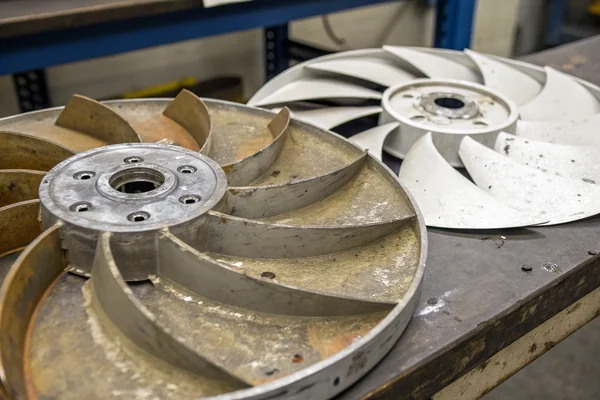
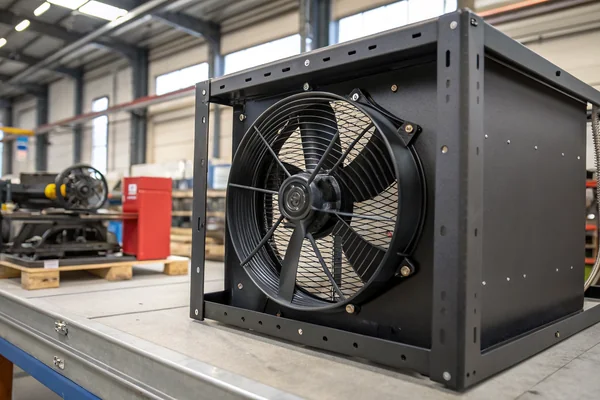
Metal spatter from welding is both hot and physically abrasive, capable of damaging fan blades directly or working into bearing seals over time in a way typical dust simply doesn't. Combine that with the continuous vibration inherent to welding equipment operation -- transformers humming, mechanical components engaged during use -- and a fan needs genuine mechanical robustness, not just a dust rating, to hold up. Metal-frame construction, robust bearing selection, and spatter-resistant blade materials or positioning all matter more here than in typical electronics cooling.
How Wide Does the Operating Temperature Range Actually Need to Be?
Between internal heat generation and elevated ambient conditions, welding equipment fans often need a genuinely extended temperature range.
Welding equipment fans often need an extended operating temperature range -- sometimes up to 70-85°C or beyond -- to handle the combination of elevated ambient conditions and the machine's own internal heat generation without the fan itself becoming the limiting component.
Why Standard Temperature Ratings Fall Short Here
A fan rated for standard 0-70°C operation might seem adequate on paper, but once real ambient conditions (a hot shop floor, proximity to other heat sources) combine with the welder's own internal temperature rise, the fan can end up operating consistently near or past its rated maximum -- exactly the conditions that shorten fan life fastest. Specifying a genuinely extended-temperature-rated fan, validated at conditions close to the actual application rather than standard test conditions, is worth the extra step for equipment destined for genuinely hot industrial environments.
What Should You Actually Look for When Selecting a Welding Equipment Fan?
Welding equipment fan selection means prioritizing survivability characteristics that most cooling applications don't need to think about.
Look for a fan with metal or reinforced frame construction, vibration-rated bearings, extended operating temperature range, and real dust/spatter protection -- in that rough order of priority for most welding applications, ahead of simply maximizing CFM.
Prioritizing Survivability Over Raw Airflow Numbers
A high-CFM fan that fails within months from spatter damage or vibration fatigue delivers worse real-world cooling than a moderately-specified fan that survives the application's actual operating life. This is why welding equipment fan selection should start with survivability -- frame material, bearing robustness, temperature rating, contamination protection -- and treat raw airflow capacity as a secondary optimization once those baseline durability requirements are met.
Does Duty Cycle Change How Aggressively a Welder Needs to Be Cooled?
Duty cycle -- how much of the time the machine actually runs at full output -- matters as much as peak power rating for cooling purposes.
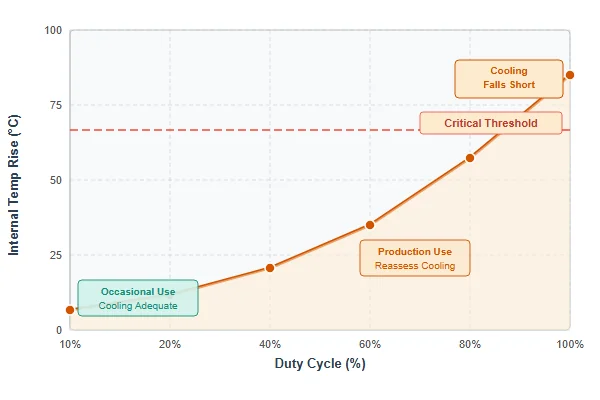
Higher duty cycle1 welding operations generate more average heat over time than the same machine used intermittently, even at identical peak output, which means cooling requirements should be sized around actual production duty cycle, not just the machine's rated peak capacity.
Why Duty Cycle Changes the Real Cooling Math
A welding machine rated for a given peak output but used in short, intermittent bursts with recovery time between welds generates meaningfully less average heat than the same machine run in continuous production welding with minimal downtime. Production environments moving from occasional to high-duty-cycle use are a common place where cooling that was previously adequate starts falling short -- worth reassessing explicitly when welding equipment moves into more demanding production use.
What Happens to Weld Quality When a Welding Machine Runs Hot?
Overheating in welding equipment shows up as inconsistent performance before it shows up as a hard failure.
An overheating welding machine typically responds with output derating (reduced current capacity) or thermal shutdown, both of which directly affect weld quality and production continuity, rather than a sudden catastrophic failure with no warning.
Why This Is a Production Problem, Not Just a Hardware Problem
Most modern welding power sources include thermal protection that reduces output current or shuts down entirely once internal temperature approaches unsafe limits, protecting the electronics at the direct cost of interrupting the weld or reducing achievable current for the next one. In a production environment, this translates directly into lost time, inconsistent weld quality if output derates mid-job, and real cost -- which is the practical argument for taking cooling seriously as a production reliability issue, not just a component spec buried in the equipment's datasheet.
We've supplied fans into welding and heavy industrial equipment programs for over 20 years, and vibration and spatter resistance are consistently the specs that separate fans that last from fans that fail within months in this segment. Every fan we build for industrial equipment customers goes through our in-house vibration, drop, and temperature cycling testing as part of our IATF 16949 and ISO 9001 quality process, and we can supply metal-frame, extended-temperature-range options validated specifically for the combination of heat, dust, and vibration welding equipment actually experiences.
FAQ
Do all welding machines need active fan cooling, or do some rely on passive cooling?
Lower-power, light-duty welders sometimes use passive or minimal cooling, but most production-capable welding equipment, especially inverter-based machines, relies on active fan cooling to sustain rated output.
Can a metal-frame fan alone solve vibration-related fan failures?
Metal frames help significantly with vibration resistance compared to plastic, but bearing selection matters just as much -- a metal frame paired with a bearing not rated for continuous vibration still leaves a real weak point.
How often should welding equipment fans be inspected for spatter damage?
This depends on usage intensity, but equipment used in heavy production welding benefits from more frequent visual inspection than occasional-use equipment, given how quickly spatter exposure can accumulate.
Does outdoor use change fan requirements beyond just temperature range?
Yes -- outdoor use typically adds moisture and broader dust exposure considerations on top of temperature range, which often means a genuinely higher IP rating is worth specifying alongside extended temperature capability.
Is fan noise a real concern for welding equipment?
Generally less than in office or consumer applications, since welding environments already have significant ambient noise, though it's still worth considering for operator comfort during extended use.
Can I retrofit an older welding machine with a more robust replacement fan?
Often yes, provided the replacement matches mounting, voltage, and airflow specifications, and ideally improves on the original's vibration and temperature ratings if the original fan was under-specified for the application.
Welding and industrial equipment cooling is a survivability problem as much as an airflow problem, and a fan that can't handle spatter, vibration, and elevated ambient heat will fail long before a properly specified one, regardless of how much CFM it delivers on paper. At Herays, our Dongguan facility has supplied metal-frame, vibration-resistant DC fans into welding and industrial equipment programs for over 20 years, validated under ISO 9001 and IATF 16949 certification. If you're specifying cooling for harsh industrial equipment, prioritize survivability data -- vibration, temperature, spatter resistance -- ahead of raw CFM.
Duty cycle describes the percentage of a given time period a machine can operate at its rated output before needing to rest and cool down. A welder rated for a 60% duty cycle at a given current can weld continuously for 6 minutes of every 10 before requiring a cooldown period. ↩

Liang
I've been working with DC fans for 30 years — long enough to have seen the industry evolve from basic sleeve bearing designs to today's high-efficiency, IP68-rated systems built for the harshest environments imaginable. I founded Herays because I believed manufacturers and engineers deserved a supplier who could talk technical from day one. Not just hand over a datasheet, but actually help you select the right fan for your thermal load, your enclosure, your certification requirements. Most of what I write here comes directly from problems I've solved on the factory floor or in customer applications — medical devices, laser equipment, industrial automation, you name it. If it involves moving air efficiently and reliably, I've probably spent time thinking about it. When I'm not obsessing over airflow curves, I'm usually helping a customer figure out why their cooling system isn't performing the way their simulation said it would.
View all posts by Liang