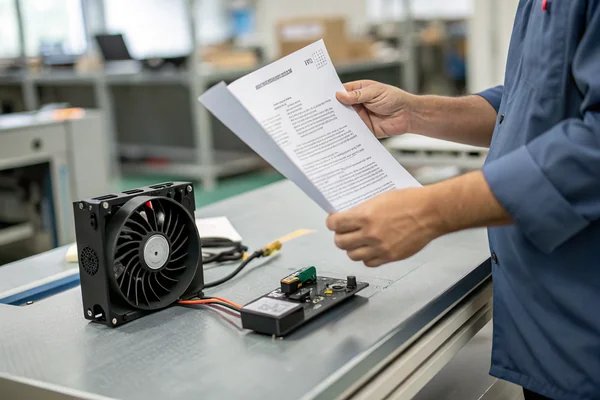
Choosing a DC fan seems simple, but picking the wrong voltage can stop your project cold. This common mistake creates delays and adds costs. Let's make sure you get it right.
The best DC fan voltage is the one that matches your device's power supply. The choice isn't about performance; it's about compatibility. 12V is standard for PCs, 24V for industrial equipment, and 48V for telecom systems. Your application dictates the required voltage.
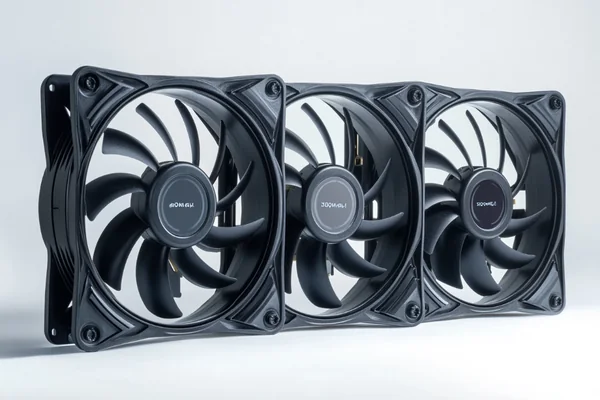
At Herays, we talk to engineers and buyers every day. A frequent question we get is, "Which voltage is better?" People often think a higher voltage means a more powerful fan. This is a common misconception that leads to buying the wrong part. The truth is much simpler: the fan's voltage must match your system's power source. Instead of looking for the "best" voltage, the first question you should ask is, "What is the power supply voltage in my application?" Answering that question correctly solves most of the problem before it starts. Let's break down why this is so critical.
Table of Contents
Why Does Fan Voltage Matter So Much?
You believe a higher voltage fan will give you better cooling performance. This assumption can lead you to specify a fan that is completely incompatible with your equipment. Let's clarify the real relationship.
Fan voltage primarily determines compatibility with your power source. A higher voltage does not mean better cooling. Instead, it allows the fan to achieve the same power using less current, which improves system efficiency and allows for thinner, cheaper wiring over long distances.
To understand this, let's look at a basic electrical principle: Power (Watts) = Voltage (Volts) × Current (Amps). The power is what relates to the fan's work—how much air it can move. A 12W fan does the same amount of work whether it's a 12V, 24V, or 48V model. The difference is how it gets that 12W of power. As the voltage goes up, the current needed to achieve the same power goes down.
From our experience guiding customers, this is a system-level decision, not a fan-level one. The main benefit of using a higher voltage is reducing the electrical current running through your wires. Lower current allows you to use thinner, less expensive copper wires and reduces the amount of energy lost as heat within the cables themselves. This is why large-scale systems prefer higher voltages.
| Fan Voltage | Power (Example) | Required Current | Primary Benefit |
|---|---|---|---|
| 12V | 12 Watts | 1.0 Amp | Consumer standard |
| 24V | 12 Watts | 0.5 Amps | Industrial efficiency |
| 48V | 12 Watts | 0.25 Amps | System-level savings |
When Is a 12V DC Fan the Right Choice?
You're building a new gaming PC or designing a small consumer gadget. You pick a fan based on its airflow specs, but a 24V model accidentally ends up in your cart. That fan will be useless.
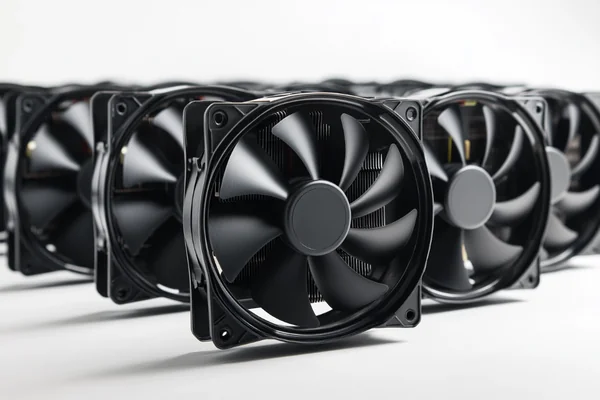
Choose a 12V DC fan when your application is consumer electronics, PC cooling, or any device powered by a standard 12V supply. It is the default voltage for desktop computers, many consumer-grade 3D printers, and small battery-powered devices.
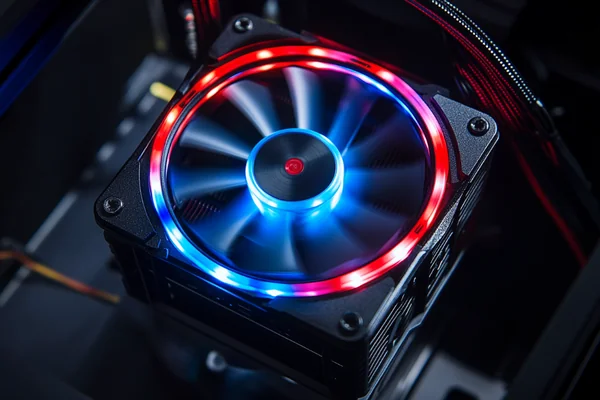
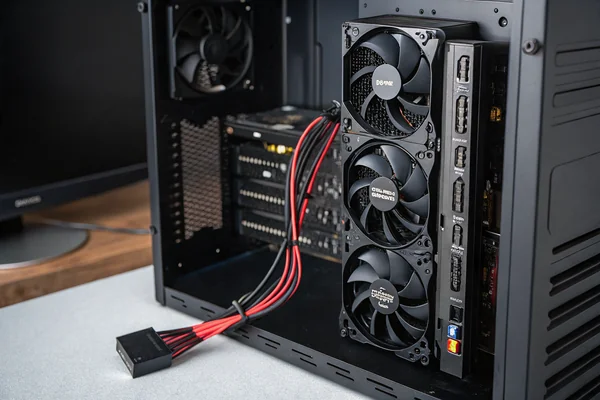
The 12V standard is dominant in the consumer world for historical reasons, largely driven by the ATX power supply standard for desktop computers. Your PC's motherboard provides 12V power headers specifically for case fans and CPU coolers. Because of this, the market for 12V fans is huge, offering an incredible variety of sizes, speeds, and lighting options like ARGB. If you're an electronics hobbyist or building a device that uses a common "wall wart" power adapter, it's also very likely to be a 12V system.
| Aspect | Details |
|---|---|
| Pros | The universal standard for PC and consumer electronics. Huge variety of models, sizes, and features (like RGB). Easily powered by common off-the-shelf power supplies. |
| Cons | Requires higher current for the same power compared to 24V/48V. Less efficient for applications with very long cable runs. |
| Best For | PC cases, CPU coolers, power supply units (PSUs), consumer gadgets, small appliances. |
Why Is a 24V DC Fan the Industrial Standard?
You are designing a control cabinet for a factory floor. Using a 12V fan might seem easy, but it will likely be incompatible with the standard power rails inside. You need to use what the industry uses.
24V DC fans are the standard for industrial automation, control cabinets, professional-grade 3D printers, and other heavy-duty equipment. This voltage offers a good balance of power efficiency and safety, and it aligns with the power supplies used in most industrial settings.
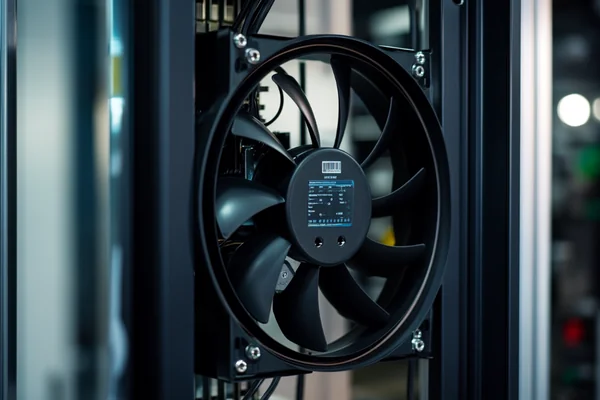
When we work with manufacturers of industrial machinery, the conversation almost always starts at 24V. This is because the entire ecosystem of industrial control—from PLCs (Programmable Logic Controllers) to sensors and actuators—is built around a 24V DC power standard. It provides a significant efficiency gain over 12V by cutting the current in half for the same power output. This is important in complex machinery where cables can be long and bundled together, as less current means less heat buildup and less voltage drop over distance.
It's a practical choice that balances performance and safety. While 48V is even more efficient, 24V is often seen as a safer "low voltage" for technicians to work with, making it the sweet spot for factories and workshops. If you're replacing a fan in an industrial machine or building a new one, you can be almost certain that 24V is the correct, and often only, choice.
| Category | 24V DC Fan Applications | 12V DC Fan Applications |
|---|---|---|
| Primary Market | Industrial & Professional | Consumer & PC |
| Typical Uses | Control cabinets, PLCs, servers, network switches, high-end 3D printers, LED lighting systems. | Desktop PCs, gaming rigs, small appliances, automotive accessories. |
| System Benefit | Lower current draw, better efficiency over longer wiring. | Wide availability, compatibility with consumer power standards. |
Who Needs a 48V DC Fan for High-Power Applications?
You are tasked with cooling a dense server rack filled with networking gear. Using 12V or 24V fans would require thick, heavy, and expensive wiring to handle the total current draw, creating a logistical nightmare.
48V DC fans are the go-to solution for telecommunications equipment, data centers, and high-density server racks. The high voltage dramatically reduces current, enabling massive gains in system efficiency, lower wiring costs, and better thermal management at scale.
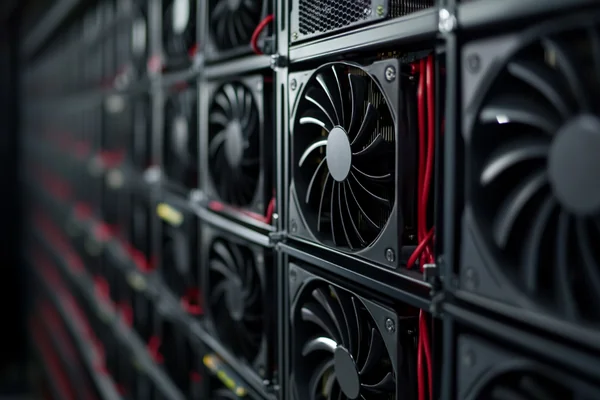
When a customer from the telecom or data center industry contacts us, they are almost exclusively looking for 48V fans. In these environments, efficiency is king. A single server rack can contain dozens of fans. Multiplying the small efficiency loss from each fan across an entire data center results in a huge amount of wasted energy and excess heat. By using 48V, the current is reduced by 75% compared to a 12V system of the same power. This means less copper is needed for wiring, saving money and weight. It also means less energy is lost as heat in the power distribution cables, which reduces the overall cooling load on the building's HVAC system.
Historically, -48V DC (a negative voltage) has been the power standard in the telephone industry for its reliability and resistance to corrosion. While modern data centers often use +48V DC, the principle remains the same. The choice for 48V is a strategic one made at the highest level of system design to maximize operational efficiency and minimize cost.
| Use Case | Primary Benefit of 48V |
|---|---|
| Data Centers | Reduced energy loss (heat) in power distribution, lower cooling costs. |
| Telecom Racks | Allows for thinner, lighter, and less expensive copper wiring. |
| High-Density Servers | Maximizes power delivery efficiency to densely packed components. |
What Happens If You Use the Wrong Fan Voltage?
You've found a fan online with amazing airflow and pressure specs, but it's a 12V model and your system is 24V. You might be tempted to just hook it up and see what happens. This is a bad idea.
Never use a fan with a voltage that doesn't match your power supply. Connecting a lower-voltage fan to a higher-voltage supply will instantly destroy it. Connecting a higher-voltage fan to a lower-voltage supply will cause it to underperform or fail to run at all.
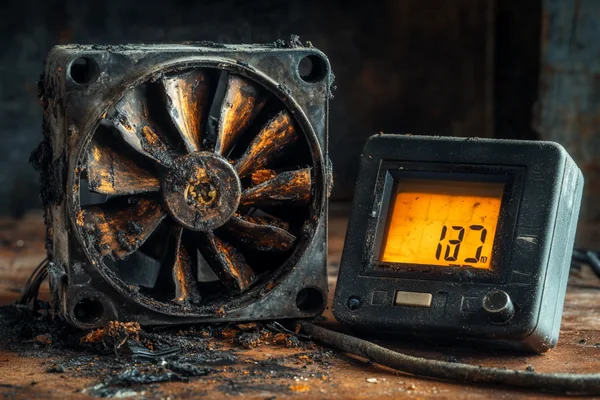
I have seen this mistake cause significant project delays and damage to equipment. It's a completely avoidable problem. There are two ways this goes wrong, and neither has a good outcome. The fan's motor and control electronics are designed to operate within a very specific voltage range (usually ±10%). Going outside that range guarantees failure.
Scenario 1: Connecting a 12V Fan to a 24V Supply
When you connect a 12V fan to a 24V power source, you are feeding it double the voltage it was designed to handle. The internal motor windings and control IC will be overloaded with current. The fan will either fail to start, or it will spin at a dangerously high speed for a few moments before overheating and burning out. I've heard from customers that the fan made a pop, released smoke, and died. This is not just a waste of a component; it's a genuine fire risk.
Scenario 2: Connecting a 24V Fan to a 12V Supply
In the opposite scenario, the 24V fan is receiving only half the voltage it needs to operate correctly. The fan motor won't have enough torque to overcome its own inertia and friction. Most of the time, the fan will simply not spin at all. In some cases, it might twitch or spin extremely slowly, producing almost no airflow. You might think the fan is defective, but the real problem is that it's being starved of the power it needs to function. It cannot cool your device, leading to overheating of the components you were trying to protect.
Conclusion
Always match your fan's voltage to your power supply. 12V is for consumer electronics, 24V for industrial use, and 48V for telecom. This simple check ensures compatibility and prevents costly mistakes.

Liang
I've been working with DC fans for 30 years — long enough to have seen the industry evolve from basic sleeve bearing designs to today's high-efficiency, IP68-rated systems built for the harshest environments imaginable. I founded Herays because I believed manufacturers and engineers deserved a supplier who could talk technical from day one. Not just hand over a datasheet, but actually help you select the right fan for your thermal load, your enclosure, your certification requirements. Most of what I write here comes directly from problems I've solved on the factory floor or in customer applications — medical devices, laser equipment, industrial automation, you name it. If it involves moving air efficiently and reliably, I've probably spent time thinking about it. When I'm not obsessing over airflow curves, I'm usually helping a customer figure out why their cooling system isn't performing the way their simulation said it would.
View all posts by Liang