
Technical Resources & Industry Insights
Explore technical guides, application notes, product selection tutorials, and industry news for industrial cooling solutions.

How Much Airflow Does Your System Actually Need? A Real CFM Calculation
Guessing at CFM from a similar past project, or trusting a manufacturer's "recommended" fan without checking the math, is how thermal problems get discovered after the design is already committed. Calculating required CFM starts with your system's actual heat load in watts, applies a standard formula relating heat, temperature rise, and airflow, then checks that […]
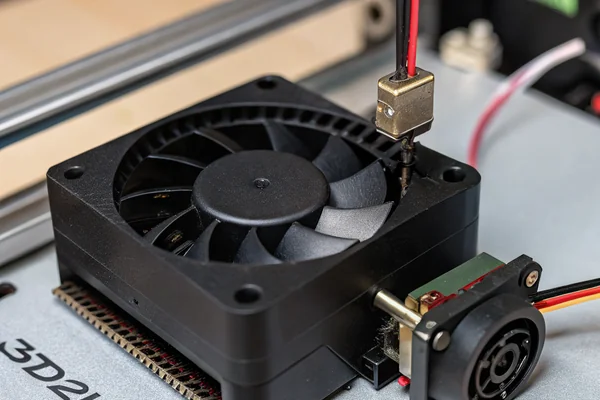
Why Does Your 3D Printer’s Part Cooling Fan Matter More Than You Think?
Print quality issues that look like a filament or temperature problem often trace back to a part cooling fan that isn't delivering focused, adequate airflow to the freshly extruded layer. Part cooling in FDM 3D printing relies on a blower fan -- not a standard axial fan -- to deliver focused, directed airflow that solidifies […]
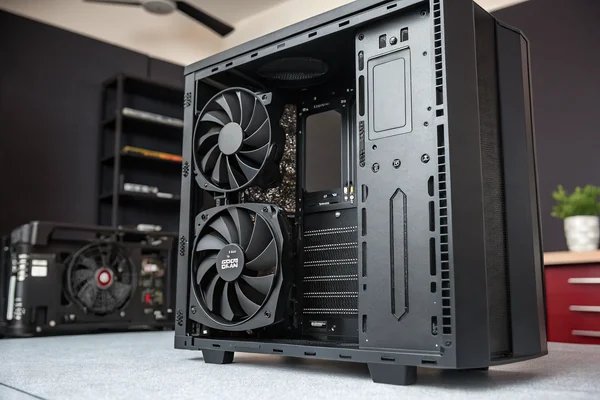
Are 200mm Case Fans Actually Worth It for a Quiet Build?
A single 200mm fan can move the same air as two smaller fans spinning much faster -- which is exactly why oversized fans have a dedicated following among builders chasing genuinely silent operation. 200mm case fans deliver meaningful airflow at very low RPM compared to smaller fans, making them one of the most effective single-component […]
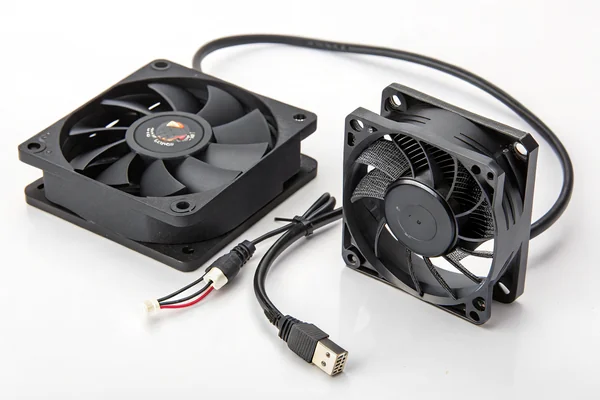
AC Fan or DC Fan: Which One Actually Fits Your System?
Specifying the wrong fan type doesn't just mean a spec mismatch -- it can mean redesigning your power supply, control circuit, or entire enclosure around a fan that never should have been the default choice. DC fans offer precise speed control, lower power consumption at partial load, and easier integration with low-voltage electronics, while AC […]
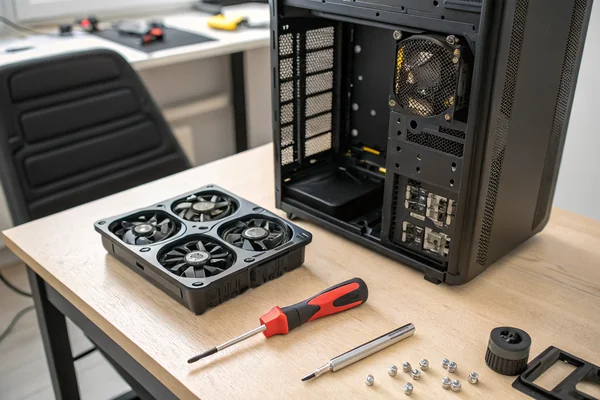
How Do You Actually Replace a PC Case Fan Without Getting It Wrong?
A fan swap looks trivial until the replacement doesn't fit the mounting holes, the connector doesn't match, or the airflow direction ends up backwards -- all avoidable with a bit of upfront checking. Replacing a PC case fan means confirming the correct size and mounting pattern, matching connector type, checking airflow direction markings before installation, […]
How Do You Actually Calculate the Right Fan Size for Your Application?
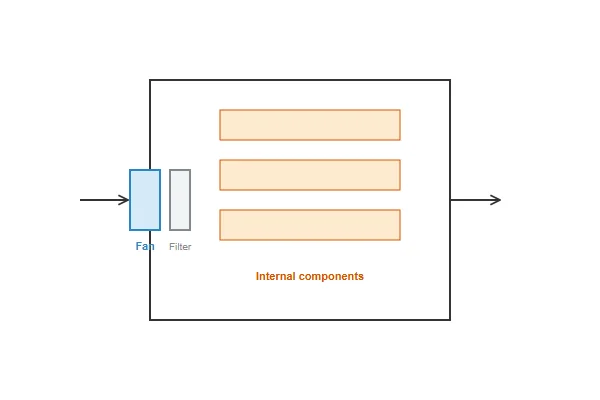
Guessing fan size from a similar past project is how thermal problems end up discovered after the enclosure is already built, when fixing it costs far more than getting the calculation right upfront. Calculating the right fan size starts with your system's actual thermal load in watts, converts that into a required airflow using a […]
Why Does Fuel Cell Cathode Air Supply Demand a Different Kind of Blower?
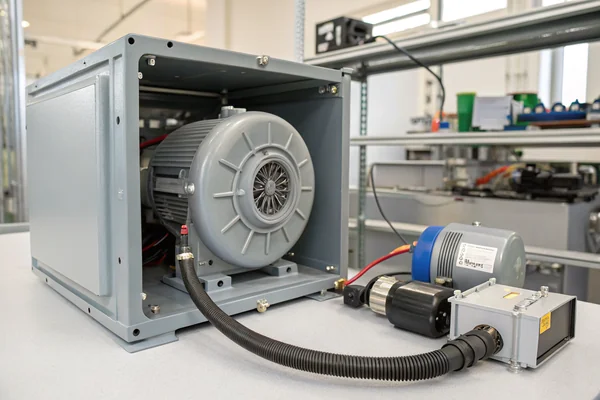
Fuel cells don't just need air moved -- they need a precisely metered, humidity-tolerant, contamination-free supply of oxygen delivered continuously, which is a fundamentally different engineering problem than general cooling. Fuel cell systems require blowers capable of precise, stable cathode air delivery matched to the stack's actual oxygen demand, tolerant of the humid internal environment […]
Positive or Negative Pressure: Which PC Case Setup Actually Cools Better?
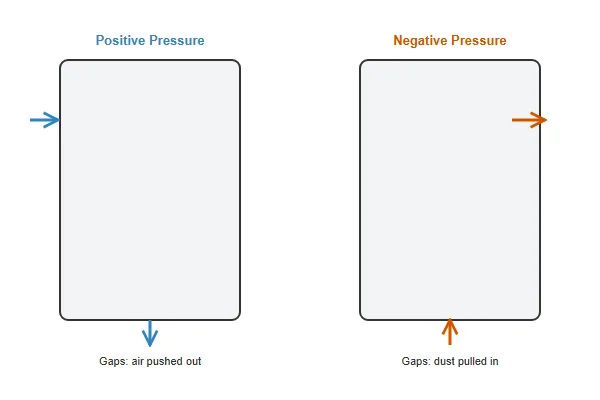
Two identical fan counts can produce very different dust accumulation and thermal results depending on one setup choice most builders never explicitly think about: whether the case runs positive or negative pressure. Positive pressure -- more intake airflow than exhaust -- reduces dust accumulation by forcing air out through small gaps rather than pulling unfiltered […]
Why Do Cooling Fans Actually Fail Prematurely? The Top 5 Root Causes
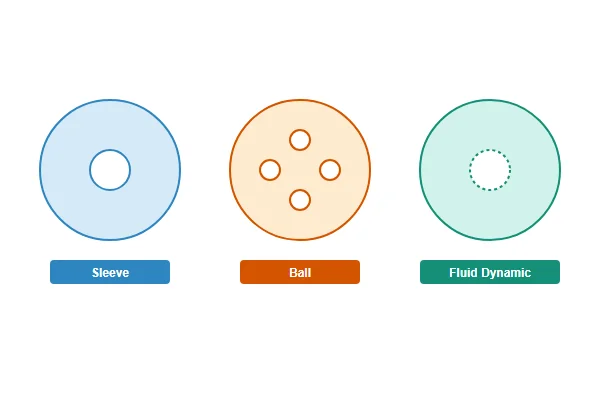
Most premature fan failures trace back to one of a handful of well-understood root causes, and nearly all of them are preventable with the right selection or installation choices made upfront. Cooling fans most commonly fail early from bearing wear and lubrication loss, overheating and thermal stress, vibration and mechanical shock, contamination from dust and […]
Need cooling solutions for your project?
Browse our product range or use our selector tool to find the right fan for your application.