
Technical Resources & Industry Insights
Explore technical guides, application notes, product selection tutorials, and industry news for industrial cooling solutions.
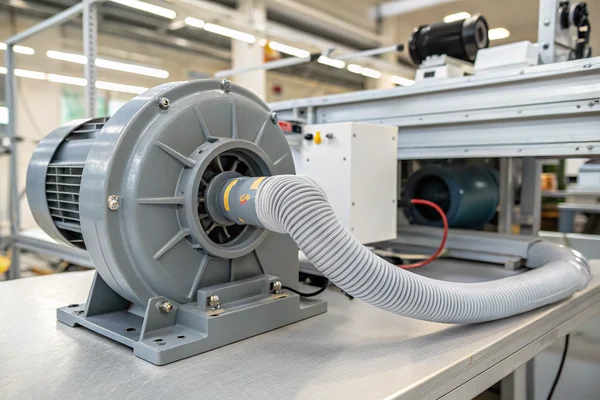
What Actually Makes a Blower Right for an Air Cushion Packaging Machine?
Air cushion machines run for hours at a stretch, and an undersized blower shows up as slow inflation, weak seals, or a motor that burns out months ahead of schedule. A DC blower for air cushion packaging machines needs to deliver steady, moderate-pressure airflow continuously for extended duty cycles, sized to match the specific film […]
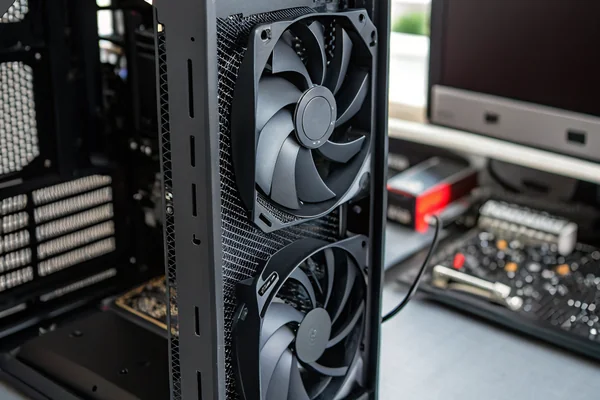
Why Are Your Case Fans Still Loud at Idle? Fix It With BIOS Fan Curves
Most PCs ship with fan curves that assume worst-case cooling and ignore how quiet the system could actually run. A five-minute BIOS adjustment usually fixes it. A fan curve is a set temperature-to-speed mapping that tells your case and CPU fans how fast to spin at a given temperature, and setting one up correctly in […]
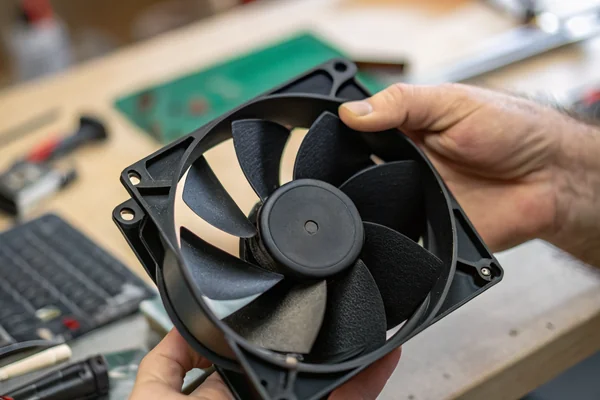
What Do the Numbers on a Cooling Fan Datasheet Actually Mean?
A fan datasheet is just a table of numbers until you know what those numbers are measuring -- and picking the wrong fan based on a misread spec is an easy mistake that costs real time to correct. A cooling fan datasheet encodes the four specs that determine whether a fan fits an application: airflow […]
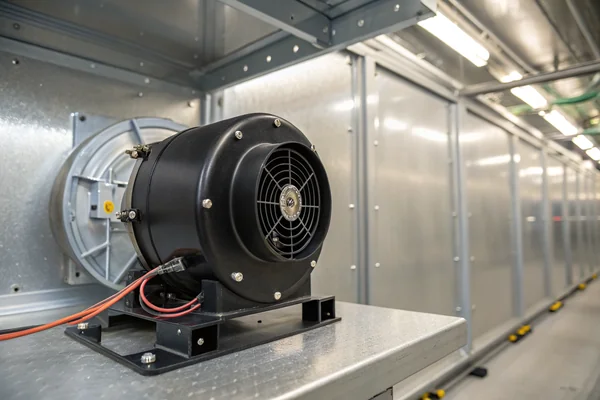
Can Your Blower Actually Get Wet? How to Select the Right IP Rating for DC Blowers
DC blowers fail in harsh environments not because the motor burns out -- but because moisture, dust, or contaminated air gets in through a gap no one accounted for during sourcing. IP-rated DC blowers carry a two-digit Ingress Protection1 rating that directly tells you how well the unit resists solid particle and liquid ingress -- […]
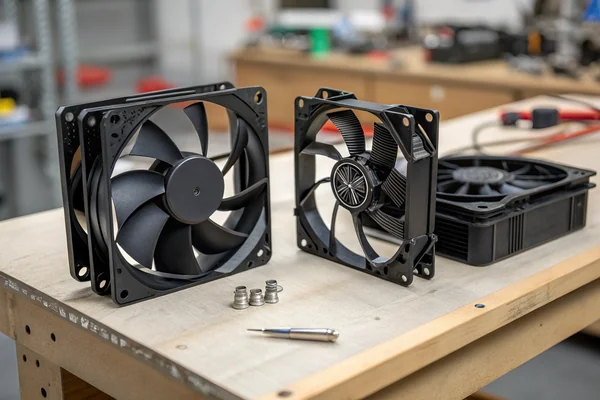
Case Fan vs. CPU Cooler Fan: Can You Actually Swap Them?
They look similar enough to cause real confusion on the workbench -- same square frame, same blades, same connector. But swapping one where the other belongs creates either a thermally marginal build or a dead component. Case fans and CPU cooler fans are not interchangeable in most real applications. They differ in static pressure tuning, […]
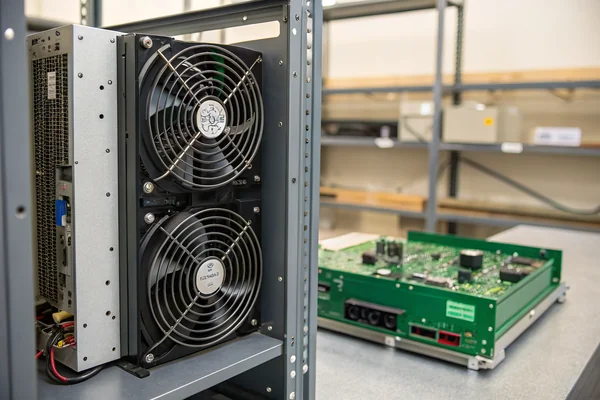
DC Axial Fan vs. DC Blower: Which One Actually Fits Your Cooling Application?
Wrong fan type locked in at the design stage costs time, tooling, and rework. The structural differences between axial fans and blowers are significant enough that swapping one for the other mid-project is rarely painless. A DC axial fan moves air parallel to its rotational axis and excels at high-volume, low-restriction airflow, while a DC […]
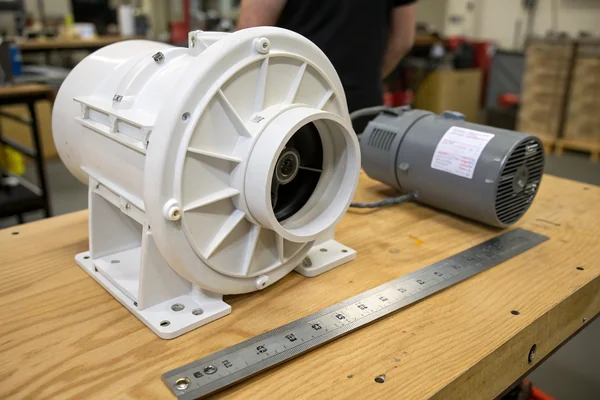
Why Does Your DC Blower Fan Sound Like That — and What Can You Actually Do About It?
Blower noise that wasn't expected in the design phase tends to become a product problem in the field. Once noise is built into a system, fixing it after the fact is expensive and often incomplete. DC blower fan noise comes from three distinct sources — aerodynamic turbulence at the impeller, motor commutation, and bearing mechanical […]
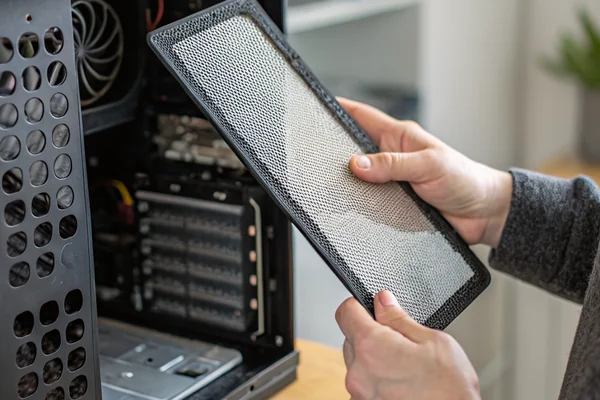
Do PC Case Fan Filters Actually Help — or Just Hurt Airflow?
Dust builds up silently, and by the time thermals spike or a fan starts grinding, the damage is already done. The right filter strategy stops that. The wrong one throttles your airflow before dust ever becomes an issue. PC case fan filters block dust from entering the chassis and accumulating on heatsinks, fans, and boards […]
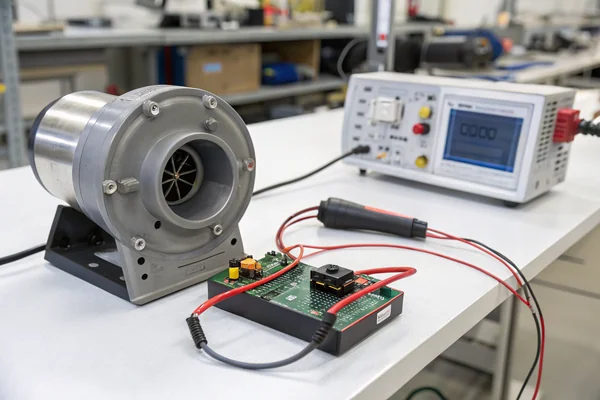
PWM, Voltage, or Feedback: Which Control Method Actually Fits Your DC Brushless Blower?
Picking the wrong control method for a DC brushless blower doesn't just leave performance on the table -- it can cause unstable operation, premature motor wear, and thermal runaway in the system it was supposed to protect. DC brushless blower control methods -- PWM, direct voltage adjustment, and closed-loop tachometer feedback -- each suit different […]
Need cooling solutions for your project?
Browse our product range or use our selector tool to find the right fan for your application.